FREE WORLDWIDE TRACKED SHIPPING

So the keys are in your hand. You walk in, drop your bag on the floor, and the sound bounces off every wall. Nothing on the shelves because there are no shelves. No couch. No coffee table. Just you and a lot of square footage that echoes.
Here is what most people do at this point: they scroll furniture stores on their phone, panic a little, and tell themselves the place will feel like home once the delivery truck shows up. That is a waste of a perfectly good empty room.
Because right now, before a single piece of furniture crowds the space, you have something designers would pay for. A blank layout with no compromises. And if you are intentional about these next few days, the whole place will come together better than if you had rushed to fill it.
Walk the Rooms With Nothing in Them

Interior designers prefer to see a space empty before they start planning. Furniture hides things. It covers up the way light pours across a floor at 8 AM. That alcove near the tall window? You would never notice it once a shelf is standing in front of it.
So do not plan anything yet. Just live in the emptiness for a bit. Walk through at noon, then again around sunset. You will notice the rooms behave differently depending on the hour. One bedroom might feel warm and golden at 5 PM but weirdly dim in the morning. The kitchen might catch a stripe of direct sun that would bleach out any rug you put there.
Grab your phone, photograph every room from multiple spots. These shots become your secret weapon later. Three weeks from now, when you are standing in a furniture store wondering if the walnut shelf will work in the hallway, pull up that photo. You will remember exactly what the wall looked like bare.
Lighting Changes Everything
Ask anyone who stages homes for a living and they will tell you the same thing: light does more for a room than paint color, furniture, or layout. It is the single biggest factor in whether a space feels alive or flat.
Most new apartments come with builder-grade fixtures. You know the ones. That dome-shaped ceiling light from 2003 that casts the same flat glow as a hospital corridor. Leave it off.
Instead, grab two or three lamps. Floor lamps, table lamps, a clip light, whatever you can get your hands on quickly. Scatter them across the room and plug them in. The transformation is almost stupid how effective it is. Where there was one flat, overhead wash of light, now there are pools of glow and pockets of shadow. The room suddenly has dimension. Go with warm bulbs, around 2700K. That amber-ish tone that makes everything feel softer and more inviting.
Candles are worth mentioning too. Group a few on a windowsill or a ledge. You do not even have to light them. Just the shapes and the waxy texture already give an empty surface something to hold on to visually.
Rugs Go Down Before Furniture Goes In
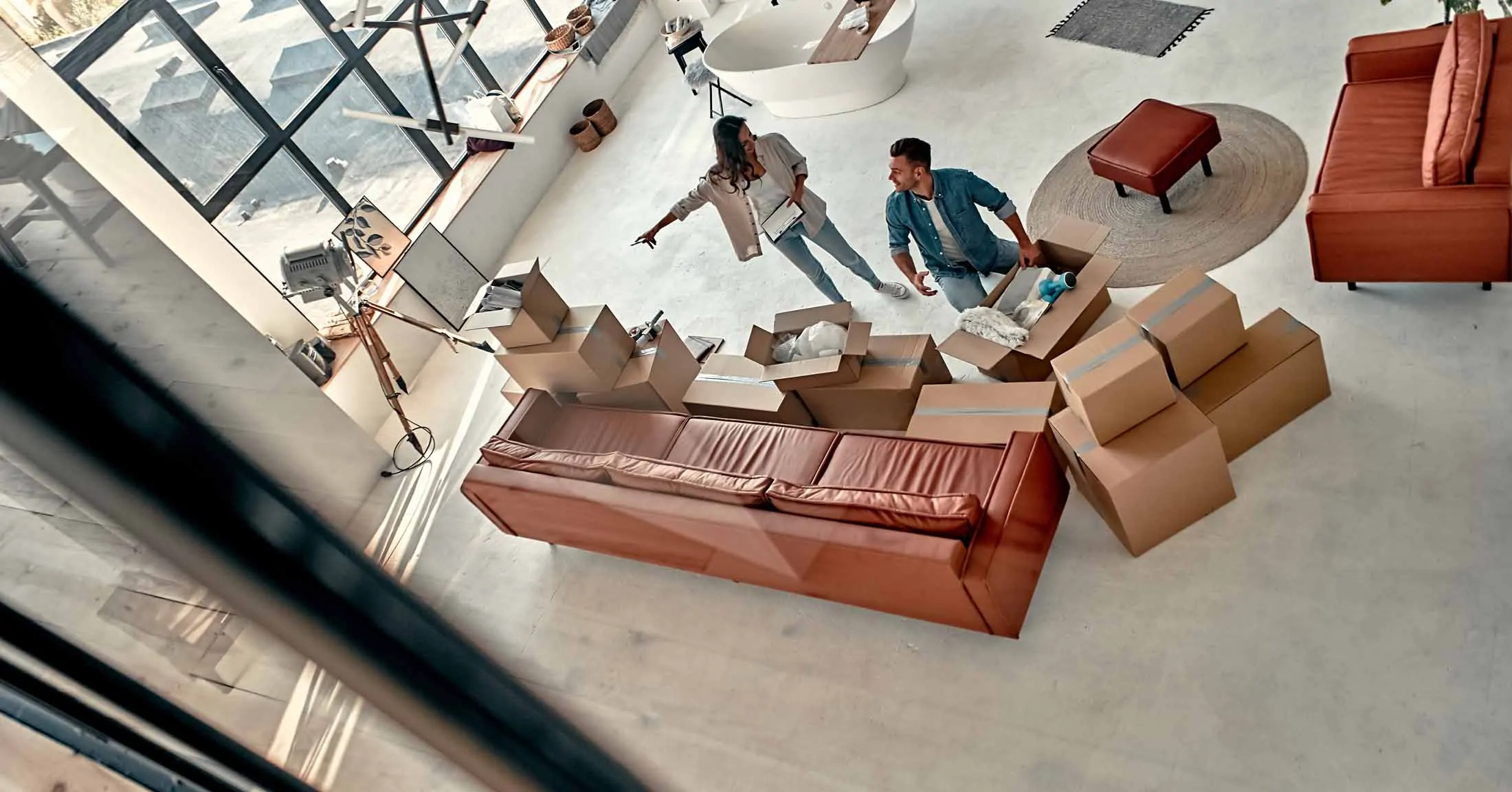
Nearly everybody does this backwards. The couch arrives, then they go hunting for a rug that fits under it. The result? A rug scaled to the sofa, not to the room. And the whole living area ends up looking like the furniture is stranded on a tiny floating platform in the middle of the floor.
Flip the order. Put the rug down first, while nothing is in the way. You will immediately see whether it is big enough for the room. For a living area, the test is simple: when your seating eventually shows up, the front legs should land on the rug. That one detail pulls an entire layout together.
A rug in an otherwise empty room does something psychological too. It marks territory. This patch of floor is the living zone. That runner along the hallway gives the eye a path to follow. The soft rectangle next to where the bed will go says morning starts here.
Curtains Before Furniture
Bare windows broadcast one thing: nobody lives here yet. A room can have gorgeous hardwood and perfect proportions, but exposed glass with no covering drains all the warmth out of it.
Linen curtains fix this faster than almost anything else you can do. White or oatmeal tones. Hang the curtain rod a few inches above where the window frame ends, closer to the ceiling, and let the panels drop all the way down to the floor. Your walls will read as taller than they actually are. Old trick, still works every time. Curtains also kill that echoey, hollow sound that plagues empty rooms. Once fabric is hanging on the windows, voices stop bouncing so harshly off the hard surfaces.
Lean Your Art, Skip the Drill
Hold off on the drill. Walls you have only known for 48 hours do not need holes in them yet. Instead, take your framed prints and lean them against the baseboard. Stack two together, put a mirror beside them. It looks relaxed and editorial, like a space that has been styled by someone who collects things over time rather than ordering a matching set online.
Floor mirrors are especially useful at this stage. Lean one against any wall and it immediately bounces light into corners that were feeling dark and forgotten. In compact apartments, this is one of the cheapest ways to make a room feel twice its actual size.
Greenery and Natural Texture
Empty rooms feel sterile when nothing alive is in them. One tall monstera or snake plant in a corner fixes that instantly. These plants take up vertical space without eating into your floor plan, and they introduce a softness that no piece of furniture can substitute for.
Got a bright windowsill? Put three small pots on it. Pothos, a succulent, maybe some rosemary from the grocery store. It costs almost nothing and suddenly that ledge has a purpose. For darker rooms, dried pampas grass or preserved eucalyptus stems in a ceramic vase give you the same organic feel without relying on sunlight. Add a woven basket on the floor next to it, or a small wooden tray with a candle, and the room starts to feel layered and warm. That is the difference between a space that looks empty and one that looks intentionally spare.
Build One Finished Corner
Your local moving team might not show up until next week. That sectional you ordered? Could be a month away. So pick one spot in the house and make it feel finished.
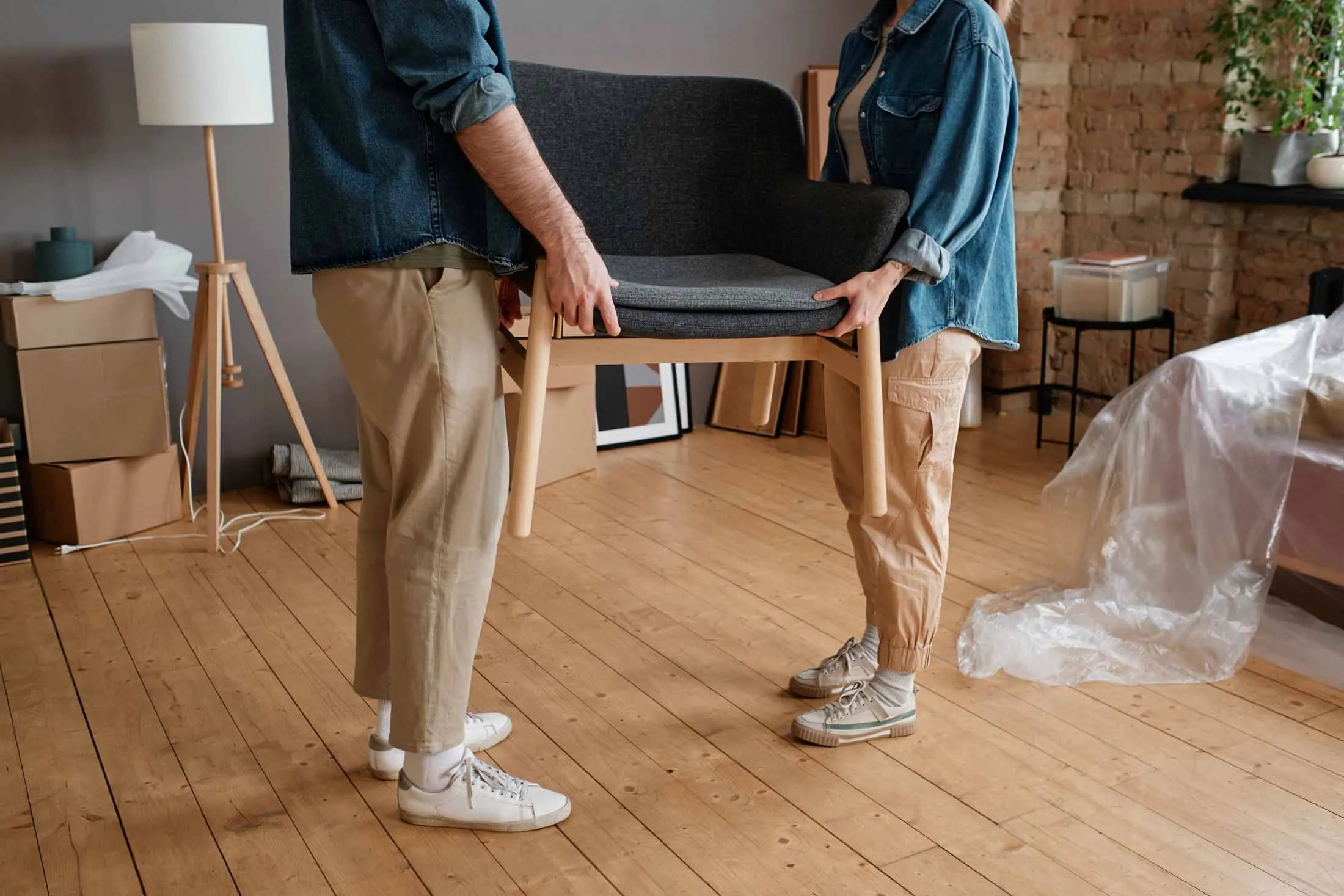
Best light in the apartment? Go there. Throw a rug or a folded blanket on the floor, toss down some cushions, put a lamp beside it, and set a book and a candle on a little tray nearby. Done. You now have a place to actually sit and enjoy being in your new home while the rest of it catches up.
Funny thing about good interiors: the ones that feel the most personal are almost never put together in one weekend. They grow room by room, piece by piece, because the person living there paid attention to what the space was asking for before they filled it. That attention starts right now, in the quiet of your empty rooms.
KŌŌI / KŌŌI Magazine / Living Smarter /


Japandi Living Room: Crafting Tranquil Spaces with Nordic-Asian Flair
Transform your space with a Japandi living room—where calm meets style with a touch of Nordic-Asian flair!


How to Relieve Lower Back Pain: Comprehensive Overview
Explore the history, treatments and societal impacts of lower back pain. This ultimate guide offers expert insights and practical advice.

Collect, Don’t Replace: Interchangeable Design for Modern Living Starts at the Front Door
The front door is one of the most stable architectural elements of a house. It anchors the façade and frames daily movement in and out. But stability does not have to mean stagnation.

How I Chose the Best Minimalist Cutlery Sets for My Home
Join me on a journey to find the best minimalist cutlery sets for your home sweet home!

10 Common Mistakes You Must Avoid When Relocating
Moving can be exciting, but let’s be honest—it’s also a recipe for stress if things go wrong. Boxes pile up, furniture doesn’t fit through the door, and suddenly the “big day” doesn’t feel so fun anymore. That’s why avoiding common mistakes is key.
Upgrade Your Bathroom: Stylish and Functional Accessories for a Spa-Like Experience
Transform your bathroom into a luxurious spa-like retreat with stylish and functional accessories. Elevate your bathing experience, enhance organization, and








 Blankets and Throws
 Home Accessories
 Furniture
 Rugs
Rugs Cushions
 Kitchen
 Cutlery and Dinnerware
 Drinkware
 Table Mats and Coasters
 Dining Accessories
 Tablecloths and Napkins
 Decorative Items
 Vases and Planters
 Wall Decor
 Bathroom Accessories
 Bathroom Storage
 Bath and Shower Mats
 Towels