FREE WORLDWIDE TRACKED SHIPPING
Bauhaus Interior Design: Principles, Iconic Pieces, and How to Apply It Today
 By Laura Jones
Bauhaus interior design is built on five core principles that still work beautifully in modern homes. A practical guide to the style, iconic pieces, and how to apply it room by room.
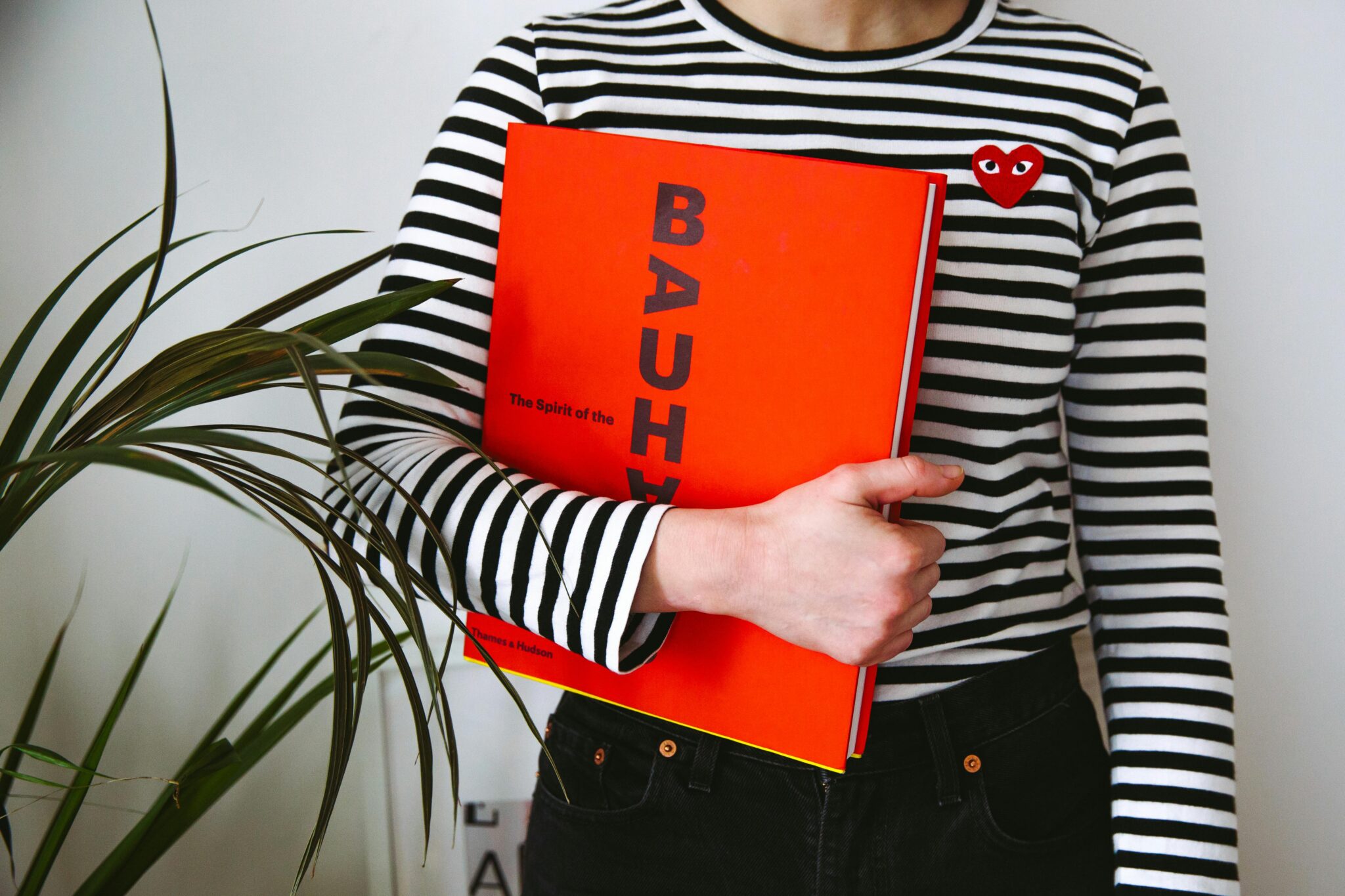
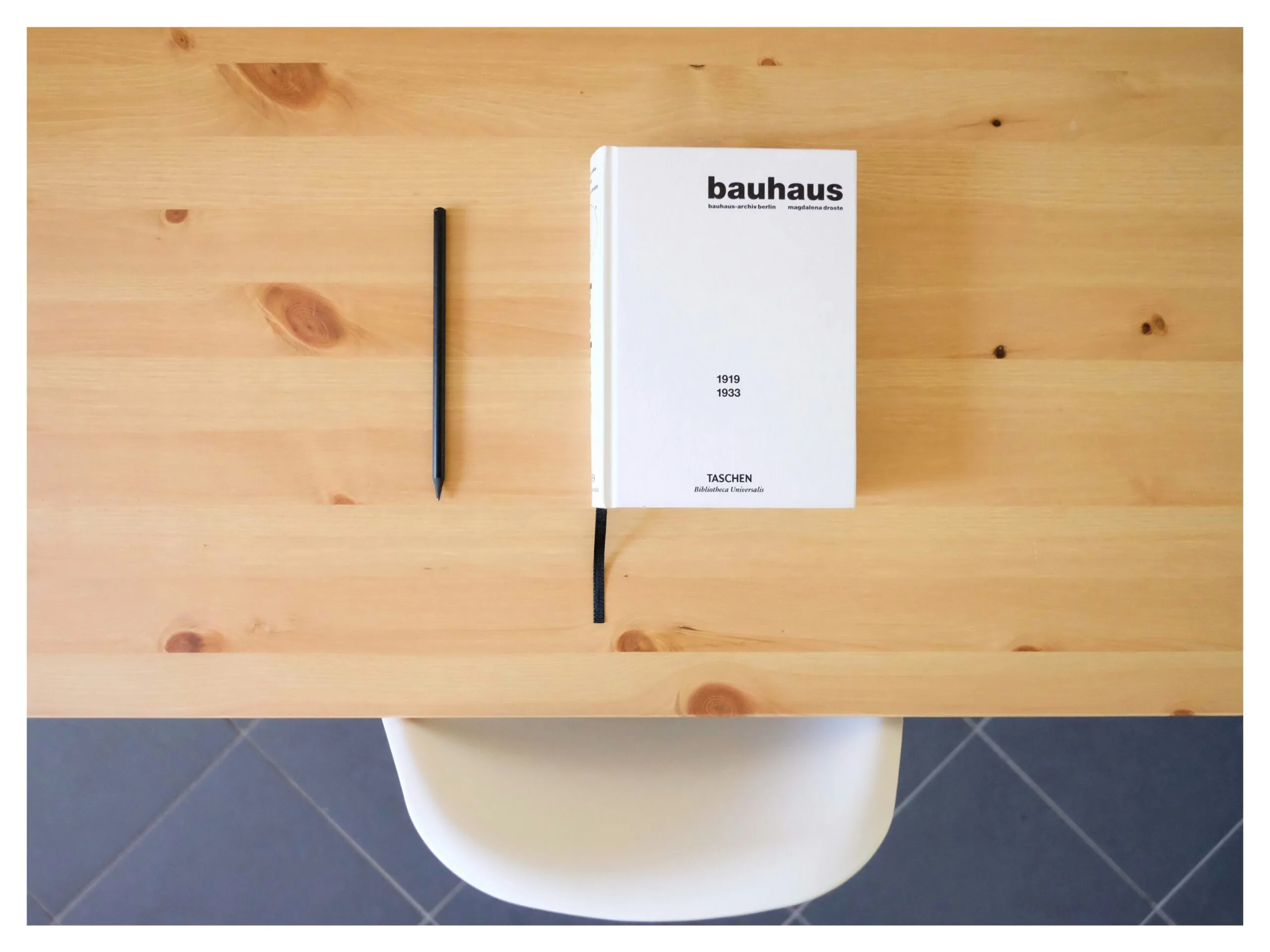
Bauhaus interior design is not a look you assemble — it’s a way of thinking about a room. Born at a radical German art school between 1919 and 1933, Bauhaus principles have quietly shaped nearly every corner of how we furnish and design homes today. Understanding what those principles actually are makes it far easier to apply them, whether you’re furnishing from scratch or editing an existing space.
What Bauhaus Interior Design Actually Means
The Bauhaus school — founded by Walter Gropius in Weimar, Germany — set out to dissolve the boundary between fine art and functional craft. Its core conviction was that well-designed objects should be available to everyone, not just the wealthy. That meant using industrial materials, simplifying forms, and designing for reproducibility.
In interior design terms, this translates into a set of principles that are still remarkably useful: form follows function, materials are used honestly, decoration serves structure rather than masking it, and negative space is treated as an active element of a room.
The Five Principles Behind the Style
Function first. Every object in a Bauhaus interior earns its place by doing something. Decorative objects exist only if they also serve — a vase holds flowers, a lamp provides light, a shelf organizes books. This doesn’t mean spaces feel cold or empty; it means they feel purposeful.
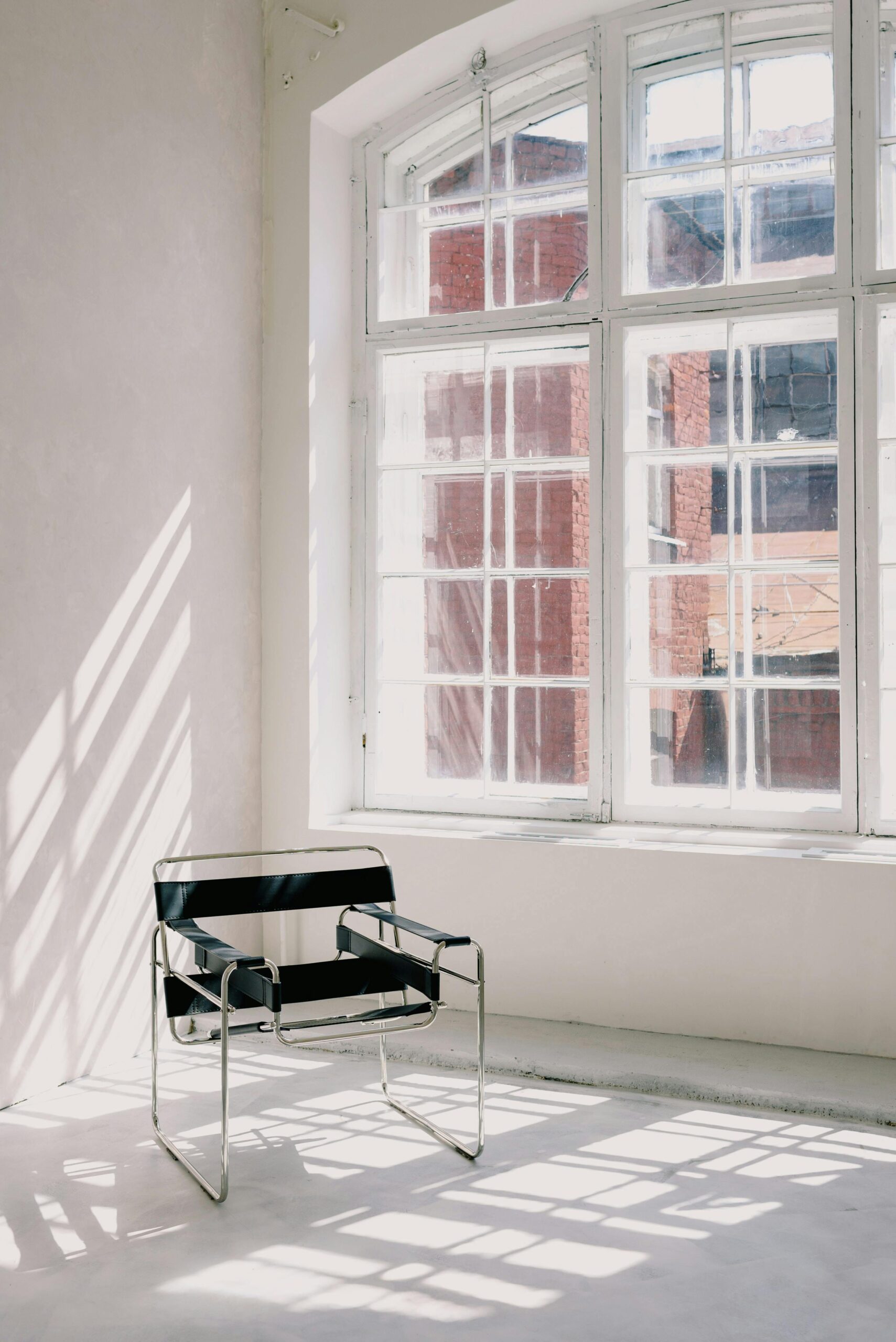
Industrial materials, used honestly. Steel, glass, concrete, and plywood are not hidden inside upholstery or covered in veneer — they’re left visible. The material’s nature is part of its beauty. Tubular steel furniture, glass pendant lights, and poured concrete counters are all expressions of this. Recessed lighting fits the Bauhaus mindset perfectly: it disappears into the architecture, it’s laid out on a grid, and it serves a purpose without decorating itself. If you’re planning a Bauhaus-inspired interior, our recessed lighting calculator can help you map out a clean, functional grid based on your room dimensions and ceiling height.
Geometric form. Bauhaus design avoids organic curves and ornamental flourishes in favor of circles, squares, and right angles. This isn’t rigidity — it’s precision. The geometry creates visual order that makes a room easy to read and move through.
A restricted palette. Original Bauhaus interiors leaned on primary colors — red, yellow, blue — combined with black, white, and gray. In contemporary applications this often softens to neutral foundations (white walls, concrete gray, natural wood) with one or two deliberate color accents.
Craftsmanship at industrial scale. Bauhaus pieces were designed to be manufactured, but not carelessly. Joints should be visible and precise. Welds should be clean. The quality of making is part of the design.
Iconic Bauhaus Pieces Still in Production

Several original Bauhaus designs remain in production, mostly through licensed manufacturers. These are the pieces most worth knowing:
- Wassily Chair (Marcel Breuer, 1925): Tubular steel frame with leather slings. Made by Knoll. The most widely recognized Bauhaus furniture piece. Read our full guide to the Wassily Chair.
- Barcelona Chair (Mies van der Rohe, 1929): Broad, low, cross-frame steel base with leather cushions. Licensed by Knoll. Designed for the German Pavilion at the Barcelona World Exposition.
- Cesca Chair (Marcel Breuer, 1928): Cantilevered tubular steel with cane seat and back. One of the most copied chair designs in history. Made by Knoll.
- Bauhaus pendant lamp (Wilhelm Wagenfeld, 1924): Opal glass globe on a chrome stem. Reproduced widely; originals are museum pieces. The form has been replicated so often it’s effectively become a design archetype.
- Breuer B32 / Cesca side chair: Affordable versions exist from multiple European manufacturers. Worth buying at mid-range quality since the design holds up at scale.
How to Apply Bauhaus Principles Room by Room
Living room: Start with a neutral base — white or off-white walls, a neutral sofa in gray, charcoal, or tan. Introduce one Bauhaus-adjacent piece: a tubular steel side table, a Cesca-style chair, or a Wagenfeld-style pendant. Keep surfaces clear. The goal is visual rest punctuated by precise objects.
Bedroom: Platform beds with clean-lined headboards (no tufting, no curves) work well. Bedside lamps should be functional — adjustable arm lamps or simple column forms. One accent color against white walls goes a long way; Bauhaus interiors used color as punctuation, not wallpaper.
Home office: This is where Bauhaus principles feel most natural. An adjustable steel-frame desk, a task lamp, a simple shelf system (IKEA’s IVAR or KALLAX in unfinished wood respects the material-honesty principle), and minimal desk objects. The connection between Bauhaus and IKEA’s design philosophy is most visible in workspace furniture.
Kitchen: Flat-front cabinets, no visible handles (or simple bar handles), and exposed materials — concrete counters, open steel shelving — all read as Bauhaus-adjacent. The kitchen is where function-first thinking pays off most practically.
Bauhaus Style vs. Minimalism vs. Japandi
These three aesthetics are often confused because they share surface similarities — clean lines, neutral palettes, reduced clutter. The differences are in the underlying logic:
- Bauhaus is ideological and industrial. It celebrates manufacturing, geometry, and the machine age. It allows bold primary colors. It’s urban in character.
- Minimalism (in its contemporary form) is about psychological reduction — removing everything unnecessary for the sake of calm. It’s quieter and more austere than Bauhaus. Where Bauhaus celebrates the process of making, minimalism often hides it.
- Japandi blends Scandinavian functionalism with Japanese wabi-sabi. It prioritizes natural materials, organic textures, and warmth. A Japandi bedroom will use linen, wood, and ceramics — materials that age visibly. A Bauhaus space would use steel, glass, and lacquer — materials that resist aging.
Where to Find Bauhaus-Inspired Furniture Today
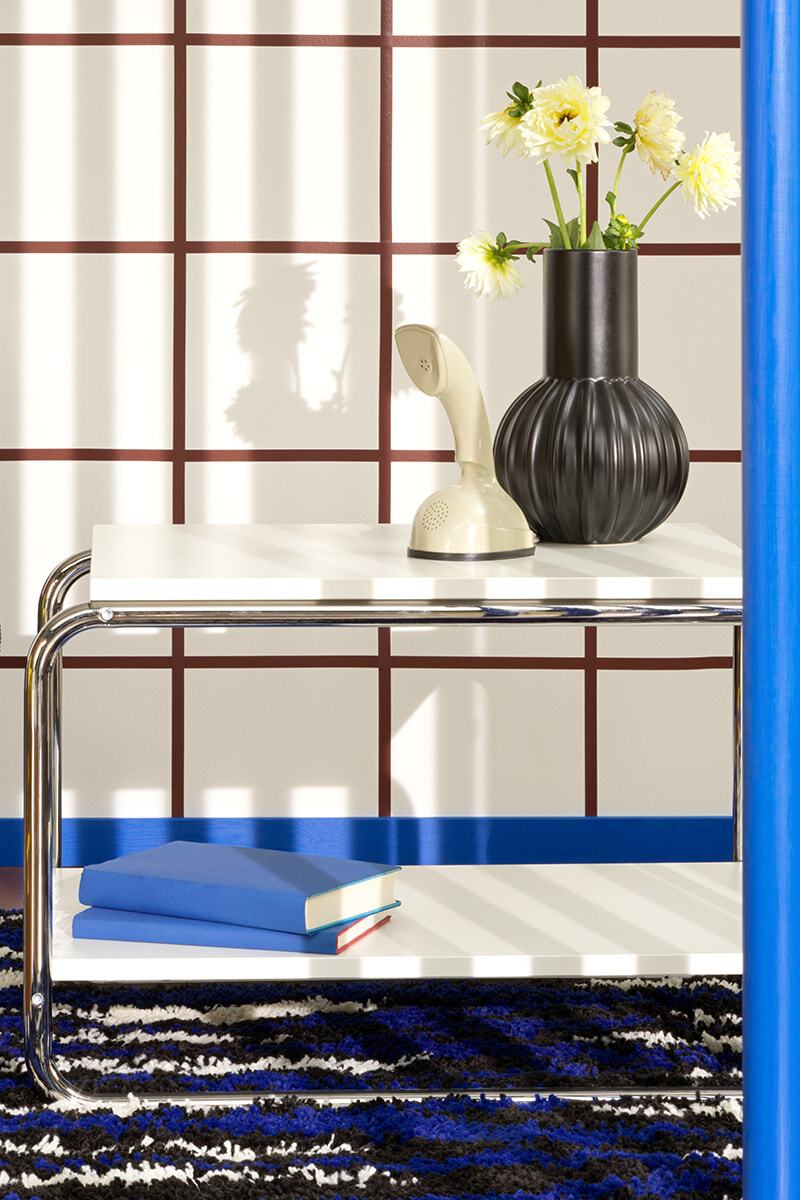
BAGGBODA side table, Photo: IKEA
Original licensed pieces from Knoll are the gold standard but require significant investment. For more accessible options, the following tend to offer genuine quality within the aesthetic:
- HAY (Denmark): Contemporary designs rooted in Bauhaus-influenced Scandinavian functionalism. Mid-range pricing, excellent quality.
- Muuto (Denmark): Similar design values to HAY. Strong on lighting and seating.
- IKEA INDUSTRIELL / IVAR / VITTSJÖ: At the accessible end, these ranges use honest materials (wood, steel, glass) without applied decoration. Not Bauhaus, but compatible in spirit.
- Replica market (Cesca, Wassily): Varies widely in quality. Buy from European suppliers where possible; check tubing gauge and joint construction before committing.
Frequently Asked Questions
What are the main characteristics of Bauhaus interior design?
Clean geometric forms, industrial materials used visibly (steel, glass, concrete), a neutral or primary-color palette, and the principle that every object should serve a function. Ornament for its own sake is avoided. The overall effect is precise, ordered, and visually restful.
Is Bauhaus design the same as minimalism?
Related but not the same. Bauhaus celebrates the industrial process and allows bold color; minimalism is more about psychological quiet and tends toward a paler, more uniform palette. Bauhaus interiors have more personality and deliberate material contrast than most minimalist spaces.
What colors are used in Bauhaus interior design?
Original Bauhaus used primary colors — red, yellow, blue — combined with black and white. In contemporary applications, most designers work from a neutral base (white, gray, natural wood tones) and introduce one or two primary accents. A red floor lamp against a white wall, or a yellow cushion on a black leather sofa, is the modern translation.
What furniture brands make Bauhaus-style pieces?
Knoll holds licenses for several original designs (Wassily, Barcelona, Cesca). HAY, Muuto, and Vitra carry Bauhaus-adjacent contemporary designs. IKEA offers accessible pieces that share the material honesty and functional logic of Bauhaus without directly replicating historical designs.
Is Bauhaus design expensive?
Original licensed pieces from Knoll are significant investments — Barcelona Chairs start at $5,000+, Wassily Chairs at $2,000+. But the underlying principles cost nothing to apply: clear your surfaces, choose furniture with visible structure, use a restrained palette. A Bauhaus-influenced room can be assembled on any budget; the philosophy does the work, not the brand names.
Bauhaus interior design has outlasted every trend that tried to replace it, because it isn’t a trend — it’s a set of questions about what objects need to be. Ask those questions about your space, and the answers tend to be clarifying regardless of budget, room size, or starting point.











 Blankets and Throws
 Home Accessories
 Furniture
 Rugs
Rugs Cushions
 Kitchen
 Cutlery and Dinnerware
 Drinkware
 Table Mats and Coasters
 Dining Accessories
 Tablecloths and Napkins
 Decorative Items
 Vases and Planters
 Wall Decor
 Bathroom Accessories
 Bathroom Storage
 Bath and Shower Mats
 Towels