FREE WORLDWIDE TRACKED SHIPPING

Paint coverage by surface type — this is one of those things people don’t think about… until their paint starts disappearing way faster than expected. The can says “covers 350–400 sq ft,” and you think, okay, easy. Then you start painting… and it’s not going as far as you thought.
Coverage isn’t just about the paint. It’s about what you’re painting onto. Use the paint coverage calculator for a tailored estimate, or read on to understand why surface type changes everything.
Quick Reference: Paint Coverage by Surface
- Smooth drywall: ~8–10 m² per liter (≈350–400 sq ft per gallon) — best-case
- Wood siding: slightly lower coverage
- Brick: noticeably lower coverage, higher absorption
- Stucco: lowest coverage — rough, textured, and highly absorbent
Why Surface Type Changes Paint Coverage
Porous surfaces absorb paint. Rough surfaces increase surface area. Uneven textures require more paint to fill gaps. Two walls with identical dimensions can use completely different amounts of paint depending on the material.
Smooth Walls (Best-Case Scenario)
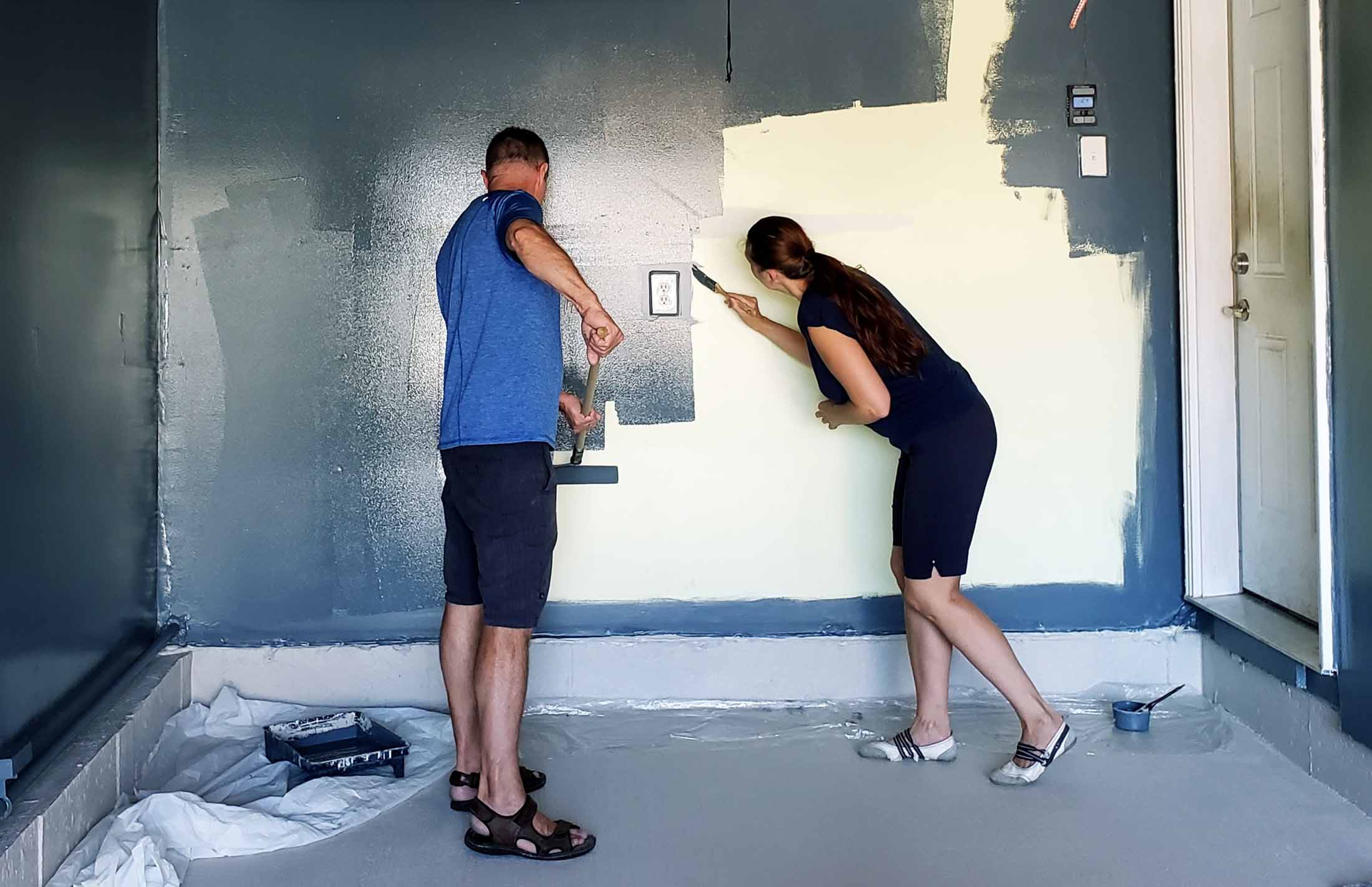
Smooth drywall or previously painted walls give you full coverage efficiency. The label numbers are accurate here: roughly 350–400 sq ft per gallon (8–10 m²/L). Predictable, consistent, easy to estimate.
Wood Surfaces (Moderate Absorption)
Wood absorbs more than drywall, but less aggressively than brick. Coverage depends on whether it’s sealed or bare, grain texture, and age. Unprimed wood noticeably increases paint usage — primer helps a lot here.
Brick (High Absorption)
Brick is porous, uneven, and full of tiny gaps. Paint gets absorbed quickly, coverage drops, and more coats are typically needed. Even if the math says one thing, brick usually requires more.
Stucco (Highest Paint Usage)
Stucco is the most demanding surface: rough, textured, and highly absorbent. Plan for significantly reduced coverage, higher paint consumption, and multiple coats. Always buy extra. This is not where you want to cut it close.
Should You Add Extra for Rough Surfaces?
Yes. For brick, stucco, and bare wood, add at least 10–20% to your estimate (more for heavy texture). Real-world surfaces rarely behave like ideal ones.
How Primer Helps with Coverage
On porous surfaces, primer seals absorption, creates a more uniform base, and improves paint efficiency. Without it, you’ll likely use more paint and still struggle with even coverage. Primer can actually reduce total paint usage on rough surfaces.
Surface Type Changes Everything
Paint coverage isn’t just about area — it’s about how that surface behaves. Smooth walls are predictable. Brick and stucco are not. Once you understand that difference, your estimates become much more accurate. Use the paint coverage calculator to get a solid baseline for your specific project.
KŌŌI / KŌŌI Magazine / Living Smarter /



Succession set design and the interiors of power and luxury
Step into the world of power and luxury with Succession set design! Explore how to infuse your space with opulence and style.
Wallpaper Ideas for a Home With Light Pink Style
One of the most transformative elements in interior design is wall décor, and choosing the right wallpaper can elevate a space in ways that paint simply can’t.


10 front yard upgrades that actually boost home value
Which exterior improvements deliver the best return when selling, and which simply make it nicer to come home every day? In this contributed piece, Denis from Montreal Paysagement Pro shares practical front yard upgrades that balance curb appeal and real home value

How to Relieve Lower Back Pain: Comprehensive Overview
Explore the history, treatments and societal impacts of lower back pain. This ultimate guide offers expert insights and practical advice.

Japandi Furniture: Fusion of East and West in 2025 Interior Design
Discover Japandi furniture for a serene space! Blend East and West for a cozy, minimalist vibe in 2025.

Minimalist Bedroom Design Ideas for a Small Space with Big Zen
Discover small bedroom minimalist design ideas! Create a serene space that’s stylish and clutter-free.








 Blankets and Throws
 Home Accessories
 Furniture
 Rugs
Rugs Cushions
 Kitchen
 Cutlery and Dinnerware
 Drinkware
 Table Mats and Coasters
 Dining Accessories
 Tablecloths and Napkins
 Decorative Items
 Vases and Planters
 Wall Decor
 Bathroom Accessories
 Bathroom Storage
 Bath and Shower Mats
 Towels