FREE WORLDWIDE TRACKED SHIPPING

A Japandi bathroom is one of those spaces you step into and immediately exhale. It combines the warmth of Japanese wabi-sabi — the beauty of imperfection and natural materials — with the clean-lined simplicity of Scandinavian design. The result is a bathroom that feels like a private retreat: calm, uncluttered, and quietly beautiful. If you’ve been thinking about redesigning your bathroom or just refreshing its feel, Japandi might be exactly the direction you need.
What Makes a Bathroom “Japandi”?
Japandi design is built on a few core principles that translate especially well into bathrooms. The first is restraint — every element earns its place. There are no decorative objects sitting on the vanity just because they look nice in a store. The second is natural material honesty: wood, stone, linen, and clay are shown as they are, without trying to look like something else. The third is a muted, grounded color palette that doesn’t compete with the calm you’re trying to create.
What separates a Japandi bathroom from a generic “minimalist” bathroom is warmth. Scandinavian design can run cold if taken too far. Japanese aesthetic adds organic texture — a wooden bath stool, a woven basket, the grain of an unfinished stone tile — that keeps the space from feeling sterile. Together, these two traditions create something that feels both refined and livable.
Japandi Bathroom Color Palette
The color palette in a Japandi bathroom is intentionally quiet. You’re not creating a statement wall — you’re creating an atmosphere. Stick to a palette of two to three colors maximum, and let natural materials add visual interest.
| Color | Where to Use It | Why It Works |
|---|---|---|
| Warm white / off-white | Walls, ceiling, large tiles | Opens up small spaces, reflects light softly |
| Warm grey / greige | Floor tiles, vanity, accents | Grounds the space without heaviness |
| Natural wood tones | Vanity, shelving, bath mat, accessories | Adds warmth and organic texture |
| Slate / charcoal | Fixtures, towel bars, small accents | Provides quiet contrast without drama |
| Sage green / dusty clay | Towels, small accents, plants | Nature reference, works beautifully with wood |
Avoid bright whites that feel clinical, and skip anything too saturated. The goal is a palette that feels like it came from a forest walk, not a paint store’s trending section.
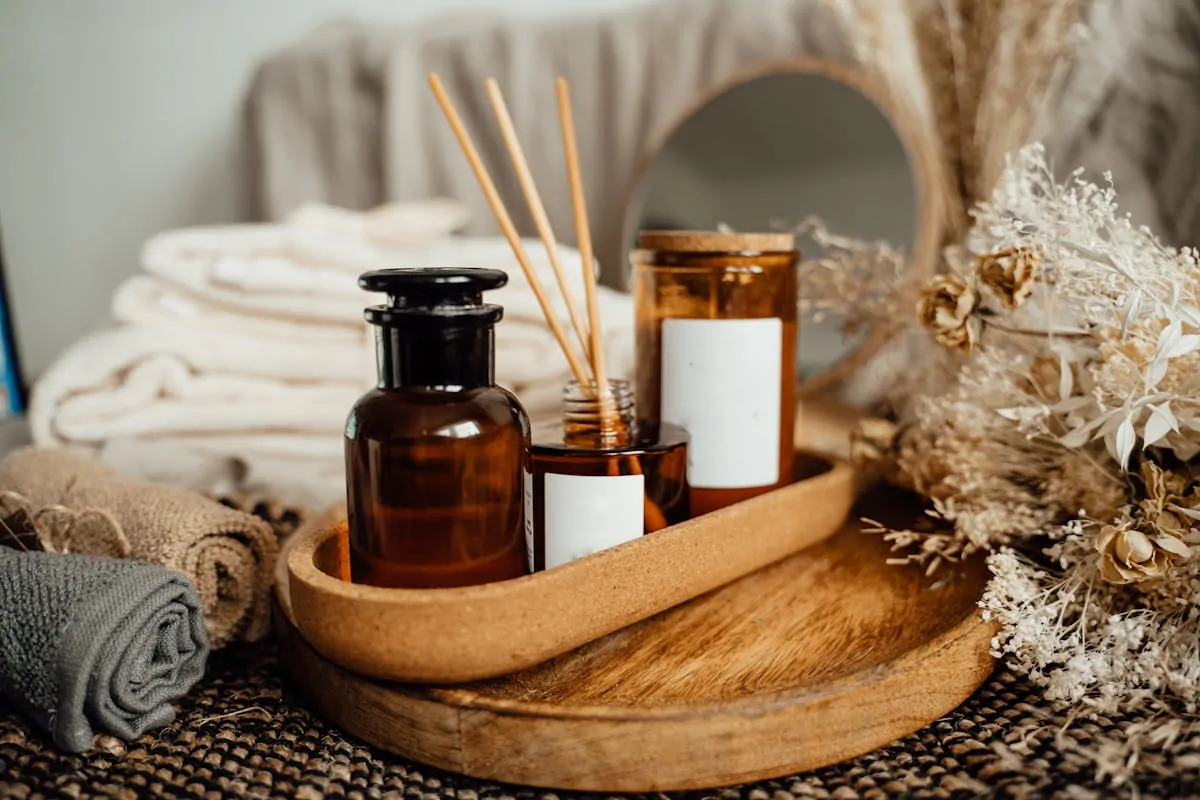
Materials: The Heart of the Japandi Bathroom
If there’s one area where your budget and effort should concentrate, it’s materials. Japandi bathrooms look expensive not because of brand names, but because of material quality and how they’re combined.
Stone tile is perhaps the most transformative material you can introduce. Limestone, travertine, slate, or matte porcelain with a stone-look finish all work well. Avoid glossy large-format tiles — they read as “hotel lobby,” not “serene retreat.” Smaller format tiles with natural variation, or large matte slabs, both work in a Japandi context.
Wood brings warmth that no other material can replicate. A teak or bamboo bath mat, a wooden vanity, a small hinoki (Japanese cypress) stool near the tub — these details do enormous work. For wet areas, stick to species that handle moisture well: teak, bamboo, and cedar are the most practical choices.
Linen and cotton for towels and bath linens should be textured rather than fluffy. A waffle-weave linen towel in a muted sage or natural undyed tone reads as Japandi. Thick white hotel towels do not.
Matte black or brushed brass fixtures work better than chrome in a Japandi bathroom. Chrome reflects everything and creates visual noise. Matte finishes are quieter, more intentional.
Japandi Bathroom Layout and Storage
Japandi design doesn’t mean sacrificing function — it means being ruthless about what’s visible. Everything that creates visual clutter goes behind closed doors or into intentionally beautiful storage.
A floating vanity is a strong Japandi choice. It creates visual breathing room at floor level and makes even a small bathroom feel less cramped. Pair it with a wall-mounted faucet if your budget allows — it’s cleaner and easier to clean around. Under the vanity, a single drawer organizer keeps toiletries invisible and accessible.
Open shelving works in Japandi only if you can commit to keeping it spare. One or two folded linen towels, a small ceramic dish for soap, a single plant — that’s it. The moment you add a fourth item, it stops looking curated and starts looking like a shelf that needs organizing.
If you have storage challenges in a small bathroom, look to vertical space: a tall, slender cabinet in a warm wood finish can hold everything without dominating the room. For more bathroom organization ideas, explore our full japandi bedroom guide — many of the same storage principles apply across rooms.
Lighting in a Japandi Bathroom
Harsh overhead lighting is the enemy of a Japandi bathroom. You want layered, warm light that mimics the quality of natural light as closely as possible. Ideally, your bathroom has at least two light sources: one functional (for the vanity mirror area) and one ambient.
For vanity lighting, side-mounted sconces at eye level are far more flattering and more Japandi than a bar light above the mirror. Look for fixtures in matte black, warm bronze, or brushed nickel with simple geometric shapes — no ornate details.
Dimmer switches are a small investment that transform how a bathroom feels in the evening. Being able to bring lighting down to 30% for a bath makes a significant psychological difference. If you want to calculate the right number of lumens for your bathroom size, our lighting calculator can help you work out the specifics.
Natural light should be maximized where possible. Frosted glass for privacy, but keep window treatments minimal. A simple linen panel or a bamboo shade is enough.
Small Japandi Bathroom Ideas
Most bathrooms are small, and Japandi design actually works in your favor here. The philosophy of less-is-more means you’re not trying to cram everything in — you’re deliberately editing down. A few specific strategies for small Japandi bathrooms:
- Use a large-format floor tile to reduce the number of grout lines and visually expand the floor plane. A 12×24″ or 24×24″ matte tile reads as more spacious than 4×4″ mosaic.
- Extend tile to the ceiling in the shower area. Full-height tile eliminates the visual “cut” of a half-tiled wall and makes the room feel taller.
- Choose a pedestal or wall-mounted sink over a bulky vanity cabinet if storage allows. The exposed floor space makes the room feel larger.
- Keep the mirror large — a generous mirror reflects light and visually doubles the depth of the room.
- One plant, not three. A single trailing pothos on a shelf or a small snake plant in a ceramic pot is enough. Groupings become clutter in a small bathroom.
Japandi Bathroom Accessories
This is where most people over-buy. A Japandi bathroom needs very few accessories — and the ones it has should be genuinely beautiful rather than functional afterthoughts.
A ceramic soap dish or dispenser in a simple form (cylinder, hemisphere, simple cube) in white, clay, or slate. A wooden or concrete toothbrush holder. A single framed print — something quiet and nature-referencing, like a botanical illustration in a thin black frame. A small ceramic or clay vase with a single dried stem or a sprig of eucalyptus.
That’s genuinely all you need. Resist the urge to add more. The restraint is the point.
Frequently Asked Questions
What is a Japandi bathroom?
A Japandi bathroom blends Japanese wabi-sabi and Scandinavian hygge principles into a space that’s calm, natural, and uncluttered. It uses natural materials like wood and stone, a muted earthy color palette, and keeps decoration to a deliberate minimum.
What colors work best in a Japandi bathroom?
Warm whites, greiges, natural wood tones, slate grey, and muted sage or clay accents. Avoid bright whites, cool greys, and anything saturated. The palette should feel like it came from nature rather than a trend board.
Can a small bathroom be Japandi?
Yes — Japandi actually works very well in small bathrooms. The philosophy of restraint and intentional editing means you’re not fighting the small footprint; you’re working with it. Large-format tiles, floating vanities, and generous mirrors all help.
What materials are most important in a Japandi bathroom?
Stone or stone-look matte tile for floors and walls, natural wood for accents and accessories, linen or waffle-weave cotton for towels, and matte-finish fixtures. Avoid glossy surfaces and chrome where possible.
How do I add warmth to a Japandi bathroom without making it look cluttered?
Warmth comes from materials, not objects. A wood vanity, a teak bath mat, natural linen towels — these add warmth without adding visual noise. A single plant and one or two carefully chosen ceramic pieces complete the look without tipping into clutter.
What’s the difference between a Japandi bathroom and a minimalist bathroom?
A minimalist bathroom reduces everything, sometimes to the point of feeling cold or institutional. A Japandi bathroom reduces visual clutter but adds back natural warmth through wood, stone, and organic texture. It’s minimal but never cold.
A Japandi bathroom doesn’t require a full renovation to achieve — sometimes the biggest transformation comes from editing out what’s already there. Remove everything from your countertop, replace your towels with linen ones, add one piece of natural wood, and you’re closer than you think. For more Japandi inspiration across your home, explore our Japandi bedroom ideas and Japandi living room ideas guides.
KŌŌI / KŌŌI Magazine / Living Room Decor Ideas / Japandi Decor Ideas /



The White Lotus set design and the aesthetic of escapist luxury
Discover the allure of The White Lotus set design! Immerse in escapist luxury with our stylish insights.

Paint Coverage Calculator
Use our free paint coverage calculator to find out exactly how many gallons of interior or exterior paint you need. Enter your room dimensions for an instant estimate

Get Your Home Office in Order: Must-Have Products for Increased Productivity
Working from home has become the norm for many, making it essential to have a well-organized and efficient home office.


Why the Most Used Objects in a Home Are Rarely the Most Visible
The objects that shape our days most consistently are rarely the ones we notice.

Minimalist Interior Design Tips for Every Room
Discover my top minimalist interior design tips to create stylish, clutter-free spaces in any room!
The Ultimate Guide to Hygge Decor and Lifestyle: Cozy Living Simplified
Discover hygge decor for a cozy, minimalist home that feels warm and inviting! Let’s create your perfect space!








 Blankets and Throws
 Home Accessories
 Furniture
 Rugs
Rugs Cushions
 Kitchen
 Cutlery and Dinnerware
 Drinkware
 Table Mats and Coasters
 Dining Accessories
 Tablecloths and Napkins
 Decorative Items
 Vases and Planters
 Wall Decor
 Bathroom Accessories
 Bathroom Storage
 Bath and Shower Mats
 Towels