FREE WORLDWIDE TRACKED SHIPPING
Natural Texture: Plaster, Limewash & Rammed Earth Walls
 By Alex Carter
Limewash and plaster walls turn a flat painted surface into something that feels alive — here is how to choose and live with the look.

A limewashed plaster wall — the closest thing to old-world texture you can get from a paint can.
Limewash plaster walls do something flat paint will never do. They breathe with the day, soften under afternoon sun, and develop a slow patina that turns a brand-new room into something that looks like it has always been there. After a decade of glossy modern finishes, designers and homeowners are quietly returning to the oldest wall finishes we know — limewash, lime plaster, and rammed earth — and the results have a depth that paint cannot match.
Why Natural Wall Finishes Are Back
For most of the last century, painted drywall was the default — flat, uniform, and easy to repaint when trends changed. The trade-off, though, was that every wall in every room started to look the same. Limewash plaster walls offer a way out. They reintroduce texture, depth, and small variations from the wall itself rather than from styling on top of it. A room with a limewashed wall already has visual interest before you hang a single piece of art.
The shift is also practical. Lime-based finishes are naturally antibacterial and antifungal, breathable, and made from minerals that have been used for thousands of years. They are kinder to indoor air than many modern paints, and they age in a way that flat paint simply cannot.
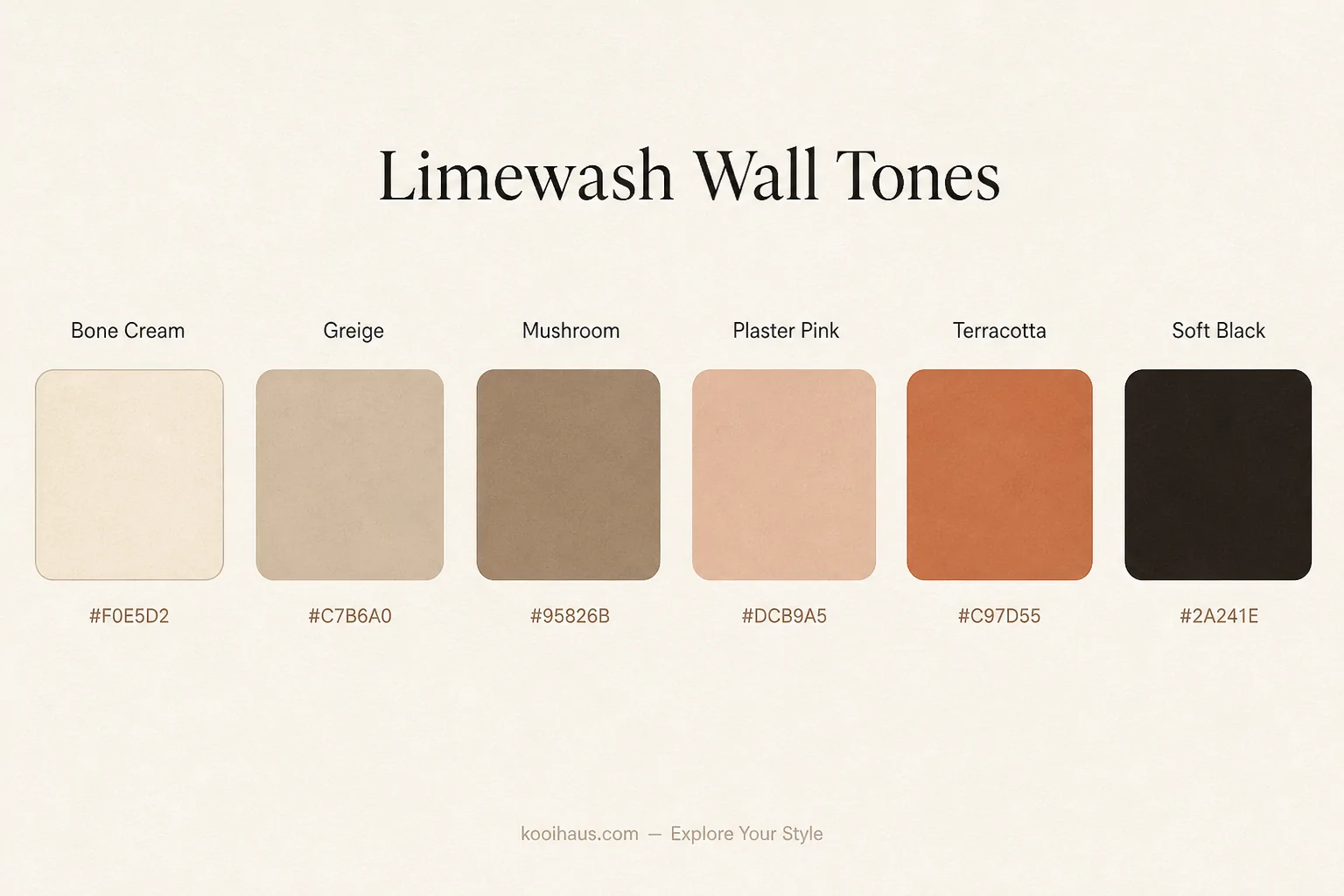

Limewash vs. Lime Plaster vs. Rammed Earth
The three finishes are often grouped together but produce quite different results. Knowing which is which saves you a lot of trouble before you start.
Limewash is the easiest to apply and the most forgiving. It is essentially a thin paint made of slaked lime suspended in water, sometimes tinted with mineral pigments. Brushed on in two or three coats, it creates a soft, cloudy finish with subtle variation — closer to fresco than to flat paint.
Limewash sits on the wall like a thin layer of color and looks best on porous surfaces. On regular drywall, it can be applied with a special primer; on plaster or masonry, it bonds beautifully without one.
Lime plaster is a thicker, more sculptural finish. It is troweled on in multiple coats, building up actual surface texture you can see and feel. The classic Mediterranean and Moroccan plaster walls you see in design magazines are usually lime plaster (often called intonachino or tadelakt depending on the technique). The texture is permanent, the depth is dramatic, and the labor is significantly more than limewash.
Rammed earth is the most committed of the three — and the most striking. It is a structural finish in which damp soil and aggregate are compacted into formwork to create a solid earthen wall. The horizontal striations of color you see in rammed-earth interiors are layers of different soils tamped one on top of the other. It is rarely applied to existing walls; it is usually built that way from the start.
The Look and Feel of Each Finish
Limewash gives you a dreamy, slightly cloudy wall with soft color variation across its surface. From across the room, the wall reads as one quiet color. Up close, you see the brush strokes and slight differences in tone that make it feel handmade. It is the lowest-commitment way to get an old-world finish in a modern home.
Lime plaster reads more textured and three-dimensional. The trowel marks, the slight depth of the surface, and the way the finish catches light give the wall a quality closer to a physical object than to a painted surface. It is the right choice when you want the wall itself to be a feature.
Rammed earth is dramatic, horizontal, and unmistakably architectural. It is a finish for entire rooms or feature walls in custom builds, not for retrofitting an apartment.
Where to Use Each Finish
Limewash is the most versatile. It works on living room walls, bedrooms, dining rooms, and even kitchens (away from direct splash zones). It is especially flattering in rooms with good natural light, where the subtle variation comes alive.
Lime plaster shines in entryways, fireplaces, accent walls, and bathrooms. The Moroccan tadelakt technique is naturally water-resistant, which has made it a favorite for showers and wet rooms in high-end design — though installation requires a specialist.
Rammed earth belongs in custom homes and large open-plan living areas where the wall is the centerpiece. The structural and labor commitments are real; this is not a weekend project.
Color Choices for Natural Finishes
The limewash and lime plaster palette leans warm, soft, and earth-toned by nature. The most popular shades are:
- Bone and cream. The safest choice for most rooms; reads as a warm white with depth.
- Greige. A versatile soft taupe that works in any light.
- Mushroom and stone. Slightly cooler, more sophisticated, ideal for living rooms and bedrooms.
- Plaster pink. A muted, dusty rose that reads almost as a neutral.
- Terracotta and clay. Warm, Mediterranean-feeling tones for accent walls or full rooms in well-lit spaces.
- Soft black and charcoal. Dramatic and surprisingly easy to live with on a single feature wall.
The colors do not behave like paint chips. Always order samples and apply them to a real wall in your space; the same color can read three different ways depending on light and surface texture.
DIY vs. Hiring a Professional
Limewash is genuinely DIY-friendly. With a primer (if needed), a wide brush, and patience, most homeowners can finish a room in a weekend. Brands like Bauwerk, Pure & Original, and Romabio sell pre-mixed limewash specifically for non-professional application, with detailed instructions.
Lime plaster is a different matter. While ambitious DIYers can attempt it, the surface texture and trowel technique are easy to get wrong. A poorly troweled lime plaster wall looks like a botched skim coat rather than an artisan finish. Most homeowners hire a specialist for lime plaster — and the cost reflects it, often $10–$25 per square foot installed.
Rammed earth is almost always architect- and contractor-built. If you are not building from scratch, this is not the finish for you.
Cost Comparison
Limewash typically runs $80–$150 per gallon (about 3.8 liters) for premium brands, with a gallon covering roughly 200 square feet (about 18.5 square meters) in two coats. Material cost for a full bedroom comes out around $150–$300, plus tools.
Lime plaster materials are more expensive, but the bigger cost is labor. A professional lime plaster install for a single room can run $2,500–$8,000 depending on size and finish. The result lasts for decades.
Rammed earth pricing varies enormously by region and project, but it is firmly in custom-build territory.
Living With a Limewashed Room
The most surprising thing about a limewashed room is how it changes through the day. Morning light makes a cream limewash glow; afternoon sun deepens it; evening lamplight turns it almost golden. A flat painted wall does not move like that.
Maintenance is also easier than people expect. Small marks can usually be wiped with a damp cloth; larger touch-ups can be brushed in with leftover limewash. Over five to ten years, a single fresh coat refreshes the whole wall — a five-minute job in the back of your mind.
Common Mistakes to Avoid
The biggest mistake is using regular paint over limewash, or limewash over the wrong primer. Limewash needs to bond with a slightly absorbent surface to develop its character. Glossy modern paint can stop it from doing that and produce a streaky, blotchy finish.
The second mistake is applying limewash too thickly. The product looks slightly transparent on purpose; thick coats erase the variation that makes the finish beautiful. Two thin coats, brushed in random crosshatches, beat one thick even coat every time.
The third is unrealistic expectations of color. Limewash and lime plaster will never look like a perfect uniform paint job. The point is the variation. If you want a perfectly even wall, this is not the finish for you.
Frequently Asked Questions
Is limewash durable?
Yes — when properly applied, a limewashed wall can last 10 to 20 years before needing refreshing, and lime plaster lasts decades.
Can I put limewash over existing paint?
Yes, but you will likely need a mineral primer first. Some brands sell their own limewash primer; follow the manufacturer’s instructions carefully.
Is limewash safe in bedrooms and kitchens?
Yes. Limewash is naturally low-VOC, antibacterial, and breathable, which makes it one of the healthier wall finishes available.
Will limewash work in a small dark room?
It can, but the magic of limewash is partly in the way it interacts with light. In a windowless room, you may not see as much variation. A textured lime plaster sometimes performs better in low-light spaces because the surface itself catches light.
Can I limewash a brick wall?
Limewash on brick is a classic look, especially in fireplaces and exterior walls. It bonds excellently with porous brick and ages beautifully.
Limewash plaster walls are one of those rare design upgrades that make your home feel older, calmer, and more itself — without the hassle of major renovation. Start with a single room or even a single accent wall. Live with the way the surface changes through the day. Once you have it, paint never quite looks the same again.
Take the Quiz
Not sure if a limewash plaster look is really your thing? Take our Interior Style Quiz and find out which textures and finishes fit the way you live.










 Blankets and Throws
 Home Accessories
 Furniture
 Rugs
Rugs Cushions
 Kitchen
 Cutlery and Dinnerware
 Drinkware
 Table Mats and Coasters
 Dining Accessories
 Tablecloths and Napkins
 Decorative Items
 Vases and Planters
 Wall Decor
 Bathroom Accessories
 Bathroom Storage
 Bath and Shower Mats
 Towels