FREE WORLDWIDE TRACKED SHIPPING
Organic Modern Interior Design: The Definitive Guide
 By Laura Jones
Organic modern interior design is what happens when warmth and restraint share the same room — here is the full guide to nailing it.
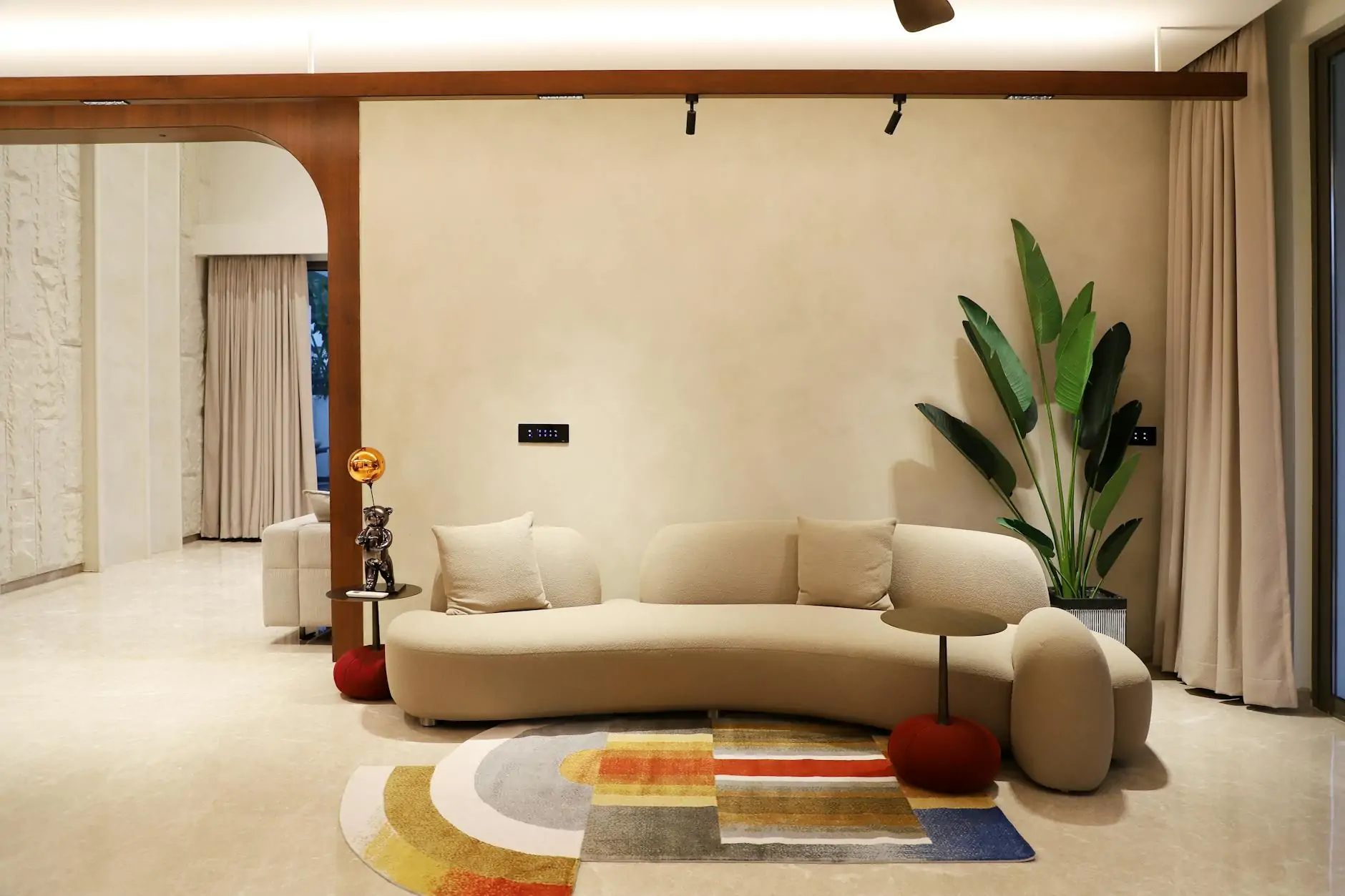
Organic modern interior design: clean lines softened by natural materials.
Organic modern interior design is what happens when contemporary discipline meets natural warmth. Where a strictly modern room can feel cold and a fully bohemian one can feel busy, organic modern lives at the intersection — clean architectural lines softened by curved silhouettes, natural materials, and earth-toned palettes. It is the look that has quietly taken over Pinterest in the last five years, and it has staying power because it solves a real problem: how to live with modern design without losing the comfort.
What Is Organic Modern Interior Design?
Organic modern is a hybrid style that pairs the simplicity of mid-century modern and contemporary design with the texture and warmth of natural materials. The hallmarks are clear once you know what to look for: curved sofas in linen or bouclé, travertine and oak surfaces, sculptural lighting, and a palette pulled from sand, stone, and warm wood. Nothing in the room shouts; everything in the room is built to last.
The style’s appeal is partly philosophical. After a decade of all-white minimalism and another of black-and-brass industrial design, homeowners began craving warmth without losing the discipline of modern lines. Organic modern is the answer — and unlike many trends, it has roots in materials and craftsmanship that will look beautiful long after the social media moment passes.
The Core Elements
Five elements show up in nearly every organic modern room. Once you can spot them, designing the look becomes much easier.
- Curved silhouettes. Sofas, chairs, and even coffee tables lean into soft, rounded forms instead of sharp angles.
- Natural materials. Solid wood, stone, linen, bouclé, leather, and ceramic are dominant; chrome, glossy plastics, and high-gloss paint are rare.
- Earth-tone palette. Warm whites, cream, oat, mushroom, terracotta, soft black, and pale wood.
- Sculptural lighting. Plaster pendants, wood-and-paper floor lamps, and carved alabaster wall sconces.
- Architectural simplicity. Clean lines, generous negative space, and minimal trim.
Materials That Define Organic Modern
Materials do most of the work in this style. The right choices here will carry a room even if the rest of your styling is modest.
Travertine has become the signature stone of organic modern. Its warm, pitted texture and creamy tone read both ancient and contemporary. It shows up as coffee tables, side tables, plinths, and occasionally fireplaces. Travertine pairs beautifully with bouclé, oak, and linen.
Bouclé is the textile of the moment for organic modern interiors. Its looped, slightly irregular surface adds visual interest without adding pattern, and it photographs as well as it lives. Cream, oat, and pale beige are the dominant colors; chocolate and charcoal show up as accents.
Solid oak and white oak are the wood tones of choice. Walnut shows up for contrast — usually as a single dining table or media console — but oak dominates. Avoid heavily stained or red-toned woods; the look is built around pale, warm wood that matches the natural palette.
Linen and cotton handle the upholstery and textile work that bouclé does not. Heavy linen on sofas, washed cotton on bedding, and rougher linen blends on pillows give the room dimensional softness.
Plaster and limewashed walls appear frequently in higher-end organic modern interiors. The slight surface variation reads beautifully against curved furniture and natural wood.
The Organic Modern Color Palette
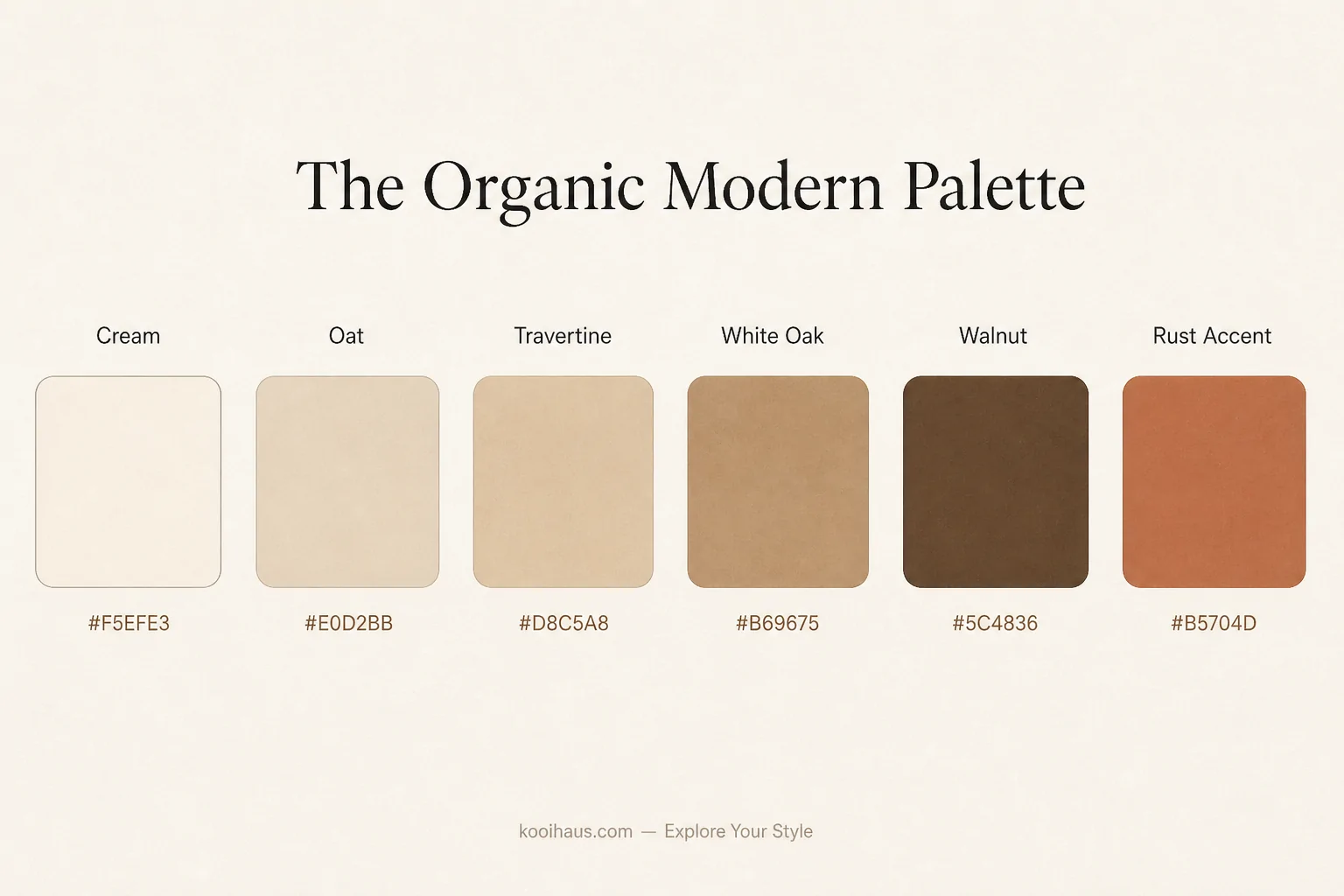
The palette is built on warm neutrals, with restrained accent colors taken from the natural world. A typical organic modern room uses three to four colors total: a warm white wall, a cream or oat upholstery tone, a wood tone, and one accent.
Common accent colors include rust, terracotta, soft sage, warm taupe, and the occasional black-brown. Bright colors and cool grays do not belong in this style — they fight the warmth that defines it. If you want to add color, take it from a desert sunset or a foggy beach, not a paint chip showroom.
Furniture for an Organic Modern Home
The furniture choices are surprisingly specific. A few pieces are essentially required:
- A curved sofa in cream, oat, or warm beige bouclé or linen.
- A round or oval coffee table in travertine, white oak, or cream lacquer.
- A solid wood dining table with a clean edge and tapered or pedestal base.
- A sculptural accent chair — a Pierre Jeanneret-inspired piece, a Wishbone chair, or a curved bouclé lounge chair.
- A wood-toned media console in oak or walnut, with simple horizontal slats or solid panels.
Avoid hard-edged tufted leather sofas, ornate carved furniture, and anything in glossy lacquer or chrome. The silhouettes should look like they were made to be touched.
Lighting in Organic Modern Interiors
Lighting is where organic modern gets sculptural. Plaster pendants — Apparatus, Allied Maker, and many independent makers offer them — have become a signature of the style. Floor lamps in wood and paper, alabaster wall sconces, and large-scale linen drum pendants are also typical.
The unifying quality is that every fixture looks like an object in its own right, not a delivery vehicle for light. Skip the spotlights and recessed cans (or use them sparingly as accent layer) and lean on visible, characterful fixtures instead.
Bringing Organic Modern Into Each Room
The living room is where the style usually starts. Anchor with a curved bouclé sofa, a round travertine coffee table, and a sculptural wood floor lamp. Add a wool or jute rug in oat or cream, a single piece of large-scale art, and one curved accent chair. Resist filling the room — organic modern lives in the space between things.
The dining room rewards a single decisive move: a solid oak round or oval table with three to six wishbone or curved-back chairs, lit by an oversized linen drum pendant. Add a single ceramic or wood centerpiece and stop.
The bedroom benefits from a low platform bed, an upholstered headboard in linen or bouclé, and two matching nightstands in white oak. Bedding in stonewashed linen and a single sculptural pendant or sconce on each side is enough.
Kitchens lean into the materials. White oak cabinets, travertine or marble counters, plaster range hoods, and unlacquered brass hardware all read organic modern. Open shelving with hand-thrown ceramics and a wooden cutting board completes the look.
Common Mistakes to Avoid
The first mistake is treating organic modern like a shopping list. Buying a bouclé chair, a travertine table, and a plaster pendant does not give you the style if the room is still cluttered, lit harshly, or painted in cool grays. The whole environment has to support the pieces.
The second mistake is overdoing the curves. Organic modern uses curves to soften modern lines, not to replace them. A room with a curved sofa, a curved chair, a curved table, a curved mirror, and curved lighting starts to look unintentionally cartoonish. Mix at least one cleaner-lined piece into every room.
The third mistake is going too neutral. A room with cream walls, cream upholstery, cream rug, and cream wood reads flat in person — even if it photographs well. Always add at least one moment of contrast: a darker wood console, a soft black floor lamp, a textured terracotta vase.
Organic Modern vs. Other Styles
Organic modern overlaps with several adjacent styles. Compared with Japandi, organic modern is slightly more polished, more curve-forward, and uses more stone and bouclé. Japandi leans into linen, paper, and lower silhouettes.
Compared with quiet luxury, organic modern uses a more natural palette and more sculptural lighting; quiet luxury uses richer materials (cashmere, marble, leather) and more refined silhouettes.
Compared with coastal luxe, organic modern is warmer and more sculptural; coastal luxe leans cooler and more breezy.
The styles can be mixed, especially at home. Most real-life organic modern rooms borrow from at least one neighbor.
Frequently Asked Questions
Is organic modern an expensive style?
It can be, but it does not have to be. The signature pieces (travertine tables, bouclé sofas, plaster pendants) are now made at every price point. A patient buyer can build the look at IKEA-Castlery prices over a year or two.
Does organic modern work in small apartments?
Especially well. The neutral palette and curved silhouettes make small spaces feel softer and larger. Skip oversized pieces and lean into one or two sculptural anchors.
Can I mix organic modern with mid-century modern?
Yes — the two styles are close cousins. A mid-century walnut credenza or a Wishbone chair fits a fully organic modern living room without friction.
What is the most important piece for the look?
The sofa, hands down. A curved bouclé or linen sofa anchors the entire style. Get this right and the rest of the room follows easily.
Is organic modern a fad?
The label may fade, but the underlying ideas — curved silhouettes, natural materials, warm neutrals, sculptural lighting — are not new. They have shown up in design for decades and will be around long after the trend cycle moves on.
Organic modern interior design is one of the most livable styles to emerge in recent years because it does not ask you to choose between warmth and discipline. Choose your materials carefully, lean on curves to soften modern lines, and resist the urge to over-decorate. The result is a room that looks beautiful, ages gracefully, and never asks for a complete redo a year later.
Take the Quiz
Not sure if organic modern is really your thing? Take our Interior Style Quiz and find out which interior style fits your home, your habits, and the way you actually live.











 Blankets and Throws
 Home Accessories
 Furniture
 Rugs
Rugs Cushions
 Kitchen
 Cutlery and Dinnerware
 Drinkware
 Table Mats and Coasters
 Dining Accessories
 Tablecloths and Napkins
 Decorative Items
 Vases and Planters
 Wall Decor
 Bathroom Accessories
 Bathroom Storage
 Bath and Shower Mats
 Towels