FREE WORLDWIDE TRACKED SHIPPING
The Beach Escape That Was Built in Someone’s Backyard
 By Alex Carter
A self-contained tiny home shaped by natural timber, warm textures, and compact design shows how small-space living can feel calm, generous, and deeply connected to its setting
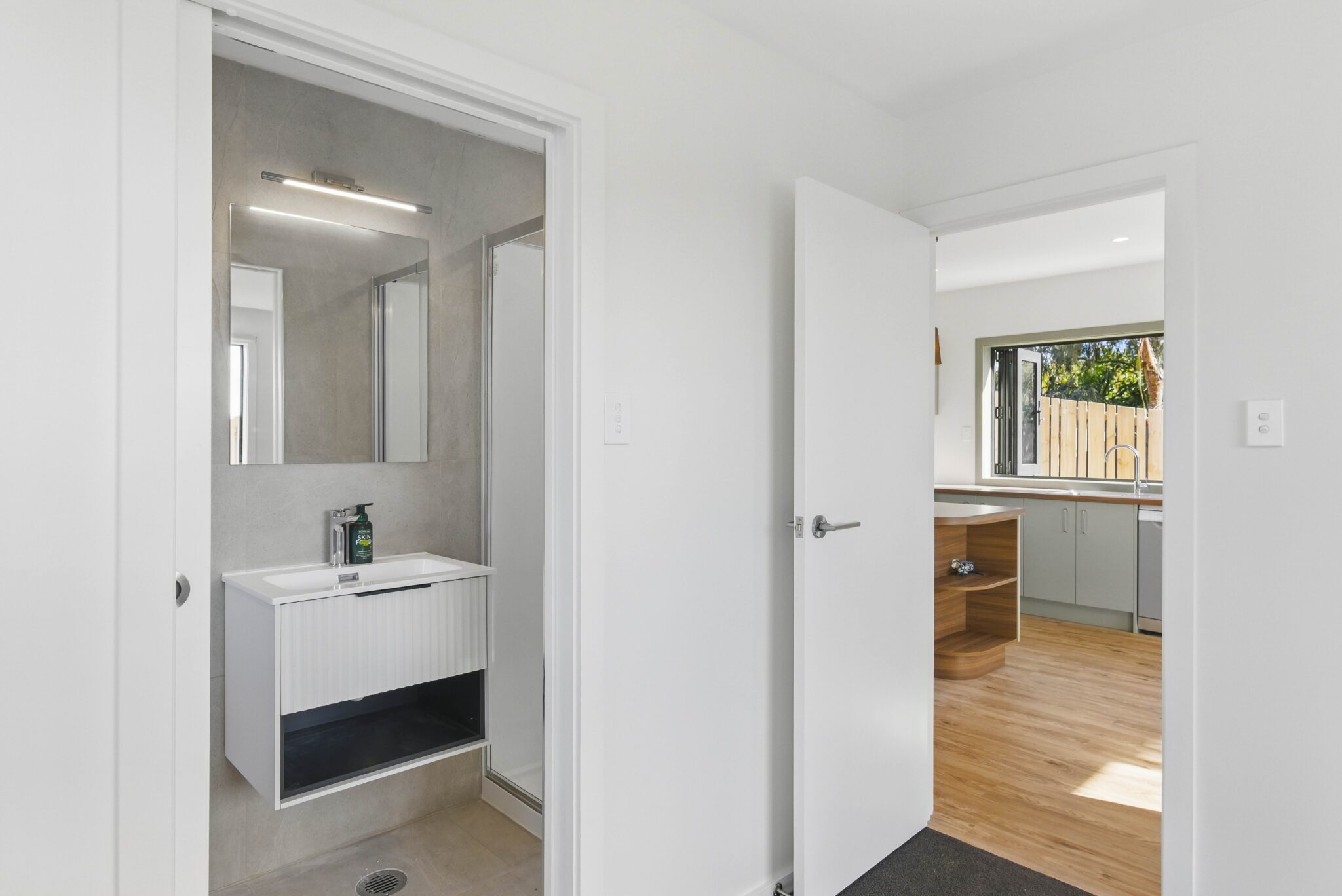
How a patch of scrub on the Kāpiti Coast became one of the most considered small homes we’ve seen.
Some homes do not announce themselves. They sit quietly, slightly hidden, and let the atmosphere do the work.
This small home sits at the rear of an existing coastal property, tucked away from the street and softened by the slower rhythm of its surroundings. It is the kind of place that feels less like an addition and more like something that has found the right corner to belong to.
The project, designed and built by Keen Builders, is a self-contained tiny home on the Kāpiti Coast. From the first structural decisions to the final timber finishes, the build seems guided by a simple question: how should this place feel to live in?
Starting From Nothing, Literally
Before any of the considered details existed, there was dense scrub. No easy access. No level ground. No services ready to connect.
The site had to be cleared, an access path created, earthworks completed, and power, water, and drainage connected before a single wall frame could go up. It is the unglamorous stage of building that rarely appears in finished photographs, but it is also the part that determines whether a small home will feel settled or forced.
Fourteen weeks later, there was a home.
The Design: Small on Footprint, Big on Feeling
The brief was deliberately restrained: low visual impact, privacy from the street, and a quiet relationship with the existing property. No oversized gestures. No attempt to make a tiny home behave like a large one.
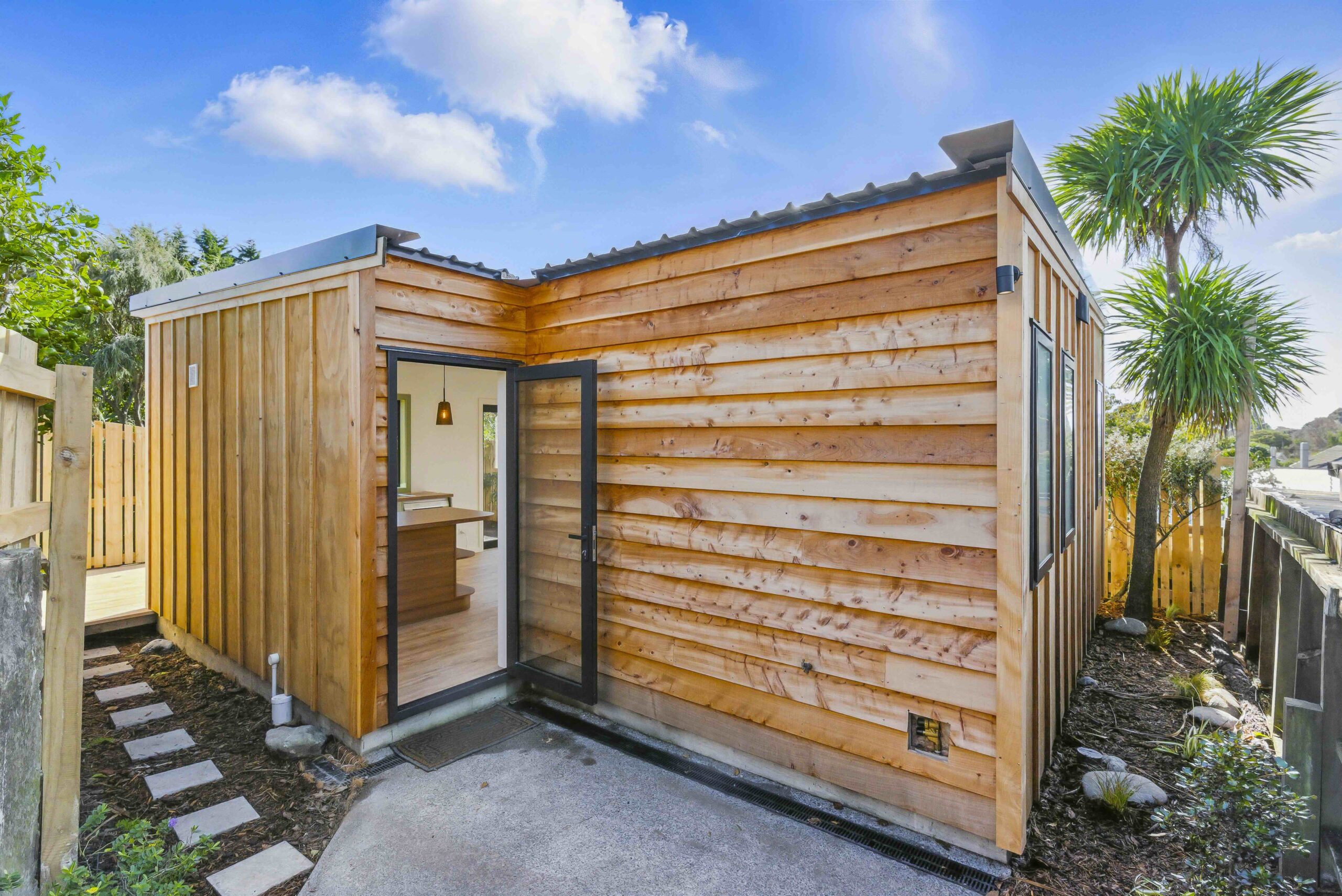
That restraint is what gives the project its charm. The exterior sits modestly within the section, with weatherboard cladding in tones that echo the natural coastal palette. A simple roofline keeps the form calm, while a small deck extends the interior outward without overwhelming the site.
Inside is where the warmth lives.
Natural Timber: The Material That Does Everything
Natural timber is the defining material of the interior, and it carries much of the emotional weight of the home. In a compact space, that matters. Materials are not just decorative; they decide whether a room feels tight, flat, and temporary, or warm, grounded, and complete.
Throughout the interior, exposed timber brings texture and softness to what could easily have become a cold, efficient box. Tongue-and-groove ceilings draw the eye upward and make the rooms feel taller than their dimensions suggest. Timber joinery, including shelving, cabinetry, and window surrounds, adds a hand-crafted quality that standard finishes rarely achieve.
The effect is immediate. The space feels considered, tactile, and already lived in, even before anyone has properly settled into it.
This is what natural materials do well in small homes. They absorb light rather than simply reflect it. They create depth without clutter. They make compact living feel intentional rather than compromised.
The Kitchen: Compact and Complete
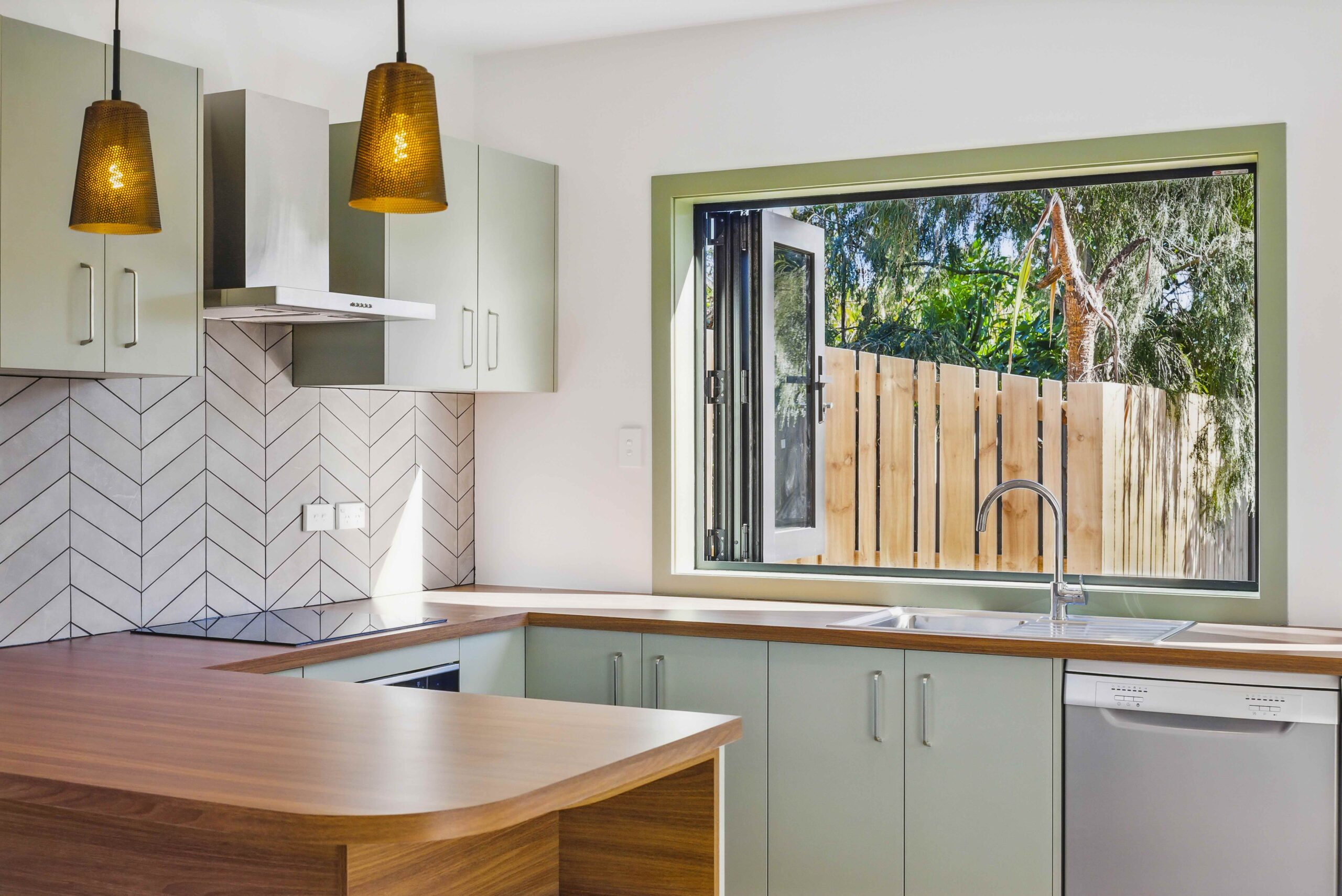
Small-space kitchen design is one of the more underestimated disciplines in residential interiors. There is almost no margin for error. Every centimetre of bench space, every drawer position, and every choice of handle or splashback tile either supports the room or quietly works against it.
This kitchen manages the balance well. Timber-faced cabinetry keeps the warmth consistent with the rest of the interior. Open shelving above the bench avoids the boxed-in feeling that upper cupboards can create in a tight space. The layout is clean and efficient, with clear sight lines, everything within reach, and little sense of wasted movement.
It is a kitchen designed for someone who wants to cook properly, not apologise for the size of the room.
Light, Privacy, and Indoor-Outdoor Flow
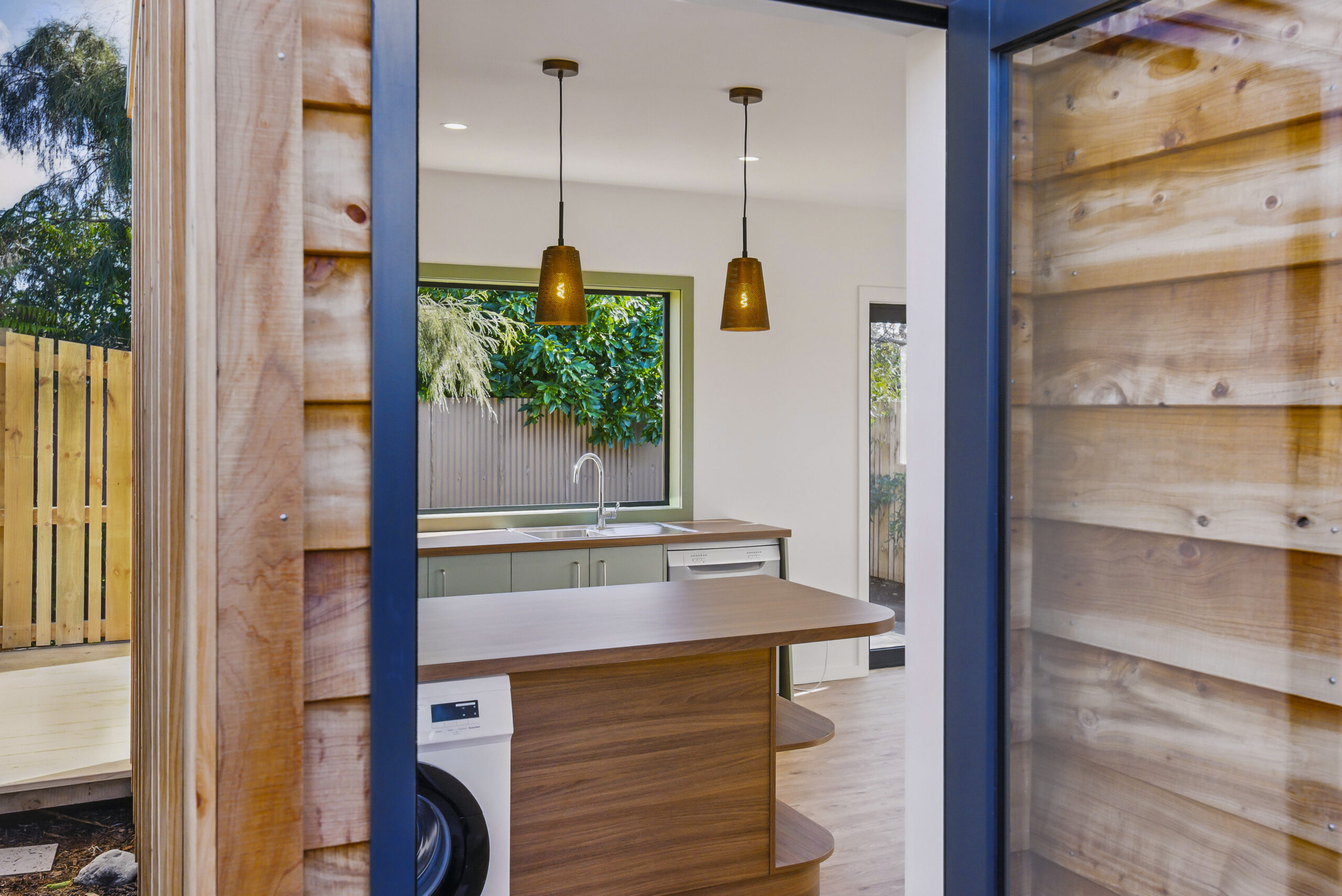
One of the defining challenges of a rear-section build is managing light and outlook without sacrificing privacy, both for the new dwelling and for the existing home it shares the property with.
Here, the positioning feels deliberate. Windows bring in natural light while avoiding the sense of being exposed. The deck faces away from the main house, creating a private outdoor extension that feels separate without feeling isolated.
This kind of indoor-outdoor flow is especially important in tiny home design. When the exterior space is treated as part of the living experience, the home feels larger without needing to become larger.
A Home Shaped by Its Setting
The best small homes are not simply scaled-down versions of larger ones. They are more precise than that. They understand what can be reduced, what must be protected, and which materials need to carry more than one role.
Here, the natural timber, quiet exterior, compact deck, and simple spatial planning all point in the same direction. The home is not trying to impress through size. It is trying to feel calm, useful, and appropriate to its setting.
That is what makes the design interesting. It feels shaped by the site rather than imposed on it.
The Details That Make the Difference
A few details stand out for anyone interested in compact interiors and natural materials:
- Oiled timber joinery: Rather than relying on painted cabinetry, natural-finish timber keeps the palette honest and gives the main touch points a warmer, more tactile quality.
- Integrated deck: Designed as an extension of the living space rather than an afterthought, the deck effectively expands the usable footprint on good days.
- Material consistency: The same restrained palette carries through the home, helping the small footprint feel calm rather than busy.
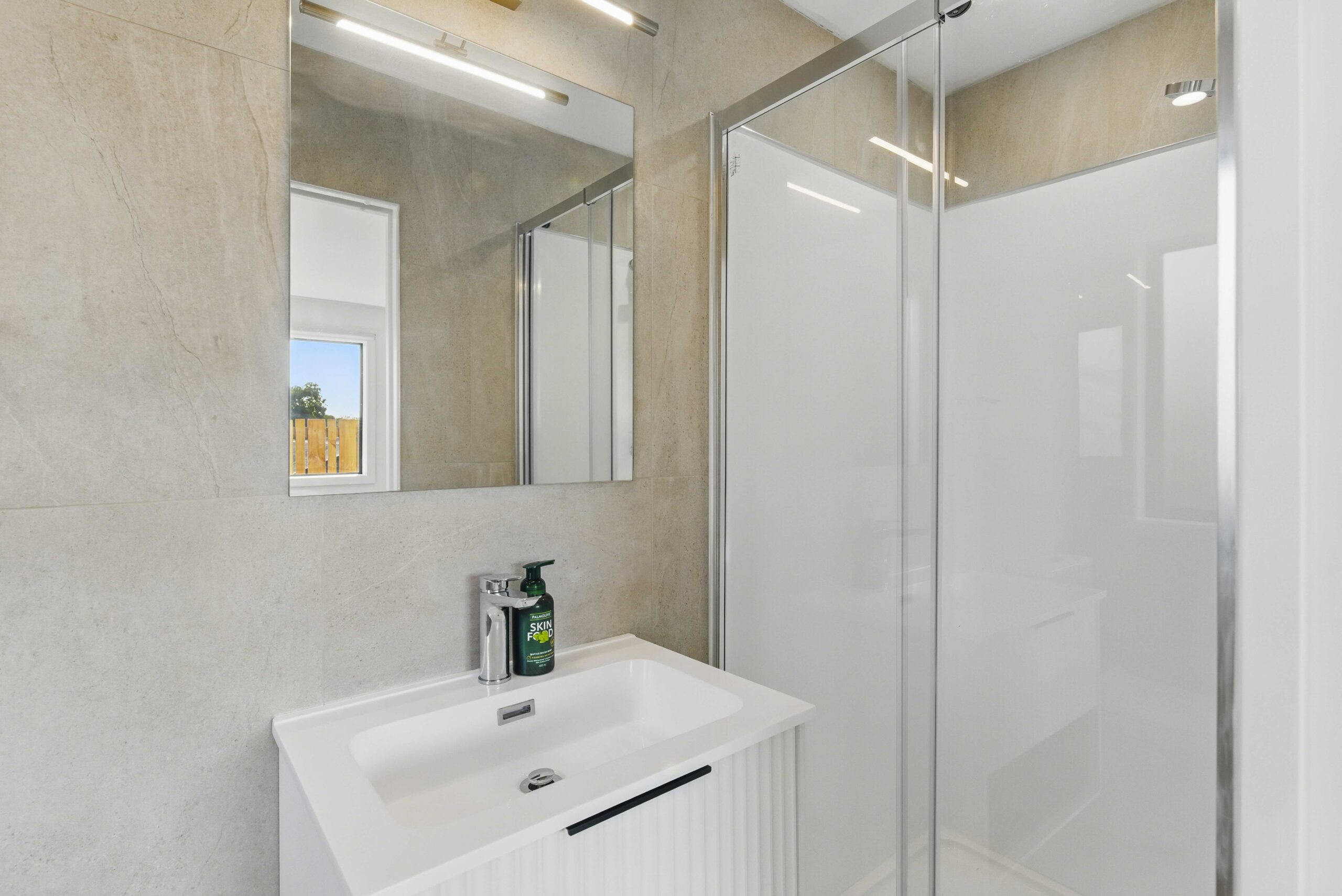
- Compact functionality: The kitchen, bathroom, sleeping area, and living space all work as part of one coherent environment rather than as separate, competing zones.
Built for Staying In
The dwelling operates as a short-stay rental, but the design avoids the transactional feeling that can sometimes come with accommodation interiors. The layout is generous enough for a slower stay. The kitchen is properly equipped. The bathroom is full-size. The bed has a view.
More importantly, the space feels like a home rather than a product. That is not easy to design, especially at a small scale.
By keeping the palette warm, the footprint efficient, and the material choices honest, this tiny home shows how compact living can feel generous when the design decisions are made carefully.











 Blankets and Throws
 Home Accessories
 Furniture
 Rugs
Rugs Cushions
 Kitchen
 Cutlery and Dinnerware
 Drinkware
 Table Mats and Coasters
 Dining Accessories
 Tablecloths and Napkins
 Decorative Items
 Vases and Planters
 Wall Decor
 Bathroom Accessories
 Bathroom Storage
 Bath and Shower Mats
 Towels