FREE WORLDWIDE TRACKED SHIPPING

The living room is where Japandi design really gets to show what it’s made of. It’s the space where you spend the most time, where people gather, and where the temptation to accumulate things is strongest. Japandi’s answer to all of that is a room that’s deeply considered rather than fully furnished — where every sofa, every shelf, every lamp is there because it earns its place, not because it filled a corner. The result is a living room that feels spacious, grounded, and genuinely calming to spend time in.
The Core Principles of a Japandi Living Room
Japandi draws from two design traditions that share more than they differ. Japanese wabi-sabi embraces imperfection and the passage of time — a worn leather cushion, a handmade ceramic bowl, a knot in the wood of a coffee table. Scandinavian hygge brings coziness and light-focused practicality into cold climates. Together they create a living room aesthetic that values quality over quantity, warmth over sleekness, and calm over stimulation.
The practical translation of these principles: a Japandi living room has fewer, better pieces. It uses a tightly edited color palette anchored in nature. It prioritizes natural materials above all else. And it maintains what Japanese designers call ma — negative space, the deliberate emptiness that gives a room room to breathe.
Japandi Living Room Color Palette
Color in a Japandi living room is quiet by design. You’re not making a statement — you’re creating a backdrop that lets the natural materials and the people in the room do the talking.
| Color | Best Use | Effect |
|---|---|---|
| Warm white / linen white | Walls, ceiling | Opens the space, reflects warm light |
| Warm grey / taupe | Sofa, rug, large textiles | Grounding without feeling heavy |
| Natural wood tones (light to medium) | Coffee table, shelving, flooring | Warmth and organic texture |
| Charcoal / deep slate | Accent cushions, lamp base, small objects | Quiet contrast and definition |
| Sage / moss / dusty terracotta | Throw blankets, cushion covers, plants | Nature-reference accent, muted not bold |
One practical rule: limit your palette to three base colors plus one or two accent tones. If you can’t stand in the room and name every color within a few seconds, you have too many. The palette should feel unified enough that any piece could be moved to another corner without looking out of place.
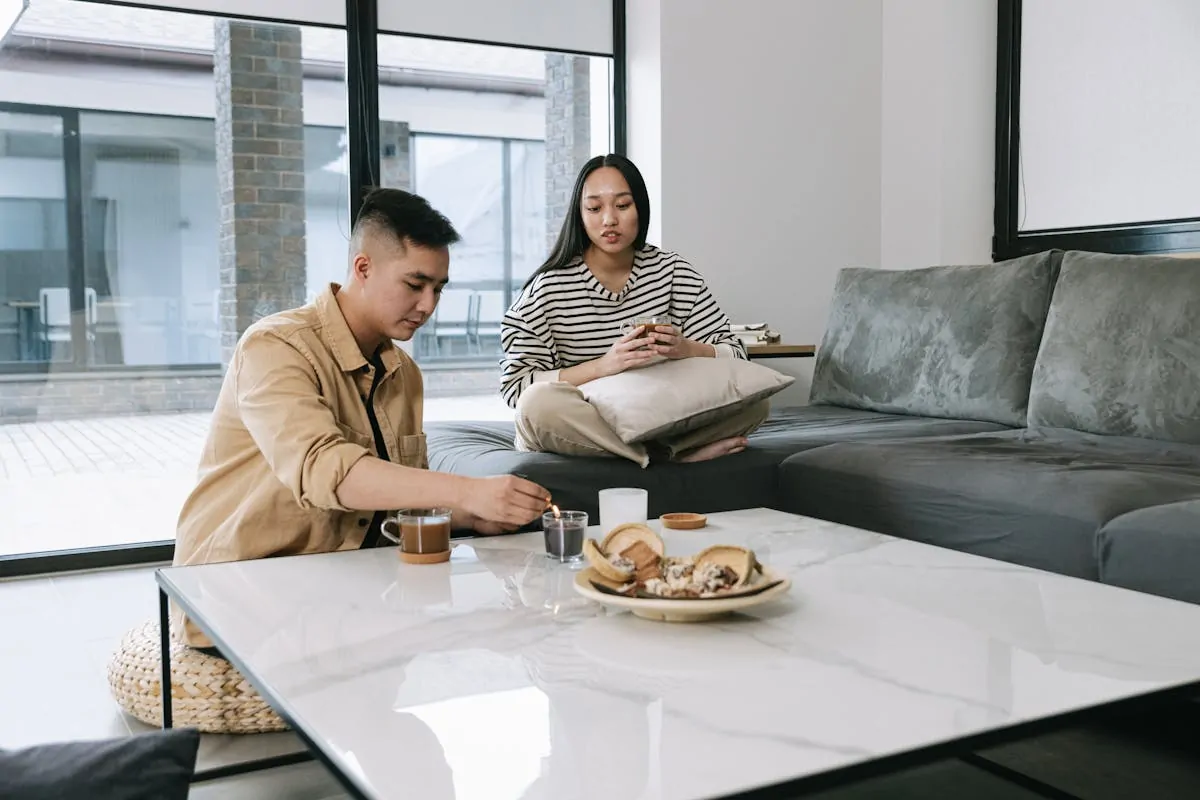
Japandi Living Room Furniture: What to Choose
Japandi furniture sits low, is built simply, and is made of natural materials. Think Shaker-meets-Nordic: clean lines, no ornate carving, no decorative legs, no upholstery that comes in more than two or three color options.
| Piece | Japandi Characteristics | What to Avoid |
|---|---|---|
| Sofa | Low profile, clean arms, linen or bouclé in warm neutral | Sectionals, tufting, bright colors, microfiber |
| Coffee table | Solid wood, simple rectangular or round form, low | Glass tops, ornate legs, lacquer finishes |
| Shelving | Open or closed, warm wood, minimal — max 2/3 full | White laminate, overloaded shelves |
| Accent chairs | Single chair in natural upholstery, simple wood frame | Overstuffed club chairs, bright upholstery |
| Floor cushions / poufs | Linen or cotton, neutral, used instead of extra seating | Leather poufs, geometric patterns |
One of the most distinctive features of Japandi living rooms is low furniture. A sofa with a seat height of 14-16 inches (instead of the standard 18-20) changes the entire energy of a room — it feels more grounded, more intimate, and more intentionally Japanese. If replacing furniture isn’t in the budget, a simple low-profile coffee table paired with floor cushions can shift the visual center of gravity considerably.
Textiles and Layering
Japandi living rooms are warm, not stark. Textiles are where warmth comes from — and where most people either under-do or over-do it.
A natural-fiber rug is essential. Jute, sisal, wool, or a woven cotton flat-weave in a natural, undyed tone or subtle pattern. The rug should be large enough that the front legs of the sofa and chairs rest on it — a rug that floats in the middle of the room looks unmoored. For a standard living room, err toward 8×10 feet rather than 5×8.
On the sofa: one or two quality linen or cotton cushions in muted tones. A single throw blanket folded (not artfully draped — folded) over one arm. That’s enough. The styling photographs that show six cushions and three throws are edited for aspiration, not for how people actually live.
For a full guide to choosing throw blanket sizes that actually work with your furniture dimensions, our throw blanket size guide covers the specifics. And if you’re building out a cozy reading corner, our complete blanket sizes chart can help you choose the right dimensions.
Lighting: Japandi Living Room Ambiance
Lighting is where a Japandi living room succeeds or fails. Overhead lighting alone — especially a single ceiling fixture — makes any room feel flat and institutional. Japandi living rooms use multiple light sources at different heights to create pools of warm light rather than uniform illumination.
A floor lamp in the corner. A table lamp on a side table or shelf. Perhaps a pendant over the coffee table if ceiling height allows. All of these should use warm-toned bulbs (2700K-3000K) rather than cool daylight bulbs. The difference is enormous — warm light makes wood glow and makes linen look rich; cool light makes everything look slightly grey and clinical.
Paper or fabric shades work better in Japandi rooms than metal shades. A Japanese-style paper pendant (like the classic Noguchi Akari series) is a natural fit and diffuses light beautifully. For calculating how much light your living room actually needs, our lighting calculator can give you a precise lumen count based on room dimensions.
Candles are worth mentioning as a lighting element in their own right. Hygge — the Scandinavian philosophy of coziness — considers candles essential. A few pillar candles on a wooden tray, or a single taper in a ceramic holder, contributes more to evening atmosphere than any pendant fixture.
Plants and Natural Elements
Plants in a Japandi living room are not a trend — they’re structural. They introduce living imperfection, movement, and connection to the natural world that no manufactured object can replicate. But the selection and placement are everything.
One large statement plant — a fiddle leaf fig, a bird of paradise, a mature monstera — in a simple terracotta or ceramic pot, floor-level in a corner. One or two smaller plants on shelves. That’s the template. Three large plants becomes a jungle; five small plants on windowsills becomes a hobby. The Japandi approach is deliberate: fewer plants, better positioned, in more beautiful vessels.
Beyond plants: a stone or concrete tray on the coffee table with a single candle and perhaps a found stone or a piece of driftwood. A ceramic bowl. A stack of two or three design books. These are the kinds of objects that pass the Japandi test: natural material, simple form, some evidence of craft.
What to Remove from Your Living Room
Japandi design often involves subtraction as much as addition. Before buying anything new, consider what’s already in the room that’s working against the aesthetic.
- Decorative objects that don’t have a story — the vase from a discount store, the tray that accumulated because something needed to go there, the framed print that’s been there since you moved in.
- Visible cables and electronics — TV cables and power strips should be managed. The TV itself can be Japandi-compatible (a simple black rectangle on the wall), but the tangle around it cannot.
- Too many cushions — if you have to move cushions to sit down, you have too many cushions.
- Furniture that doesn’t fit the scale of the room — an oversized sofa in a small room, or multiple pieces fighting for the same space, works against the sense of ma.
- Overhead lighting as the only light source — this is the single most impactful change you can make with the least money.
Frequently Asked Questions
What is Japandi living room style?
Japandi living room style combines Japanese wabi-sabi aesthetics with Scandinavian hygge principles to create a space that’s calm, warm, and uncluttered. It uses natural materials, a muted earthy color palette, low-profile furniture, and deliberate negative space.
What furniture works best in a Japandi living room?
Low-profile sofas in linen or bouclé, solid wood coffee tables with simple lines, open or closed wood shelving kept no more than two-thirds full, and one or two natural-upholstered accent chairs. Avoid tufting, ornate legs, glass tops, and anything in synthetic materials.
What colors should a Japandi living room be?
Warm whites and linens for walls, warm grey or taupe for large upholstery, natural wood tones throughout, charcoal for small accents, and one or two muted nature-inspired tones (sage, dusty terracotta, moss) as accent colors in textiles.
How do I make a small living room look Japandi?
Choose low-profile furniture to keep sightlines open, limit furniture to only what’s needed, use a large natural-fiber rug to anchor the space, maximize natural light, and keep surfaces clear. Japandi’s emphasis on negative space works in favor of small rooms rather than against them.
How many plants should a Japandi living room have?
One large statement plant on the floor and one or two smaller plants on shelves or surfaces is the right range. The goal is a deliberate, curated relationship with nature — not a maximalist plant wall. Quality of placement matters more than quantity.
Is Japandi the same as minimalism?
Not quite. Minimalism can be cold and purely functional. Japandi is warm minimalism — it reduces visual clutter but adds back sensory warmth through wood, stone, linen, candlelight, and living plants. It’s about what you include as much as what you remove.
Creating a Japandi living room is ultimately about trusting the space you reveal when you remove what doesn’t belong. Start with one edit — clear a shelf, replace a bright cushion with a linen one, add a floor lamp — and notice how the room responds. The principles are simple; the practice gets easier with each decision. For more design inspiration across your home, explore our Japandi bedroom ideas and Japandi bathroom ideas guides.
KŌŌI / KŌŌI Magazine / Living Room Decor Ideas / Japandi Decor Ideas /


Outdoor Oasis: How to Create a Stunning Patio or Garden Retreat
Your outdoor space has the potential to become a breathtaking oasis where you can escape the hustle and bustle of


The Role of Rugs in Creating a Cozy, Inviting Living Room
Hard surfaces read as open and active, which can leave a living room feeling unfinished. A rug softens the space, quiets the room, and gives the seating area a clear sense of purpose.

What is Hygge Style? Embracing Cozy, Minimalist Living
What is hygge style? Discover how to create my cozy, minimalist haven with warmth and charm!

What Makes Modern Interior Doors Look Clean and Timeless
Modern interior doors can transform a space with clean lines and timeless design. Discover styles, materials, and ideas for choosing the perfect doors for your home

Home Checks to Prevent Water Damage Year-Round
Water damage often begins with small failures in roofing, drainage, plumbing, or exterior sealing. Routine inspection helps identify vulnerabilities before moisture causes structural deterioration

Sustainable Home Care: The Proactive Guide to Extending the Life of Your Interior Furniture
A practical guide to furniture maintenance and sustainable home care, with smart tips to extend the life of upholstery and interior furniture.








 Blankets and Throws
 Home Accessories
 Furniture
 Rugs
Rugs Cushions
 Kitchen
 Cutlery and Dinnerware
 Drinkware
 Table Mats and Coasters
 Dining Accessories
 Tablecloths and Napkins
 Decorative Items
 Vases and Planters
 Wall Decor
 Bathroom Accessories
 Bathroom Storage
 Bath and Shower Mats
 Towels