FREE WORLDWIDE TRACKED SHIPPING
The Silent Bathroom: How ‘Visual Noise’ is Disappearing from Modern Interiors
 By Alex Carter
Modern bathrooms use seamless design and minimalism to create calm, distraction-free spaces
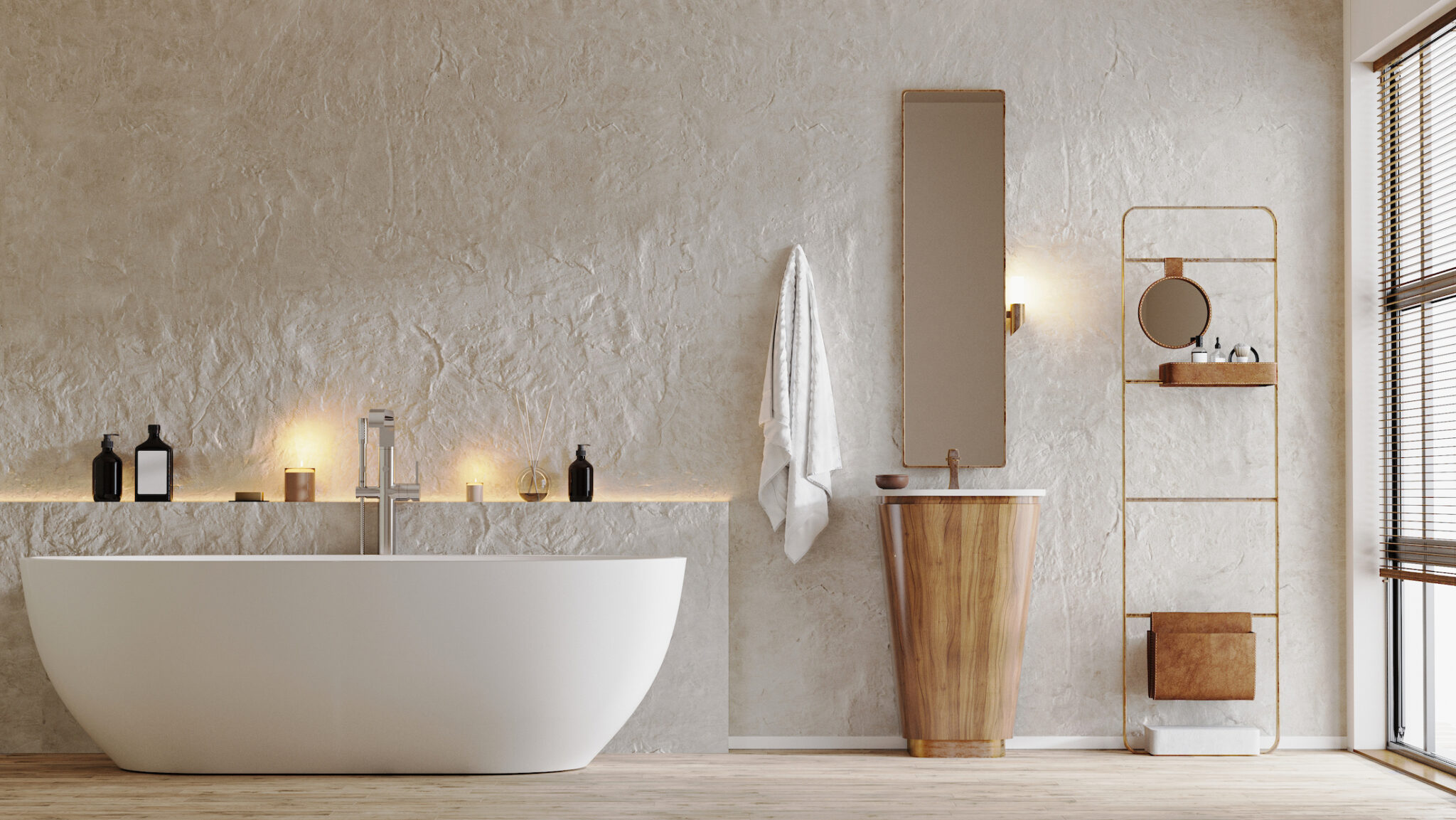
The modern home is changing. Quietly. As our daily lives become increasingly saturated with high-definition screens, persistent notifications, and a constant influx of digital input, our private spaces are beginning to serve a new, vital purpose: restoring mental clarity. We are seeking environments that don’t demand our attention, but rather, allow us to reclaim it. Nowhere is this shift more obvious than in contemporary bathroom design.
Once viewed as a purely functional room defined by utility and porcelain fixtures, the bathroom is evolving into a profound place of retreat. It’s no longer just about the placement of hardware or the efficiency of a floor plan. Instead, it’s about how a space feels at the moment of use—the tactile sensation of a surface, the way light hits a corner, and the deliberate absence of clutter. Designers call this concept “visual silence.” It is a philosophy where unnecessary details are stripped away, leaving a calmer, more intentional environment. Not everyone notices the engineering behind it at first, but the sense of immediate sensory relief when you step inside is undeniable.
The Fluidity of Seamless Surfaces
One of the major shifts in achieving this silence is the move toward seamless surfaces. For decades, traditional bathroom vanities were treated as a collection of disparate parts—a ceramic basin dropped into a stone or wood countertop, joined by visible edges, metal rims, or lines of sealant. These lines were more than just functional requirements; they created small, constant visual breaks. In the vocabulary of modern architecture, these are recognized as “visual noise.” They draw the eye to the joints rather than the form.
Not long ago, we simply accepted these seams as an inevitable part of the structure. Today, however, advanced material science is eliminating them altogether. Through sophisticated bonding techniques, it is now possible to create vanities where the basin and countertop flow as a single, continuous surface.
The eye can move freely across these forms without hitting a seam or an interruption. The room feels bigger, softer, and inherently calmer. Imagine running your hand along a smooth countertop with perfectly seamless joints—the tactile continuity reinforces a sense of order and tranquility. In short: it’s not just an aesthetic choice. It is a sensory one that fundamentally affects how you experience the privacy of your home.
Invisible Intelligence: When Technology Steps Back
Modern bathrooms are also expected to be smart, but the challenge for 2026 is to integrate technology without breaking the visual spell of the room. The goal is no longer to have “gadgets” in the bathroom, but to achieve smart integration—technology that is felt through its service, but never seen through its hardware.
Instead of visible switches, bulky control panels, or protruding sensors, intelligence is now embedded directly within the materials. Consider entering a bathroom at dawn. The room is still dim, yet the surfaces seem to recognize your presence through microwave induction sensors hidden beneath the vanity’s skin. Lighting shifts gently, providing a soft, ambient path that guides your steps without the jarring glare of traditional bulbs.
Every interaction is intuitive, almost ritualistic. Lighting follows the body’s natural rhythms, glowing and fading as you move. This is the essence of subtle technology: it works perfectly behind the scenes, but it doesn’t shout for recognition. It allows the inhabitant to remain in a state of flow, undisturbed by the “tech” itself.
A Warmer Material Language
Minimalism has often suffered from a reputation of being cold or clinical—more like a laboratory than a sanctuary. The new wave of design challenges that stereotype by introducing a much warmer, more organic material language.
Muted apricot tones paired with deep, matte carbon hues strike a perfect balance between architectural weight and domestic comfort. In this environment, precision surfaces feel human, not sterile. Textures are chosen for the way they diffuse light gently, creating a layered environment that is both precise and comforting. The bathroom remains clean, but it is no longer empty.
Designers emphasize that “visual silence” is not about emptiness; it’s about intentional absence. Every line, material choice, and lighting decision is made to enhance flow and reduce distraction. By removing these interruptions, the mind can rest. Simple daily rituals—like washing your hands or the quiet moments of a skincare routine—become subtly more mindful and grounded.
The Hidden Complexity Behind Simplicity
What seems effortless to the user is, in reality, incredibly complex to produce. Achieving those perfectly seamless joints or the careful integration of hidden technology within a slim vanity profile requires a level of extreme precision that traditional methods simply cannot reach. Most people won’t even notice the technical accuracy—but that craftsmanship is what makes the “silence” possible.
Bringing these ambitious designs to life on a global scale often relies on partnering with a specialized manufacturer—sometimes referred to in the industry as a China Bathroom Vanity Manufacturer—which possesses the advanced capabilities needed for high-precision work. By mastering the material bonding and the protective housing of internal components, these facilities have become the silent partners of modern design. Their ability to standardize such high-level craftsmanship allows the “visual silence” we see in high-end projects to become a durable, functional reality. It is this marriage of massive manufacturing capability and an obsession with material science that allows the quiet logic of a minimalist sanctuary to become a tangible, everyday reality.
Returning to Quiet
After all the meticulous material choices and hidden tech integrations, the result is not just a room—it is an experience that unfolds with every step. The bathroom is shifting from a collection of parts to an organic, holistic whole. The goal isn’t simply to remove elements for the sake of empty space, but to refine them until only the essentials remain. When seams disappear, when technology recedes, and when colors harmonize, the space stops demanding your constant attention.
Across contemporary interiors, this focus on seamlessness and subtle technology reflects a broader trend: spaces that prioritize the human experience over visual display. Bathrooms are now at the forefront of a quiet revolution in home design, where calm, thoughtful architecture is valued above showy, complicated detail.
In the end, the best designs don’t call attention to themselves. They let quiet, clarity, and comfort do the talking. Step inside, and the room simply works—without interference, without distraction. Every morning begins gently, and every night closes peacefully. In these spaces, minimalism and warmth coexist, proving that silence can be the ultimate luxury of the modern age.











 Blankets and Throws
 Home Accessories
 Furniture
 Rugs
Rugs Cushions
 Kitchen
 Cutlery and Dinnerware
 Drinkware
 Table Mats and Coasters
 Dining Accessories
 Tablecloths and Napkins
 Decorative Items
 Vases and Planters
 Wall Decor
 Bathroom Accessories
 Bathroom Storage
 Bath and Shower Mats
 Towels