FREE WORLDWIDE TRACKED SHIPPING

Few chairs have earned a place in both design history and modern living rooms quite like the Wassily Chair. Created in 1925 by Marcel Breuer at the Bauhaus school in Dessau, this tubular steel icon looks as radical today as it did a century ago — and it fits into more interiors than you might expect.
What Is the Wassily Chair?
The Wassily Chair — officially called Model B3 — was designed by Marcel Breuer when he was just 23 years old. Breuer was inspired by the curved tubular steel frame of his Adler bicycle, and set out to apply the same principle to furniture. The result was a chair stripped down to its structural essentials: a continuous loop of bent steel tubing supporting canvas or leather slings for the seat, back, and armrests.
The name “Wassily” came later. The chair was reportedly admired by Bauhaus master Wassily Kandinsky, and when the design was reissued in the 1960s by Italian manufacturer Gavina, it was renamed in his honor. Today it’s sold by Knoll and widely replicated across the furniture market.
The Design Philosophy Behind It
The Wassily Chair embodies three core Bauhaus values: honest use of industrial materials, reduction of form to pure function, and design for reproducibility. Breuer wasn’t trying to create a status symbol. He was asking: what does a chair need to be, structurally, to support a person? Everything that wasn’t an answer to that question was removed.
The tubular steel frame was a genuinely new material in furniture at the time — previously used only in industrial contexts. Using it for domestic furniture was a provocation, a statement that the machine age and the home were not opposites. That tension is still what makes the chair interesting.
Why It Still Works in Modern Interiors
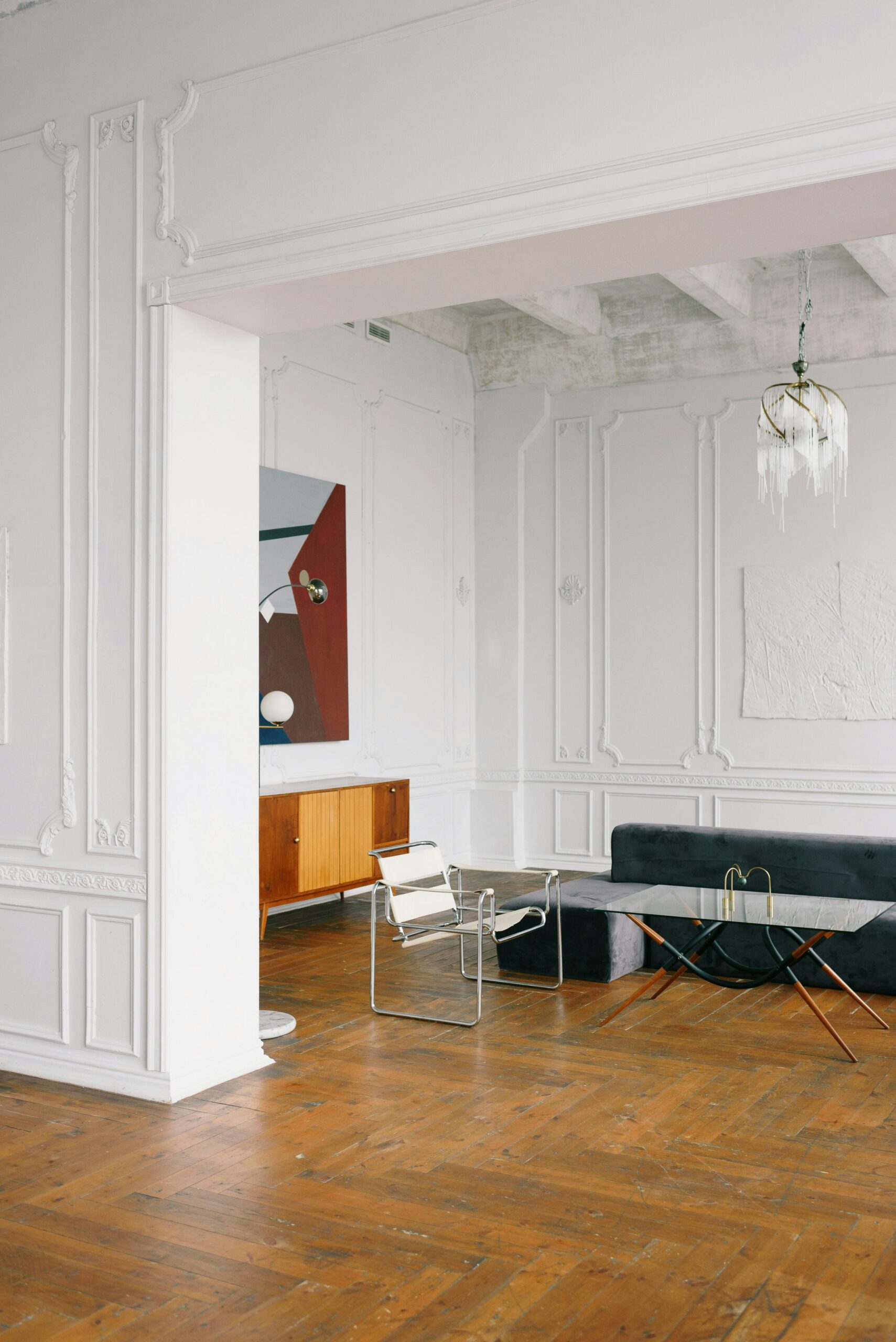
The Wassily Chair has survived a century of design trends because it operates almost like a piece of architecture rather than decoration. Its open frame takes up visual space without adding visual weight — in a small room, this matters. Set against a white wall, the steel lines become graphic, almost sculptural. In a larger space, it creates a point of contrast without dominating the room.
It pairs naturally with mid-century modern and contemporary interiors, but also works in warmer, more eclectic spaces as a counterpoint — especially in the black leather version against natural wood floors or warm textiles. The key is treating it as an anchor piece rather than filler.
Original vs. Replica: What to Know Before You Buy
The authentic Wassily Chair is manufactured by Knoll and carries a corresponding price — typically $2,000 to $3,500 depending on the leather and finish. It’s a lifetime piece with the build quality to match.
The replica market is enormous. You’ll find versions priced from $150 to $800 from manufacturers in China and Europe, and quality varies significantly. Things to check before buying a replica:
- Tubing gauge: Thinner tubing flexes and develops a wobble over time. Look for chairs that specify 25mm or thicker steel.
- Leather vs. faux leather: Budget versions use PU leather that peels within a few years. If you want it to last, pay more for genuine leather or high-grade bonded leather.
- Joint quality: Look for welded or bolted joints, not just press-fit connections that loosen with use.
- Canvas versions: The original Breuer design used Eisengarn canvas. Canvas replicas tend to be more durable long-term than budget leather versions.
Mid-range replicas from European suppliers (typically €400–700) often hit a reasonable quality-to-price balance. A good replica will last a decade or more with normal use.
The Wassily Chair and IKEA: The Gap No One Has Filled
IKEA has never produced a direct Wassily replica — and likely never will, given Knoll’s active trademark protection of the design. But IKEA’s design DNA owes a clear debt to Bauhaus thinking: the same prioritization of function, the same interest in industrial materials, the same belief that good design should be accessible. The relationship between Bauhaus and IKEA is longer and more deliberate than most people realize.
If you want the tubular steel aesthetic without the investment, IKEA’s NIKKEBY rack and VITTSJÖ shelving units share the visual language of exposed metal and minimal structure — they won’t replace a Wassily, but they speak the same formal dialect.
Where to Place It in Your Home
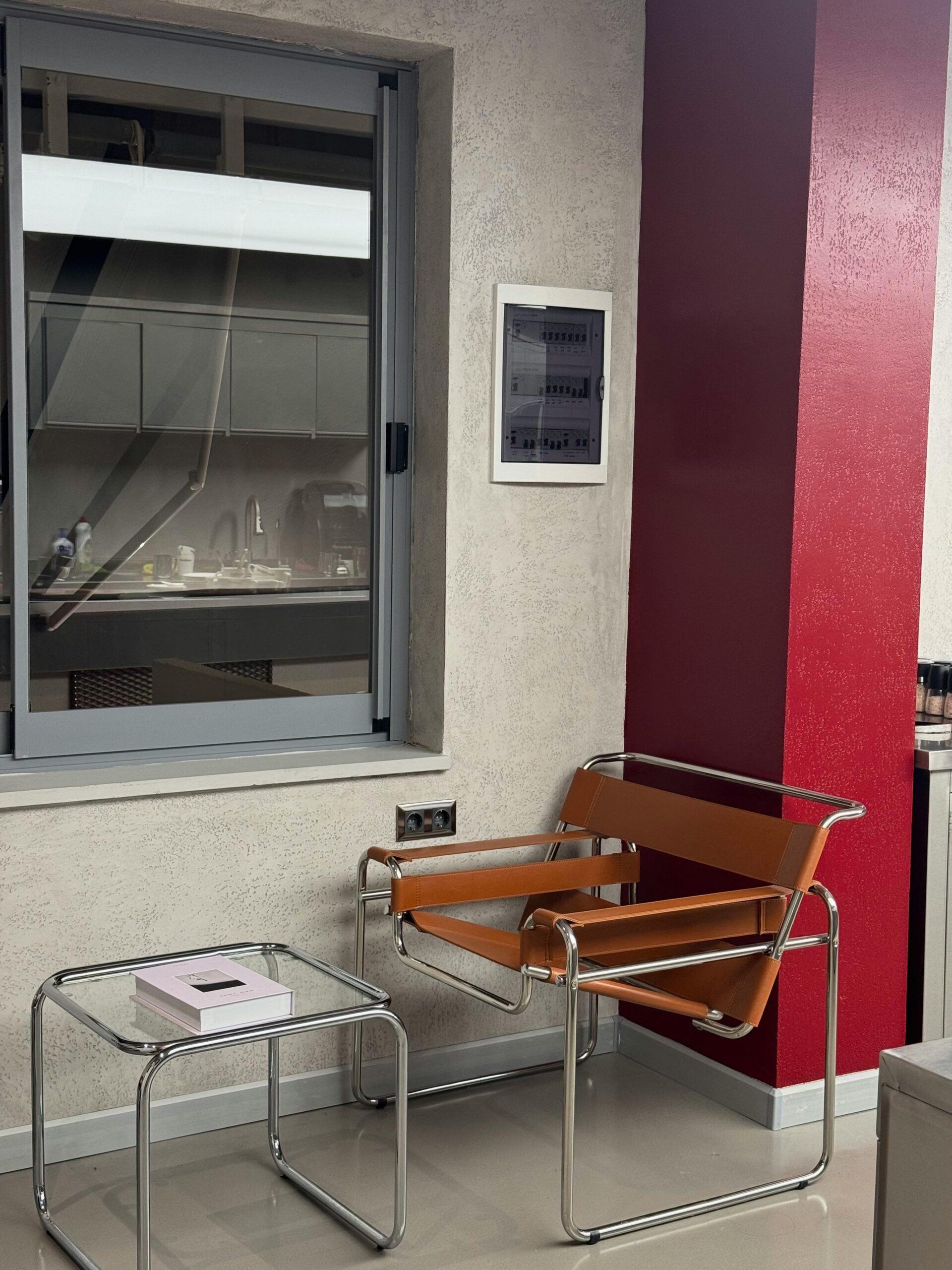
The Wassily Chair works hardest when it has space around it. A few placements that consistently work well:
- Reading corner: Pair with a simple floor lamp (Arco-style or adjustable arm) and a small side table. The chair’s openness keeps the corner from feeling heavy.
- Home office: As a visitor or accent chair — not as a primary work chair, since it lacks lumbar support for long sessions.
- Living room accent: Beside a sofa, as a third seating option. In black leather it anchors a neutral room; in tan it warms a cooler palette.
- Bedroom corner: Works well in larger bedrooms as a dressing or reading spot, particularly in lighter canvas versions.
Frequently Asked Questions
Is the Wassily Chair comfortable?
It depends on the person and the duration. The sling seat and back conform to the body reasonably well for short to medium sessions — 30 to 60 minutes. For extended sitting it lacks the lumbar support of ergonomic chairs. Most people use it as an accent or reading chair rather than a primary seating piece.
Who made the Wassily Chair?
Marcel Breuer designed it in 1925 while a student and then master at the Bauhaus school in Dessau, Germany. The original manufacturer was Standard-Möbel. Today the licensed version is produced by Knoll.
Why is it called the Wassily Chair?
Wassily Kandinsky, the abstract painter and Bauhaus master, reportedly admired Breuer’s prototype. When Italian manufacturer Gavina reissued the design in the 1960s, they named it the Wassily Chair in his honor. Breuer himself never called it that.
Is the Wassily Chair worth the money?
The original Knoll version is a long-term investment piece — built to last decades and likely to appreciate as a design artifact. A well-made replica offers most of the visual impact at a fraction of the cost, but will require replacement sooner. Your decision depends on whether you’re furnishing for the long term or experimenting with the aesthetic.
What leather colors does the Wassily Chair come in?
The Knoll original is available in black, white, caramel, and natural leather, plus fabric options. Replicas typically offer black, brown, tan, and white. The original Breuer prototypes used black Eisengarn canvas — still the most graphic and historically accurate option.
What’s the difference between the Wassily Chair and the Barcelona Chair?
Both are Bauhaus-adjacent icons in tubular steel, but the Barcelona Chair (Mies van der Rohe, 1929) is broader, lower, and more overtly luxurious — it was designed for a royal reception. The Wassily is lighter, more open, and more functional in feel. The Barcelona reads as a statement; the Wassily reads as a question about what a chair needs to be.
A century after Marcel Breuer bent his first steel tube, the Wassily Chair continues to earn its place in thoughtfully designed homes. It asks for less than most furniture and gives back a great deal — clarity of line, lightness of presence, and a connection to one of design history’s most generative moments.



The Art of Hosting: Impress Your Guests with Stunning Tablescapes and Dining Essentials
Become a master host and create unforgettable dining experiences with stunning tablescapes and carefully selected dining essentials. Whether you’re hosting


Recessed Lighting Templates for Different Room Sizes
Discover my recessed lighting template for any room size and create the perfect ambiance in your home!

Minimalist Bedroom Design Ideas for a Small Space with Big Zen
Discover small bedroom minimalist design ideas! Create a serene space that’s stylish and clutter-free.

How to Style Throw Blankets on a Bed: Bedroom Decor Tips
Learn how to style throw blankets on a bed for cozy, chic decor that makes any room feel inviting!

Best Throws for a Sofa: Cozy and Stylish Recommendations
Discover the best throws for a sofa—cozy, stylish picks that elevate your living space effortlessly!

Japandi Bathroom: Transforming Your Space into a Minimalist Oasis
Discover how to create a serene japandi bathroom oasis with minimalist decor and natural materials!








 Blankets and Throws
 Home Accessories
 Furniture
 Rugs
Rugs Cushions
 Kitchen
 Cutlery and Dinnerware
 Drinkware
 Table Mats and Coasters
 Dining Accessories
 Tablecloths and Napkins
 Decorative Items
 Vases and Planters
 Wall Decor
 Bathroom Accessories
 Bathroom Storage
 Bath and Shower Mats
 Towels