FREE WORLDWIDE TRACKED SHIPPING
Building a Lifetime Kitchen: The 10 Tools That Replace 50 Cheap Ones
 By Alex Carter
Guilherme Dantas from Moelle talks to us about building a lifetime kitchen through fewer, better tools that replace clutter, last longer, and make everyday cooking more intentional
Most kitchen drawers tell the same story. Tools that were acquired without intention, maybe to be used for one recipe that was never again replicated; a cheap grinder that has now become only decoration; a spatula bought to replace the one that melted. Without planning, acquisition leads to accumulation.
The problem is not the number of tools. It is how they were chosen. Each one arrived to solve a specific problem, usually quickly, usually cheaply, and often without much thought about what else it would need to do. The result is abundance without function: a drawer full of objects and still, somehow, the feeling that something is missing.
There is a different way to approach this. Not minimalism as an aesthetic, but as a logic: fewer things, chosen more carefully, that do more over a longer period of time. A kitchen built this way inevitably becomes coherent.
What a Lifetime Kitchen Actually Means
The phrase is not about permanence in a sentimental sense, but about the relationship between quality, versatility, and time. A lifetime kitchen is one where the tools you own today are still the right tools in ten or fifteen years, not because you held onto them out of habit, but because they never gave you a reason to replace them.
This requires a different selection filter. Instead of asking whether something solves a problem, the question becomes whether it solves several problems, does so reliably, and is made from materials that hold up over daily use.
The other shift is in how objects age. Cheap tools degrade: they warp, dull, discolour, and eventually get thrown out. Well-made tools age differently. A wooden board develops character. A quality knife, maintained properly, becomes more familiar in the hand. The objects settle instead of wearing out.
Why Cheap Tools Multiply
A cheap tool is designed around a single use case. It does one thing adequately, which is often enough to justify buying it. But because it does only one thing, it cannot replace anything else. And because it is cheap, it does not last long enough to become truly reliable.
The cycle that follows is predictable. The tool breaks or becomes obsolete, so it gets replaced, often with something similar. Or it gets supplemented by another single-use item that handles a slightly different version of the same task. The drawer fills and the problem does not get solved.
There is also a psychological dimension. Cheap tools lower the threshold for buying. When something costs very little, the decision to add it to a kitchen feels inconsequential. Over time, those inconsequential decisions accumulate into something that takes up space, creates friction, and does not particularly help anyone cook better.
The 10 Tools
What follows is not a shopping list. It is a framework for thinking about what a kitchen genuinely needs, and why quality in each category compounds across everything else you cook.
01. Chef’s Knife
Replaces: Cheap multi-packs, dull all-purpose blades, and knives bought without intention
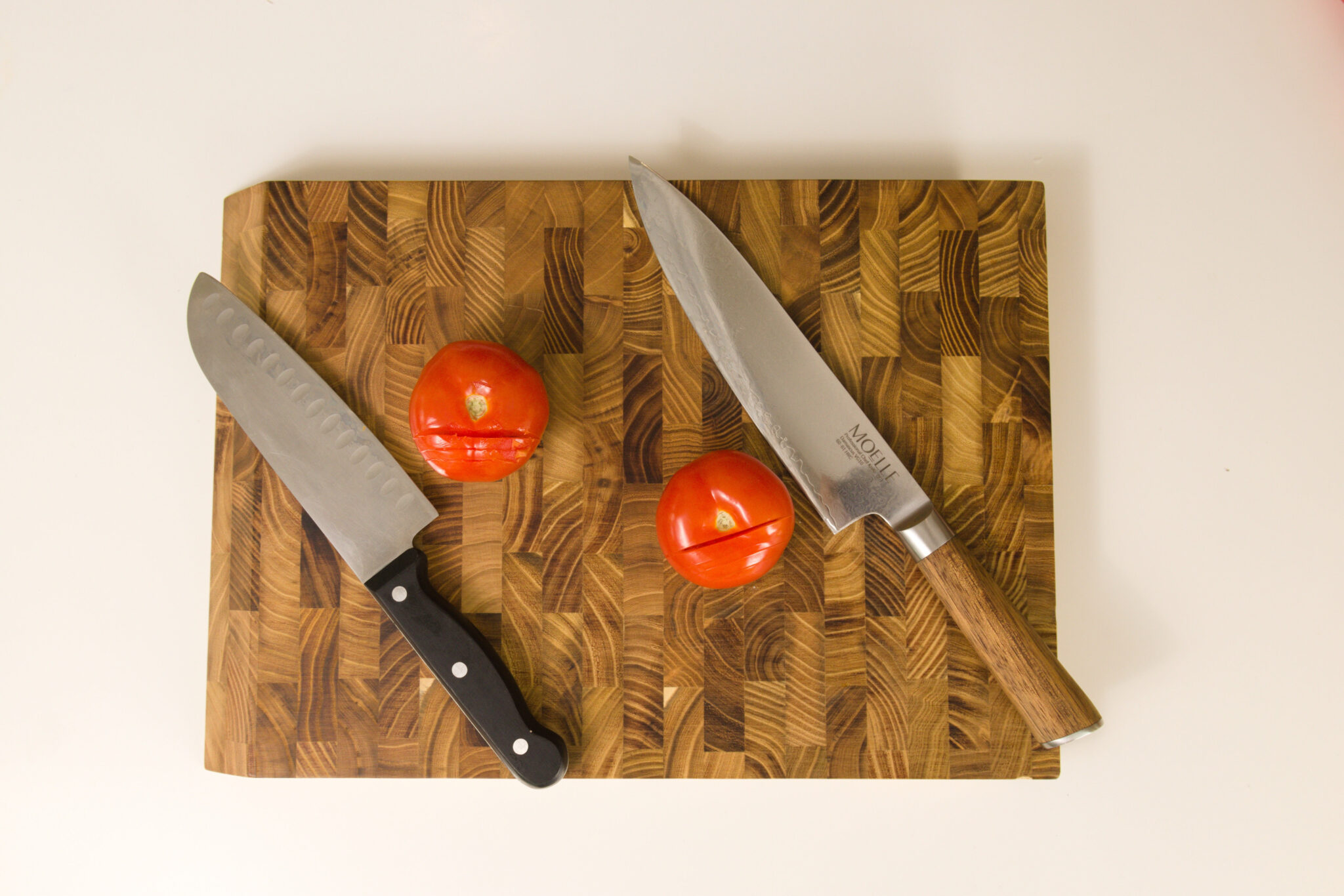
The chef’s knife is the foundation of the kitchen, and it works best when treated as exactly that: a foundation, not a replacement for everything else. A well-made chef’s knife handles the bulk of daily preparation, from chopping vegetables to breaking down proteins. But a kitchen built around quality rather than quantity still has room for the right specialist blades, for example, a serrated knife for bread and a paring knife for precision work. The difference between a lifetime kitchen and a cluttered one is not whether you own more than one knife. It is whether each knife you own was chosen deliberately, is made well, and earns its place every time you cook.
02. Wooden Cutting Board
Replaces: Plastic boards, glass boards, small prep boards, separate serving boards
A large wooden board, particularly teak or another dense hardwood, functions as both a preparation surface and a serving piece. Wood is gentler on knife edges than plastic or glass, and it has natural antibacterial properties that make it genuinely hygienic when cleaned and dried correctly. A quality board does not need to be replaced seasonally. With occasional re-oiling, it improves with use.
03. Cast Iron or Stainless Steel Pan
Replaces: Non-stick pans, separate sauté pans, dedicated omelette pans, shallow casserole dishes
Non-stick coatings degrade, and most non-stick pans have a limited lifespan regardless of how carefully they are used. Cast iron or stainless steel, by contrast, are materials built for decades of use. They require a different kind of attention, but they return that attention in consistency and performance. One or two good pans, used regularly, teach you more about cooking than four mediocre ones combined.
04. Wooden Spoon
Replaces: Silicone spatulas, melamine spoons, plastic stirring tools
Wooden spoons do not conduct heat, do not scratch surfaces, and do not melt. A solid hardwood spoon handles stirring, folding, scraping, and tasting without any of the limitations that come with synthetic alternatives. Over time, it develops a worn quality that is not a sign of damage, but of use. It is one of the most honest tools in the kitchen.
05. Tongs
Replaces: Slotted spoons, forks for turning, separate salad servers, pasta tongs
A good pair of tongs is among the most versatile things in the kitchen. They turn, lift, toss, and serve. The distinction between a poor pair and a good one is mostly in the tension and the precision at the tip. Heavy, spring-loaded tongs made from solid steel will not lose their shape or functionality after a year of regular use.
06. Peeler
Replaces: Speciality vegetable tools, and separate zesters in many cases
A sharp, well-made peeler handles vegetables, fruit, and fine shaving tasks that would otherwise require a second or third tool. The quality gap between a cheap peeler and a good one is immediately obvious the first time you use both. The cheap one drags. A quality blade glides and stays sharp significantly longer.
07. Mixing Bowl
Replaces: Multiple plastic bowls in different sizes, salad bowls
One large, heavy mixing bowl in stainless steel or ceramic can handle most tasks that require volume: mixing, marinating, proofing dough, tossing salad, or holding prepped ingredients. Lightweight plastic bowls tend to move while you work and stain over time. A single quality bowl that stays still and looks presentable enough to bring to the table does the work of several.
08. Kitchen Towel
Replaces: Paper towels, single-use cloths
A heavy linen or cotton kitchen towel handles spills, grips hot handles, and dries hands. Its usefulness depends entirely on the weight and quality of the fabric. A well-made towel lasts years, can be washed hundreds of times without degrading, and replaces a surprising number of disposable habits. It is also, not incidentally, significantly less wasteful.
09. Glass or Stainless Steel Storage Container
Replaces: Plastic containers, disposable bags
Plastic containers stain, absorb odours, and eventually warp. Glass or stainless steel containers do not. They can move from fridge to oven to table without any of the limitations that come with softer materials. A small set of quality containers with well-fitting lids replaces an entire shelf of plastic that needs to be cycled out every few years.
10. Salt and Pepper Grinder
Replaces: Pre-ground spice jars, cheap grinders that stop working, separate shakers
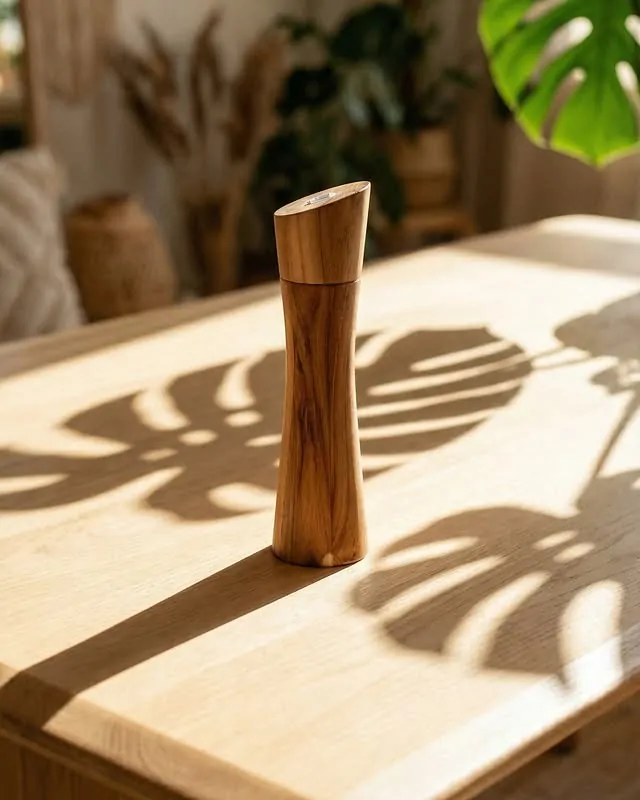
Freshly ground pepper is not the same thing as pre-ground pepper, and the difference is noticeable in the food. A well-built grinder with a ceramic or stainless steel mechanism will adjust consistently, hold its setting, and last indefinitely. Cheap grinders fail at the mechanism long before the body wears out, which means replacing the whole thing. A quality grinder does not have this problem.
From Consumption to Selection
The shift from a cluttered kitchen to a coherent one is about changing how buying decisions get made. Most kitchen accumulation happens passively: a tool bought because it seemed useful, another to replace one that failed, another because it was on offer, and so on.
Selection is a different posture. It starts with a question about what a tool needs to do, not just today but across years of use. It considers material quality, not just initial function. It asks whether the object is worth the space it takes up and the relationship it requires.
Frequently Asked Questions
Does spending more on kitchen tools actually make a difference?
It depends entirely on the category and the quality gap in question. For knives, cutting boards, and pans, the difference between a cheap option and a well-made one is significant and immediate. For some other tools, the gap is smaller. The more useful frame is longevity: a tool that costs three times as much but lasts ten times as long is not a luxury acquisition. It is a more efficient use of money over time.
How do you maintain wooden kitchen tools?
Wooden boards and spoons should be washed by hand and dried promptly after use. Never leave them submerged in water, and never put them in a dishwasher. Occasional oiling with coconut oil or beeswax restores the surface and protects the wood. A board that is treated this way will not crack or warp, and will remain food-safe for years.
What should I do with tools I already own but rarely use?
The most useful question to ask is how often a tool is actually reached for. If the answer is rarely or never, it is probably not earning its space. Donating, giving away, or passing tools along to someone who will use them is not waste. It is a more honest accounting of what a kitchen actually needs.
Guilherme Dantas works with Moelle, a Copenhagen-based kitchenware brand rooted in Scandinavian design and sustainability, focusing on intentional living through everyday tools.











 Blankets and Throws
 Home Accessories
 Furniture
 Rugs
Rugs Cushions
 Kitchen
 Cutlery and Dinnerware
 Drinkware
 Table Mats and Coasters
 Dining Accessories
 Tablecloths and Napkins
 Decorative Items
 Vases and Planters
 Wall Decor
 Bathroom Accessories
 Bathroom Storage
 Bath and Shower Mats
 Towels