FREE WORLDWIDE TRACKED SHIPPING
Quiet Luxury Interior Design: The Full Guide
 By Laura Jones
Quiet luxury interior design is the opposite of flashy — it is the kind of room where everything is the best version of itself, said softly.
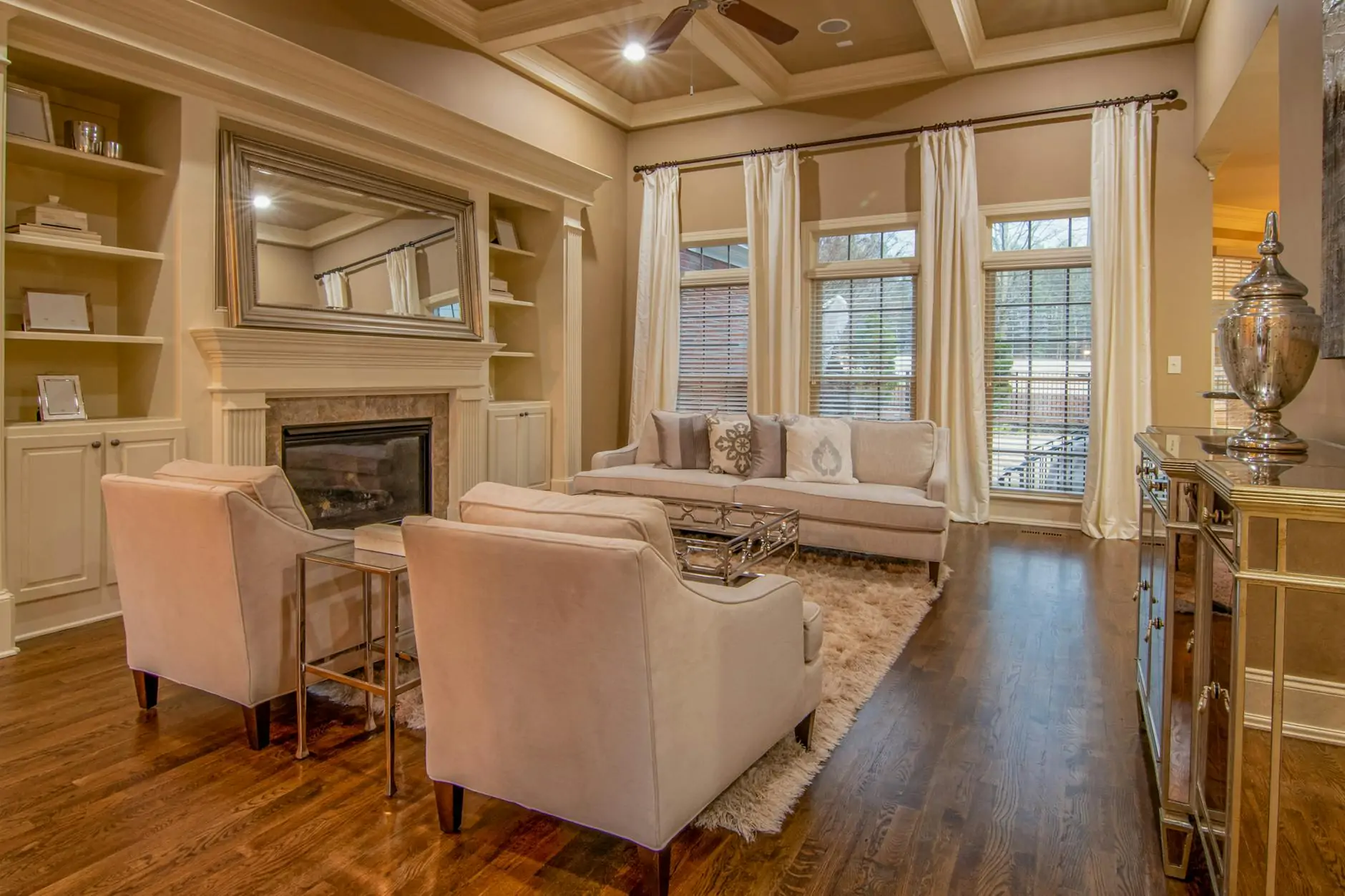
Quiet luxury interior design: less label, more feel.
Quiet luxury interior design is the opposite of flashy. There are no oversized logos, no showroom-perfect arrangements, no statement pieces engineered for social media. Instead, the look is built on materials you can feel, proportions that have been considered, and the kind of restraint that takes years of editing to learn. A quiet luxury room is the kind of room where everything is the best version of itself, said softly.
What Quiet Luxury Actually Means
The quiet luxury movement borrowed its name from fashion — where heritage tailoring, unmarked cashmere, and shoes that cost a fortune without showing it became the alternative to logo-heavy luxury. The interior version followed the same logic. A quiet luxury room is recognizable not because of what is in it but because of how it feels: substantial, precise, and unmistakably calm.
This is not minimalism. Minimalism is about subtraction; quiet luxury is about quality. A quiet luxury room can be layered and even fully furnished, but every layer earns its place. The sofa is real linen or cashmere, the marble is real, the lamp was made by someone, the rug was woven not printed. The total effect is not louder than its parts; it is the parts being very, very good.
Materials That Read Quiet Luxury
If you only get one thing right in this style, get the materials right. Three principles cover most of it: choose natural over synthetic, choose solid over veneered, and choose pieces that age well over pieces that look new.
Cashmere and fine wool. Throws, cushions, and upholstery in cashmere or merino wool feel different from synthetic fleece — the kind of difference you cannot see in a photo but cannot miss in person.
Linen and silk. Heavy linen drapery and silk-blend cushions add a softness that polyester drapery cannot fake. The slight wrinkles of unironed linen are part of the look.
Marble, travertine, and natural stone. Real stone, even small accents, anchors a room with a weight that engineered surfaces cannot match.
Solid wood. White oak, walnut, ash, and rosewood with visible grain — never veneer over MDF if you can help it.
Aged brass and unlacquered metals. Hardware, sconces, and small accents in brass that ages naturally, rather than chrome or polished steel.
Hand-thrown ceramics and hand-blown glass. One or two artisan objects in a room signal the larger philosophy: things made by people, kept for years.
Vintage leather. A worn-in leather chair, vintage bench, or collected leather-bound books contribute texture and history nothing new can match.
The Quiet Luxury Color Palette
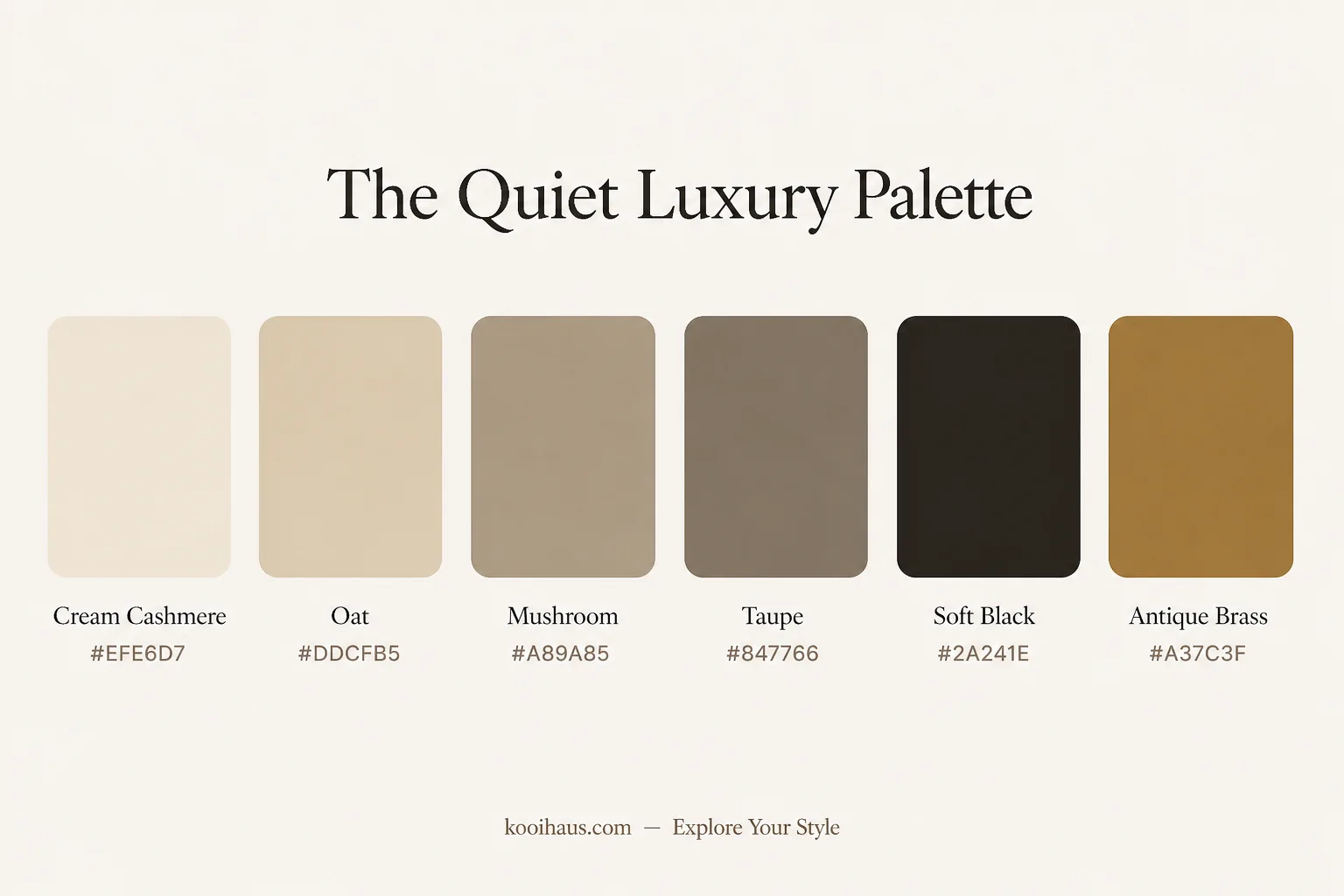
The palette leans neutral, warm, and slightly desaturated. Cream, oat, mushroom, taupe, soft black, and warm whites dominate. Where color appears, it is restrained: deep moss instead of bright green, dusty terracotta instead of rust, charcoal instead of true black.
What is missing is just as important. There are no high-saturation accent walls, no candy colors, no glossy lacquer. Even when quiet luxury rooms use richer tones — chocolate brown, deep burgundy, ink blue — those colors are always softened by texture and never used as the room’s only voice.
Furniture That Captures the Look
Quiet luxury furniture is recognizable by silhouette, material, and proportion. The classic pieces:
- A generous linen or cashmere sofa with deep, comfortable cushions and a clean profile.
- A solid wood or stone coffee table with a substantial footprint — never delicate, never trendy.
- A pair of vintage leather or boucle accent chairs in a warm tone.
- A solid wood dining table with a simple top and tapered or pedestal base.
- A low credenza in walnut or oak with brass or matte black hardware.
- A statement bed in linen or upholstered in fine wool, with a low headboard and substantial proportions.
The pieces tend to be larger and lower than fast-furniture equivalents. Quality silhouettes have weight to them; cheap silhouettes are usually narrower and shorter to save material costs.
Lighting Like a Quiet Luxury Hotel
Lighting is where quiet luxury rooms quietly outperform every other style. The look depends on layered, warm, dimmable light from multiple sources. Five quiet luxury lighting moves:
- Use real fixtures. Plaster pendants, alabaster sconces, hand-blown glass table lamps, and substantial floor lamps in metal and linen. Skip thin spun-metal pieces that read flimsy.
- Layer at three heights. Floor (lamps), table (lamps), and ceiling (pendants or sconces). Every major room should have at least three sources.
- Dimmers everywhere. Non-negotiable. A quiet luxury room shifts from morning brightness to evening warmth without changing fixtures.
- Warm bulbs. 2700K is the only acceptable temperature for primary lighting. Cooler bulbs flatten texture and read clinical.
- Skip overhead can lights as primary lighting. They wash everything flat. Use them as accent layers if they exist.
Bringing Quiet Luxury Into Each Room
The living room rewards a single splurge: a real linen or cashmere-blend sofa. Anchor with a substantial wood or stone coffee table, a wool or silk-blend rug, two well-chosen lamps, and a single piece of original art. Add one or two textural accents — a chunky throw, a hand-thrown vessel — and stop. The room should feel finished, not curated.
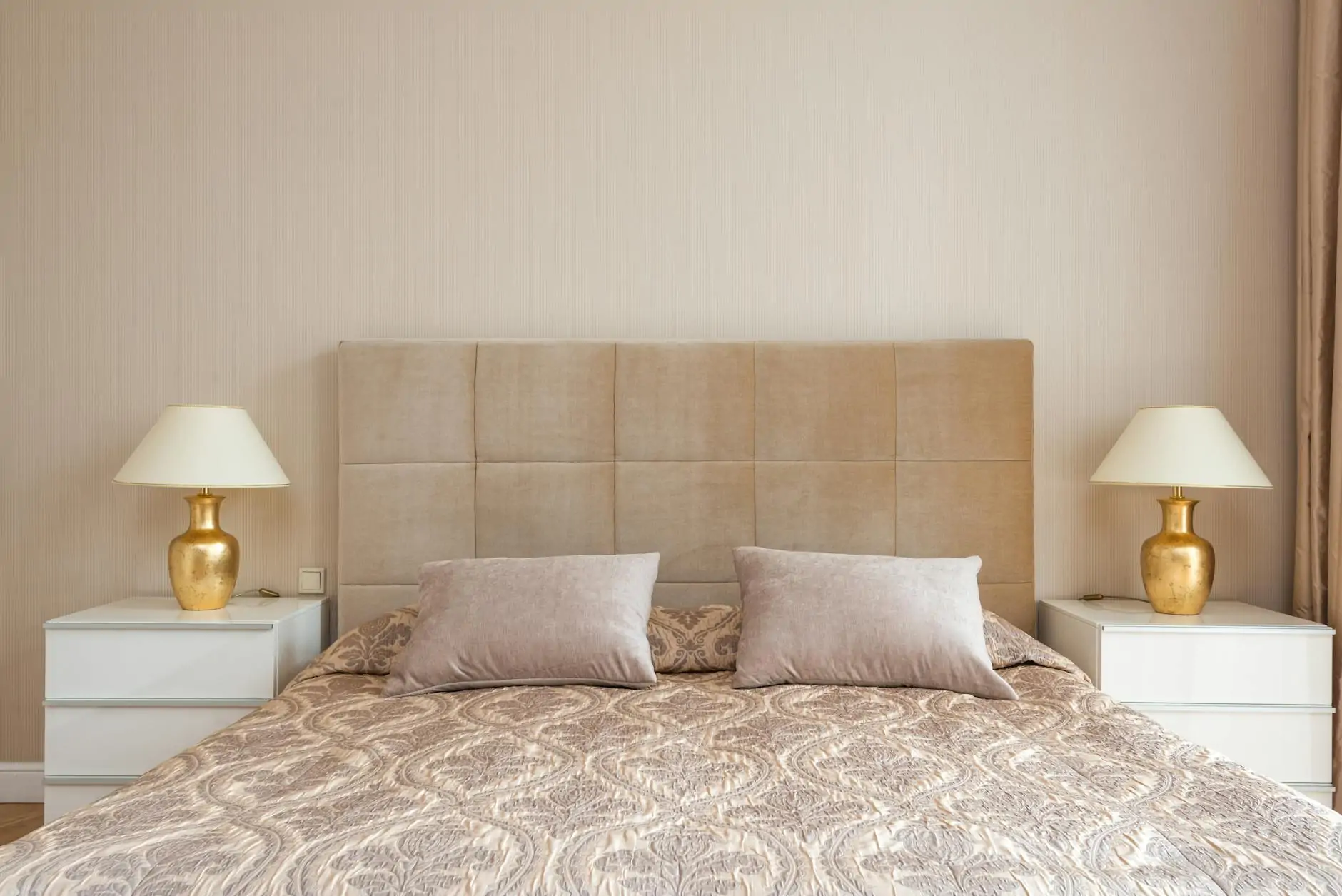
The bedroom is the easiest place to feel the difference. Quiet luxury bedrooms layer linen and cashmere bedding in three or four shades of cream, oat, and warm white. The bed itself has weight: a low upholstered headboard, a generous mattress, and proper investment in the bedding. Skip decorative pillow stacks; one or two textural cushions are enough.
The dining room is built around the table. A solid oak or walnut table with substantial proportions, surrounded by upholstered or wood-and-leather chairs. A single sculptural pendant overhead, a textural runner, and a few hand-thrown ceramic candle holders complete the room. Skip the formal centerpiece; a quiet luxury dining room is for use, not display.
Kitchens and baths express quiet luxury through materials. Real stone counters, solid wood or fully painted cabinets, unlacquered brass hardware, and quality tile (zellige, hand-cut marble, or honed stone). Counters should be largely clear; the few items that live there — a wooden cutting board, a stone salt cellar, a single bottle of olive oil — should each be considered.
What Sets Quiet Luxury Apart From Other Styles
Quiet luxury overlaps with several adjacent styles but differs in important ways. Compared with organic modern, quiet luxury uses richer materials (cashmere, marble) and a more refined silhouette; organic modern uses more bouclé, travertine, and curves.
Compared with traditional luxury, quiet luxury removes the formal carved details, the heavy drapery, and the gold-leaf finishes. Traditional luxury announces itself; quiet luxury hides in plain sight.
Compared with minimalism, quiet luxury is willing to be layered. A minimalist room subtracts; a quiet luxury room may have more in it, but everything in it is excellent.
Common Quiet Luxury Mistakes
The biggest mistake is buying for the look without buying the materials. A polyester sofa in a quiet luxury silhouette will never read quiet luxury. The fabric matters more than the shape. Save longer and buy better, or thrift carefully — vintage pieces in real materials almost always beat new pieces in the wrong ones.
The second mistake is trying to do quiet luxury at scale on a tight budget across an entire home at once. The look depends on quality, and quality compounds with patience. One room done well is better than five rooms done with compromise materials. Pick your most-used room — usually the living room or bedroom — and spend the budget there.
The third mistake is over-styling. A quiet luxury room is meant to feel inhabited, not staged. Skip the matched throw-and-pillow set, the perfectly arranged tablescape, and the accessory clusters that look right in a magazine and uncomfortable in real life. The discipline is to leave space.
Frequently Asked Questions
Is quiet luxury just for wealthy people?
Not entirely. The materials are real and not cheap, but the philosophy — fewer, better things, kept for years — is friendlier to a moderate budget than a fast-design rebuild every two years. A vintage walnut credenza, a real linen slipcover, and a cashmere throw add up to less than three rounds of trendy decor.
What is the difference between quiet luxury and old money style?
They overlap heavily. Old money style is essentially quiet luxury with more inherited furniture, more leather-bound books, and more traditional architecture. The values — restraint, quality, longevity — are the same.
Is quiet luxury a fad?
The label may fade, but the underlying ideas are timeless. Quality materials, restrained color, and patient editing have defined high-end interiors for centuries.
How do I shop for quiet luxury on a budget?
Vintage and consignment shops are gold mines. A real walnut credenza or a vintage Chesterfield sofa from a consignment store often costs less than a new piece in lower-quality materials. Patience and Saturday morning thrift visits beat Black Friday sales every time.
Can quiet luxury work in a small apartment?
Especially well. The style rewards restraint, and small spaces force restraint. A few perfect pieces in a small apartment outperform a houseful of mediocre ones in a larger home.
Quiet luxury interior design is the opposite of fast design — slower to build, more rewarding to live with, and less likely to look dated next year. Choose materials over silhouettes, quality over quantity, and patience over impulse. The room you build that way will feel like the best version of itself for years longer than any trend-led alternative.
Take the Quiz
Not sure if quiet luxury is really your thing? Take our Interior Style Quiz and find out which interior style fits the way you actually live, age, and grow into your home.











 Blankets and Throws
 Home Accessories
 Furniture
 Rugs
Rugs Cushions
 Kitchen
 Cutlery and Dinnerware
 Drinkware
 Table Mats and Coasters
 Dining Accessories
 Tablecloths and Napkins
 Decorative Items
 Vases and Planters
 Wall Decor
 Bathroom Accessories
 Bathroom Storage
 Bath and Shower Mats
 Towels