FREE WORLDWIDE TRACKED SHIPPING
A Guest Room for Guests—and the Rest of Your Life
 By Laura Jones
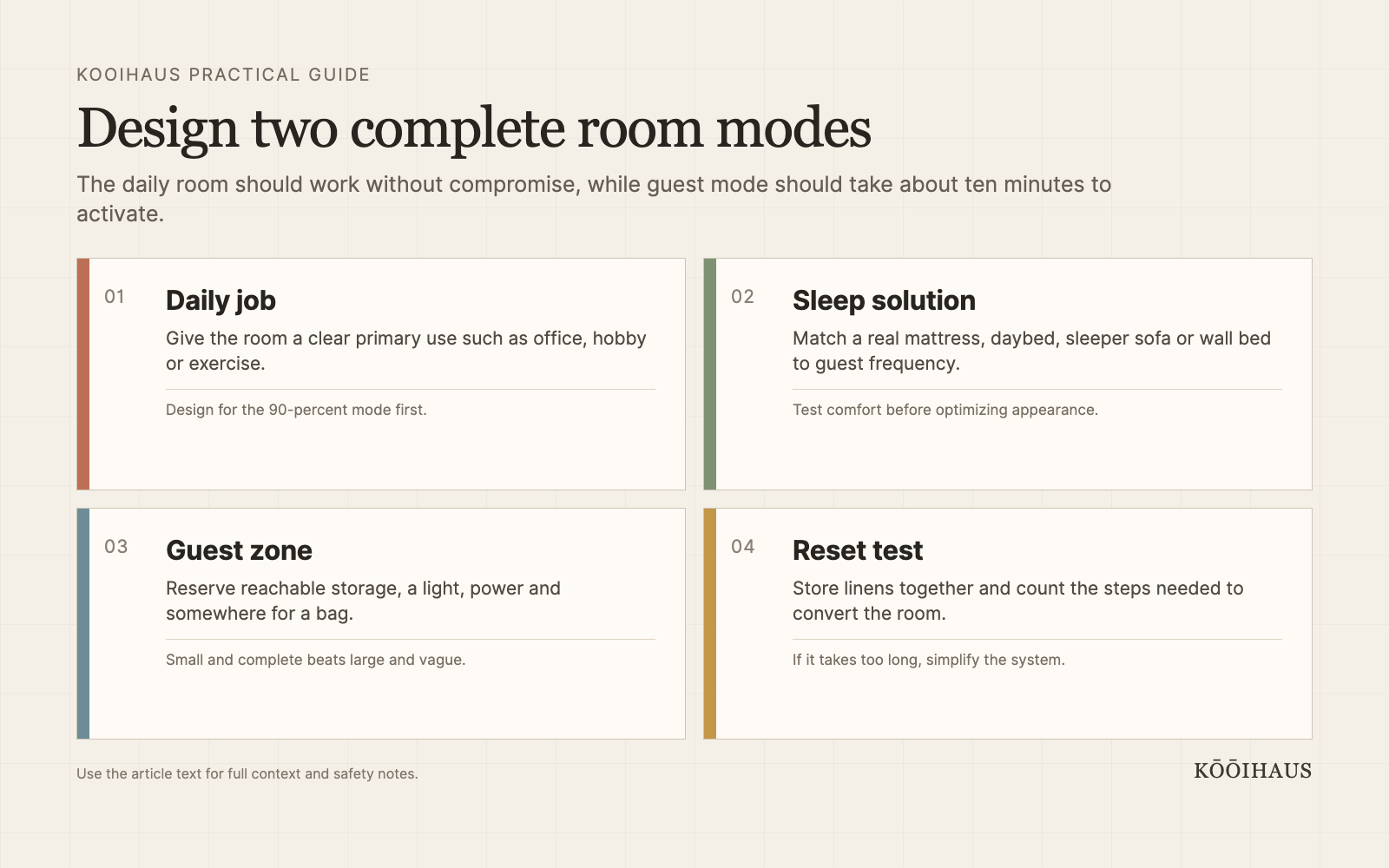
Design a guest room for its everyday job first, then make guest mode complete and quick to activate. Compare sleep solutions, storage, lighting and conversion effort.
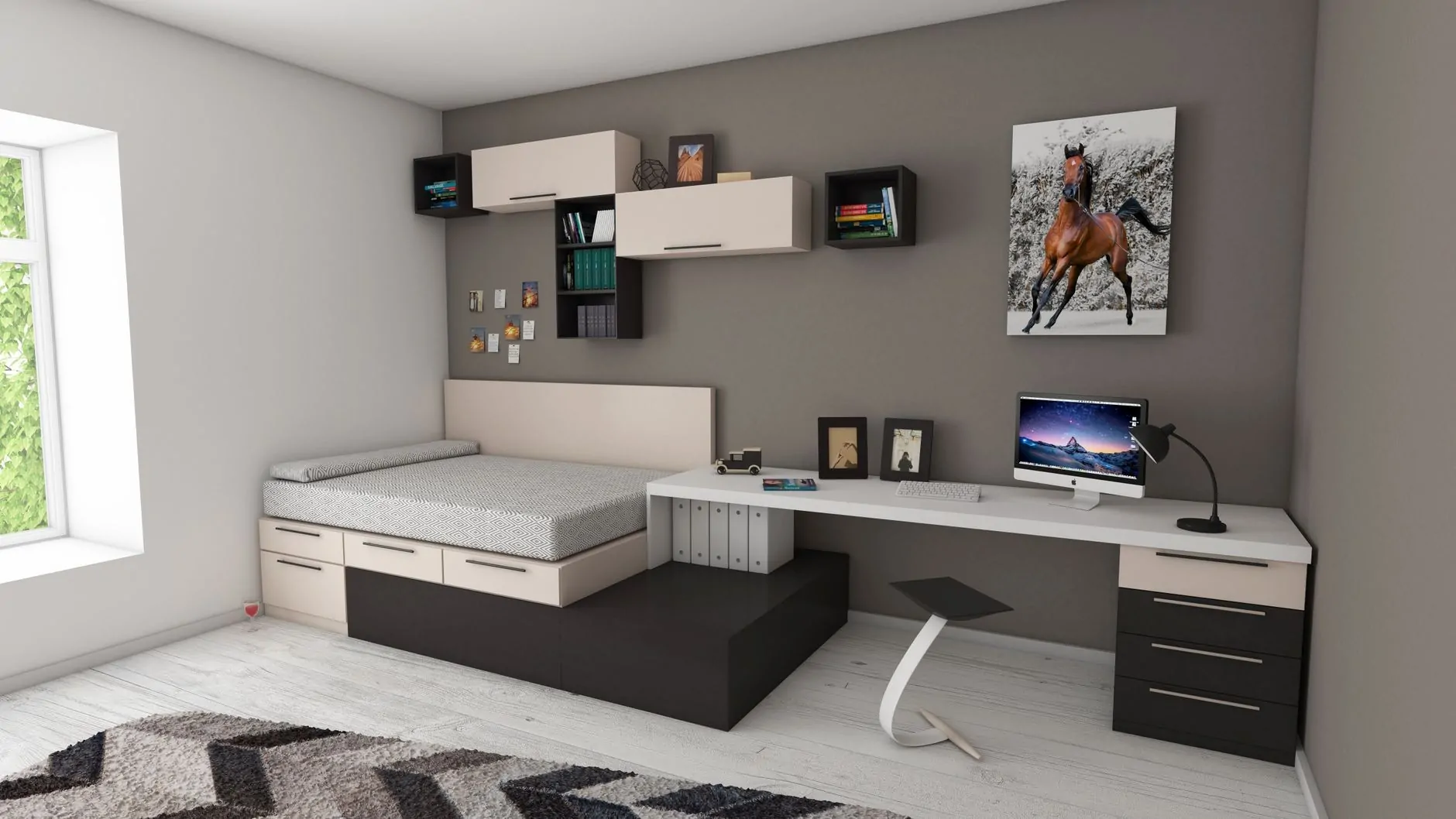
Photo by Medhat Ayad via Pexels.
A dedicated guest room can be generous, but it can also be the least-used room in the house. For most of the year, a neatly made bed occupies the best light and most of the floor while work, exercise, hobbies, or reading spill into rooms already doing too much.
The most useful multi-purpose guest room ideas begin with a different priority: design the room for its ordinary life first, then make its guest mode complete and easy to activate. That does not mean offering visitors a makeshift corner. It means choosing a sleep solution, storage plan, and lighting scheme that support both modes without leaving either one permanently compromised.
Choose the Room’s 90-Percent Job First
Ask what the room needs to do on a typical Tuesday. It might be a focused home office, a sewing room, a workout space, a library, a dressing room, or a quiet media room. Give that daily function the best daylight, the most natural circulation path, and the storage it needs.
Then define the guest function around it. A desk should not become a luggage rack every time someone stays. Exercise equipment should not be pushed into the hallway. A permanent double bed should not consume the center of a room used by guests for only ten nights a year.
This primary-function-first approach is especially useful in compact homes, where minimalist space planning works best when every object has a clear job. Multi-purpose does not mean filling a room with convertible furniture. It means making each mode legible, comfortable, and quick to reset.
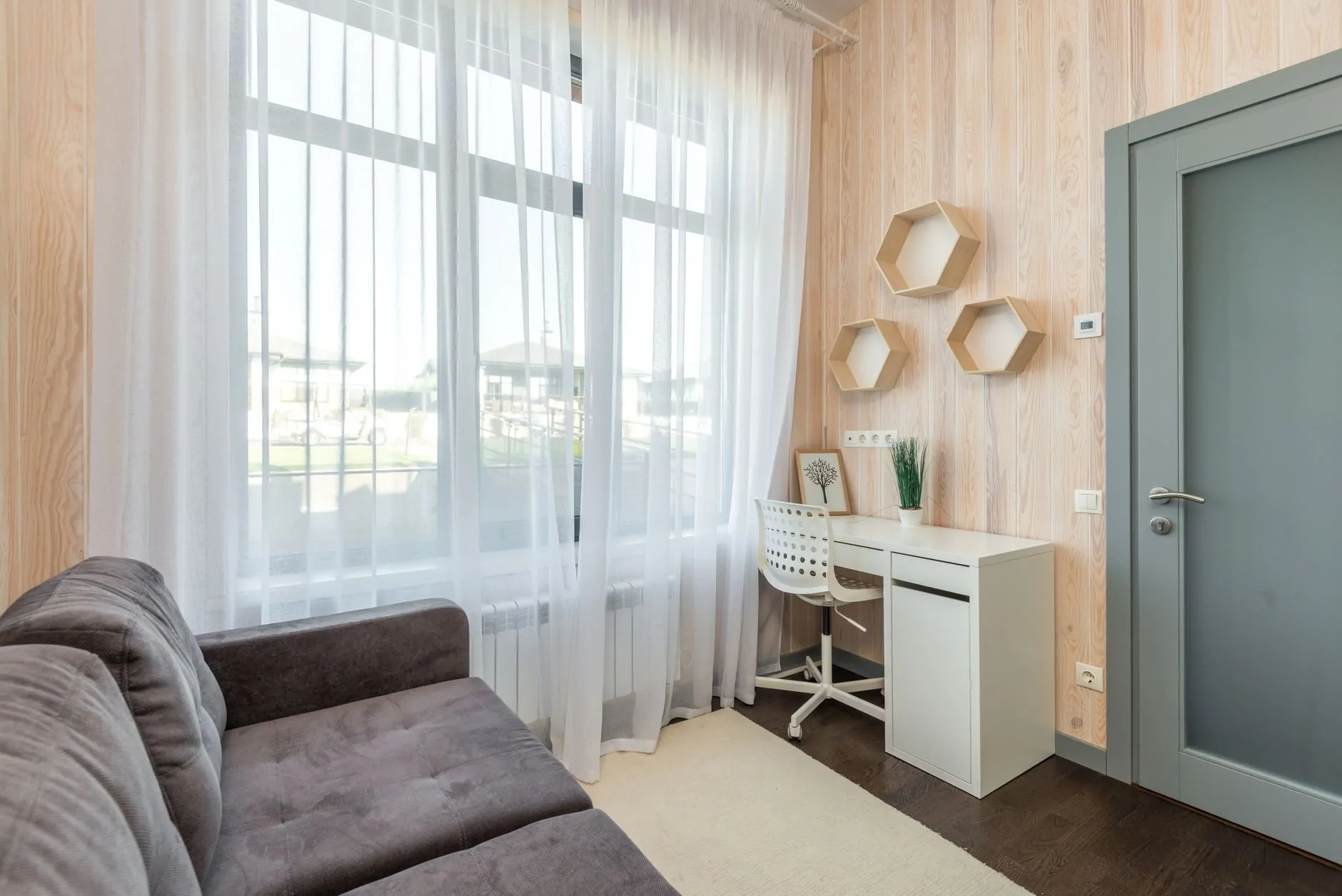
Define What “Guest-Ready” Actually Means
Before choosing a bed, describe the likely visit. How often do guests stay? Is it usually one person or a couple? One night or a week? Are older relatives or guests with limited mobility likely to use the room? Will they need privacy during the day, somewhere to work, or space for a suitcase?
A weekend visitor and a parent staying for two weeks may need different sleep surfaces, access, and privacy. A trundle for a child and one for an adult are different briefs.
Also decide what must remain available in guest mode. Can office equipment close into a cabinet? Can fragile or private hobby materials be secured? Good planning starts with these behaviors, not a styled photograph.
Compare the Main Sleep Solutions
There is no universally best guest bed. The right choice balances comfort, daily footprint, conversion effort, and how permanently you want to commit the room.
| Sleep solution | Daily footprint | Guest comfort | Conversion effort | Skip if |
|---|---|---|---|---|
| Murphy or wall bed | Excellent when closed | Can approach a conventional bed with the right mattress and system | Low once installed; bedding still needs a home | The wall, budget, installation, or room geometry cannot support the specified system |
| Sleeper sofa | Useful seating every day | Varies widely by mechanism and mattress | Moderate; clear the floor and unfold it | The room does not need seating or the open bed blocks circulation |
| Daybed or trundle | Bed-sized bench or lounging zone | Good for one; secondary mattress may be less suitable for some adults | Low to moderate | Most visits are couples or guests need easy access on both sides |
| Permanent bed plus compact desk | Largest constant footprint | Familiar and dependable | Very low | Guest use is rare and daily work needs open floor area |
| Quality temporary setup | Almost none when stored | Highly product-dependent | Highest; requires storage, setup, and bedding | Frequent guests or mobility needs make floor-level/temporary sleep unsuitable |
A wall bed can be an elegant answer, but it is an installed mechanism rather than a casual furniture swap. Follow the manufacturer’s requirements and use qualified professional installation where specified. Existing owners should also plan for wall-bed maintenance and Murphy-bed care, not treat the closed facade as maintenance-free cabinetry.
Test any sleeper sofa or daybed in both positions. Measure the open bed, the route around it, bedside access, door swing, radiator or vent clearance, and where the displaced coffee table or desk chair will go. A convertible piece only saves space if its second mode fits the actual room.
Build Two Modes, Not One Compromised Room
Draw a simple plan for daily mode and guest mode. In daily mode, the desk chair moves freely, hobby tools are accessible, or the exercise floor is clear. In guest mode, the bed opens, luggage has a landing place, and the route from bed to door remains unobstructed.
Every object that moves during conversion needs a destination. A folding desk chair can hang in a closet. A small side table can become a nightstand. Bedding can live in a labeled, ventilated section of a wardrobe. Office papers and cables can disappear behind one closed door rather than being gathered into an anxious pile.
This is the practical side of smart interior changes for small homes: the room changes state through a short sequence, not a miniature renovation.
Office Plus Guest Room
Place the desk where daylight supports work without putting the sleeper directly in the strongest glare. If the desk sits opposite the bed, its surface will tempt guests to unload bags there. Give luggage a better option and keep the desk intentionally narrow or easy to close.
Contain work equipment as one system. A cabinet or lidded boxes can hold chargers, notebooks, and sensitive documents. If the desk must remain usable during a visit, preserve its chair position rather than expecting work to happen from the bed.
For a wall bed, a fixed desk and the bed mechanism must be designed as one compatible installation. Do not improvise around moving hardware or assume two separate products can safely overlap.
Hobby or Exercise Plus Guest Room
Hobby rooms need closed storage more than clever furniture. Shelves full of fabric, paint, models, or tools may look productive during the week but visually overwhelm a guest. Keep the active project in one movable tray or cart and reserve closed volume for the reset.
An exercise room needs a reliable equipment routine. Weights, resistance bands, and machines should not remain in the path to the bed. Heavy items need stable, suitable storage rather than an overloaded decorative cabinet. Durable flooring can support everyday use, but a rug or bedside mat may make guest mode feel warmer if it can be placed without creating a trip hazard.
In both cases, leave a deliberately empty zone. Empty space is not wasted capacity; it is what allows the room to transform.
Give Guests a Small, Complete Zone
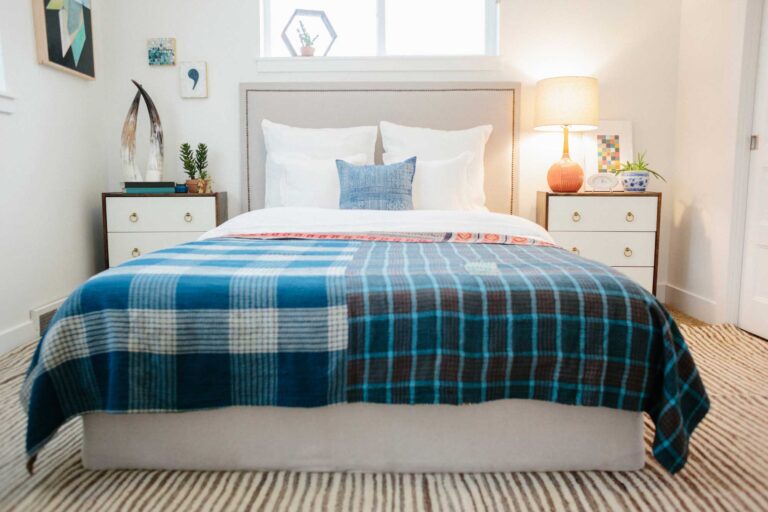
Visitors do not need an empty wardrobe and a hotel minibar. They do need a few complete gestures: a place for a suitcase, an accessible outlet or charging point, a reading light that can be controlled from the bed, a glass or bottle of water, a wastebasket, and somewhere to hang a coat or tomorrow’s clothes.
A narrow bench, folding luggage rack, sturdy stool, or clear section of a low cabinet can handle a bag. Leave a few empty hangers and one empty drawer or shelf. Provide window privacy and explain any unfamiliar blind, heating, or lighting controls.
These details are more welcoming than decorative cushions that must be removed before sleep. They also make the room easier to prepare because the guest zone can stay edited and consistent even when the room’s daily function changes.
Let Lighting and Storage Do the Heavy Lifting
Layer general light with task lighting for the room’s everyday job and warm, independently controlled light near the guest bed. Do not run loose extension cords across circulation routes.
Closed storage creates the fastest visual reset. Open shelves should not be the only place for office files, exercise accessories, or bedding. Reserve some empty capacity; a full cabinet cannot absorb the transition.
When selecting furniture, test the layout before committing. The same measured, gradual approach used to style a home before all the furniture arrives can prevent a large sleeper from becoming the room’s permanent obstacle.
Run the Ten-Minute Conversion Test
One person should be able to change the room safely without relocating half the home. Time the sequence:
- Close or store the daily work.
- Move only the furniture shown in the guest-mode plan.
- Open or assemble the sleep surface according to its instructions.
- Add bedding and activate the bedside zone.
- Confirm clear access to the door, light controls, and luggage space.
If the conversion takes much longer than expected, identify the friction. Bedding may be stored too far away. A chair may have no destination. The sleeper may require moving a heavy table. Fix the sequence instead of assuming the household will become more disciplined.
What to Spend On—and What to Skip
Spend on the part that supports sleep, the mechanism that moves, professional installation where required, storage hardware used every day, and lighting that makes both modes comfortable. A modest room with a supportive sleep surface and clear bedside setup will feel more considered than an expensive room that is difficult to navigate.
Skip an oversized permanent bed when guests are rare and the daily function genuinely needs the floor. Skip novelty furniture that performs two jobs poorly. Skip wall-mounted or moving systems that do not suit the structure, measurements, manufacturer requirements, or users. And skip filling every wall with storage before leaving room for a suitcase and a human body in motion.
The Final Verdict
The best multi-purpose guest room earns its square footage every week and still welcomes people without apology. Its daily job gets first claim on light and layout; its guest mode gets a comfortable sleep solution, a clear route, and a small complete zone.
Design those two states on paper, give every moved object a destination, and test the conversion before buying more furniture. A room that works beautifully on an ordinary Tuesday is not less hospitable. When it can become calm and guest-ready in ten minutes, it is more honest, useful, and generous.
Frequently Asked Questions
What is the best bed for a multi-purpose guest room?
The best bed depends on visit frequency, guest needs, room size, and the room’s daily job. A wall bed can preserve floor area, a sleeper sofa adds everyday seating, a daybed suits one-person stays, and a permanent bed favors frequent guests. Measure and test the open position before choosing.
How do you combine a home office and guest room?
Give the desk the best everyday work position, contain equipment in closed storage, and choose a bed that opens without blocking the door or desk route. Plan separate daily and guest layouts, including destinations for the desk chair, bedding, luggage, and any items that must be secured.
Is a Murphy bed better than a sleeper sofa?
A Murphy bed generally preserves more open floor area and may offer a more conventional sleep surface, while a sleeper sofa provides useful seating without a fixed wall installation. The better choice depends on budget, structure, installation requirements, desired seating, open-bed dimensions, and who will use it.
How can a guest room feel welcoming without staying empty?
Create a compact guest zone with a reading light, charging access, luggage surface, water, privacy, hangers, and a little empty storage. Keep bedding together and make the conversion simple. Practical completeness feels more welcoming than reserving an entire decorated room that rarely gets used.











 Blankets and Throws
 Home Accessories
 Furniture
 Rugs
Rugs Cushions
 Kitchen
 Cutlery and Dinnerware
 Drinkware
 Table Mats and Coasters
 Dining Accessories
 Tablecloths and Napkins
 Decorative Items
 Vases and Planters
 Wall Decor
 Bathroom Accessories
 Bathroom Storage
 Bath and Shower Mats
 Towels