FREE WORLDWIDE TRACKED SHIPPING
Stroller Blanket Size: A Practical Guide for Babies on the Go
 By Alex Carter
A stroller blanket should be compact, breathable, washable, and easy to keep clear of wheels, straps, and a baby’s face.

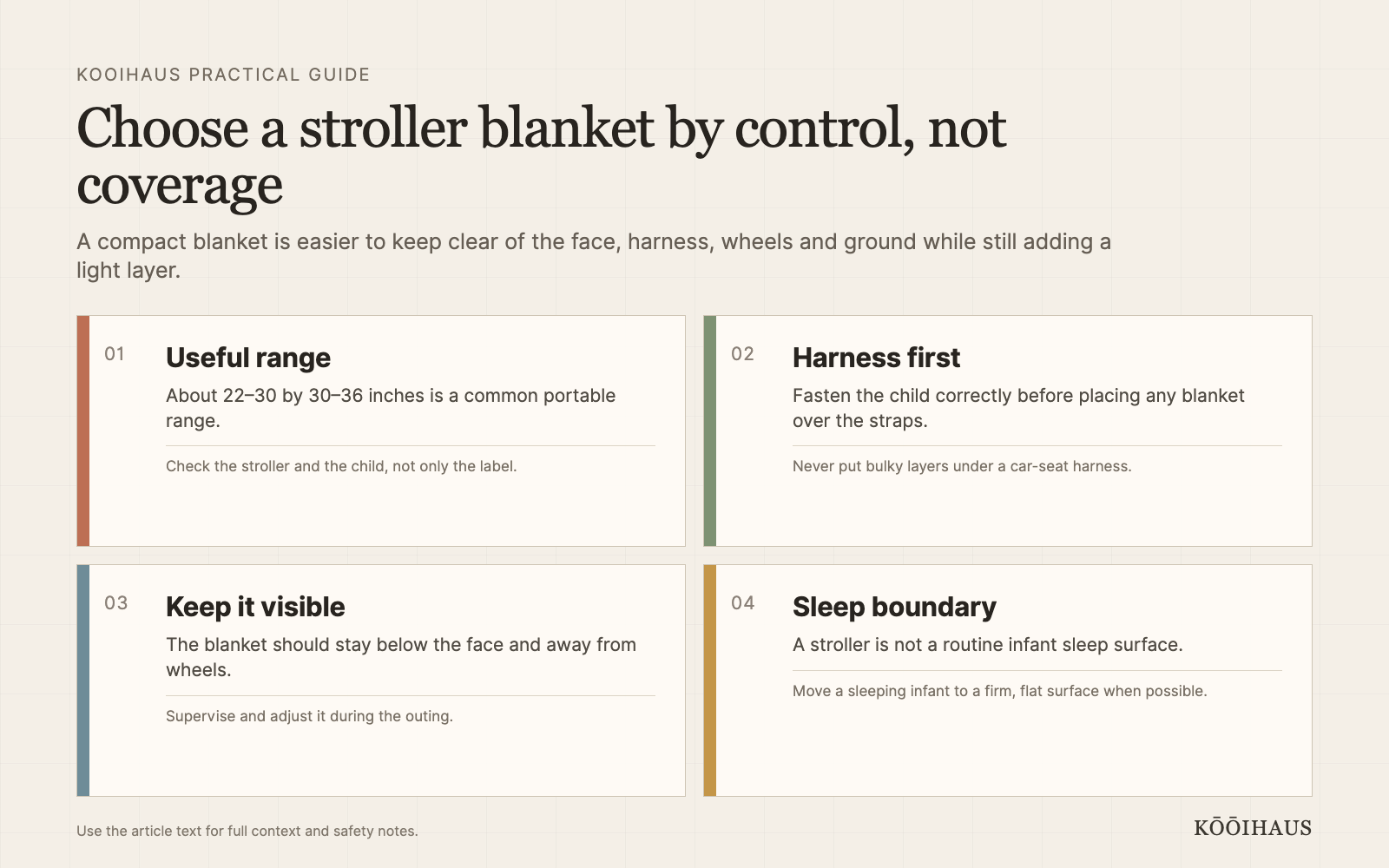
The short answer: commonly about 22–30 inches wide by 30–36 inches long is a compact, portable baby blanket. It is roughly 1 foot 10 inches to 2 feet 6 inches wide and 2 feet 6 inches to 3 feet long, or approximately 56–76 by 76–91 centimeters. That makes it best for supervised stroller walks, a light layer placed over correctly fastened straps, tummy-time setup when appropriate, or a clean portable surface. It is not designed for routine infant sleep, placement beneath or behind a car-seat harness, covering the face, or fabric long enough to reach stroller wheels.
That answer is more useful than a retailer’s size name because blanket labels are not perfectly standardized. Two products described with the same use can differ by several inches, and the material can change how large the blanket feels. A dense blanket occupies more visual and physical space than a thin open weave, even when the tape-measure dimensions match.
commonly about 22–30 inches wide by 30–36 inches long: the dimensions at a glance
The first number normally describes width and the second length. Product pages sometimes rotate images or describe orientation differently, so confirm the dimension diagram before buying. Small manufacturing variation and rounded metric conversions are normal; the practical question is whether the finished blanket covers the person or furniture in the way you expect.
| Measurement | Approximate size |
|---|---|
| Listed dimensions | commonly about 22–30 inches wide by 30–36 inches long |
| Feet | roughly 1 foot 10 inches to 2 feet 6 inches wide and 2 feet 6 inches to 3 feet long |
| Metric | approximately 56–76 by 76–91 centimeters |
| Best identity | a compact, portable baby blanket |
For a broader reference across bedding categories, use our complete blanket size chart. If the product is marketed as a throw, the throw blanket size guide explains how casual layers differ from mattress-sized bedding.
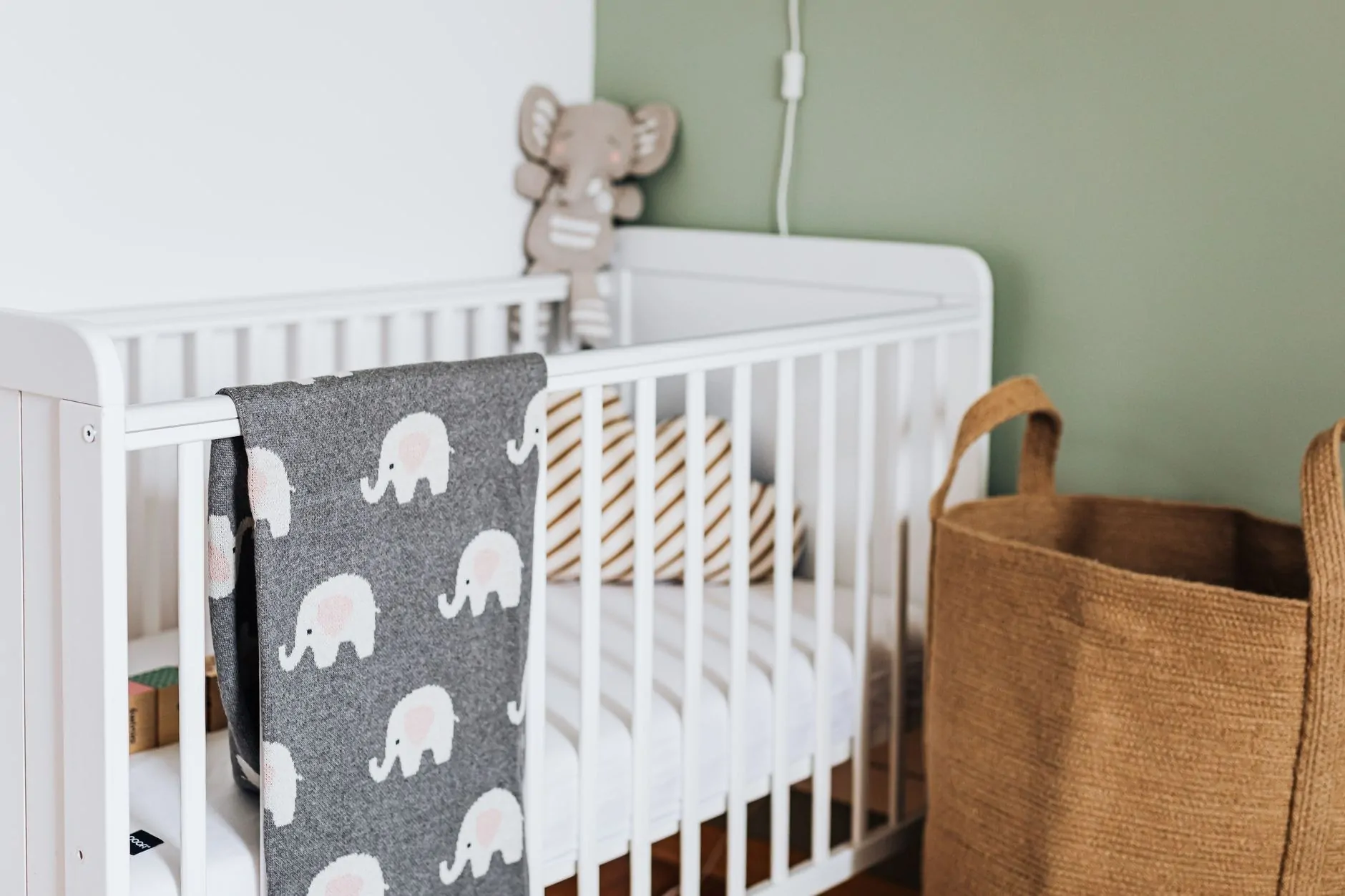
What this size fits well
A stroller blanket is intentionally smaller than a crib blanket because loose length is harder to control around wheels, straps and the ground.
The right size depends on the stroller seat, the child and the weather; the blanket should remain below the face and visible to the caregiver.
For car seats, the American Academy of Pediatrics advises fastening the harness over thin layers and placing a blanket over the buckled straps if needed, never beneath the child or under the harness.
The most reliable way to evaluate fit is to name the job in a complete sentence: “I want one adult covered from shoulders to feet,” “I want a folded layer across the lower third of a queen bed,” or “I want a compact blanket that can live in a basket.” That sentence exposes whether width, length, portability or visual proportion is the real priority.
Do not judge from a tightly cropped product photograph. Styling images often conceal the far edge, fold excess fabric underneath or use unusually small furniture. Mark the dimensions on your sofa or bed with painter’s tape or a sheet you already own. The test takes a few minutes and shows how much upholstery, mattress and floor clearance will remain visible.
What it does not fit well
This size is a poor match for routine infant sleep, placement beneath or behind a car-seat harness, covering the face, or fabric long enough to reach stroller wheels. That does not make it undersized; it means the intended function and the requested function are different. A throw is allowed to leave furniture visible. Formal bedding is expected to cover the mattress more consistently and may need enough extra fabric for side drop or tucking.
If two people will share the blanket, measure the combined shoulder or lap width in the position they actually use. If it is for a bed, add the desired drop to both sides of the mattress width. If it must tuck, include mattress depth and the amount of fabric needed beneath the mattress. These checks are more dependable than names such as oversized, double or queen, which vary across sellers and countries.
Compare it with nearby blanket sizes
| Size | Typical role | Main tradeoff |
|---|---|---|
| 18×24 in | Very small lovey or emergency layer | Easy to carry; limited coverage |
| 22–30 x 30–36 in | Common stroller range | Portable and easier to control |
| 30×40 in | Receiving blanket | More versatile but more fabric to manage |
| 36×52 in | Crib-size blanket | Too large for most stroller duties |
Choose the next size up when the current option fails a specific test: feet remain exposed, two users fight for width, or the bed layer looks mean against the mattress. Stay with the smaller size when portability, frequent washing, a compact sofa or a light visual effect matters more. Bigger is not automatically more luxurious; uncontrolled fabric can be heavy, hot and awkward.
How to measure before ordering
- Measure the person, seat or mattress rather than copying a size from another room.
- Decide whether the blanket will be used flat, folded, wrapped or tucked.
- Add the side drop or body overlap you want; do not add arbitrary inches “just in case.”
- Check the product’s exact finished dimensions and whether shrinkage is expected.
- Compare the folded volume with your shelf, basket and washing machine.
For a sofa, note the seat width, seat depth and arm height. For a bed, record mattress width, length and depth. For personal use, measure from shoulder to feet and across the body in a relaxed position. A paper plan is helpful, but a physical mock-up with a sheet reveals weight distribution and drape more clearly.
Material can make the same size feel different
A lightweight cotton weave drapes closely and folds into a small volume. Brushed wool has more loft and warmth, while plush synthetic fleece can feel visually larger and hold more heat. Open knits stretch but may snag; dense woven blankets hold a cleaner edge but can feel heavier. Read fiber composition, weight and care instructions together with dimensions.
Consider the climate and the room’s baseline temperature. A large heavy blanket may be welcome in a cold reading corner and excessive in a warm apartment. If the blanket touches bare skin, hand feel matters as much as appearance. If children, pets or outdoor use are involved, washability and snag resistance may outrank an elaborate weave.
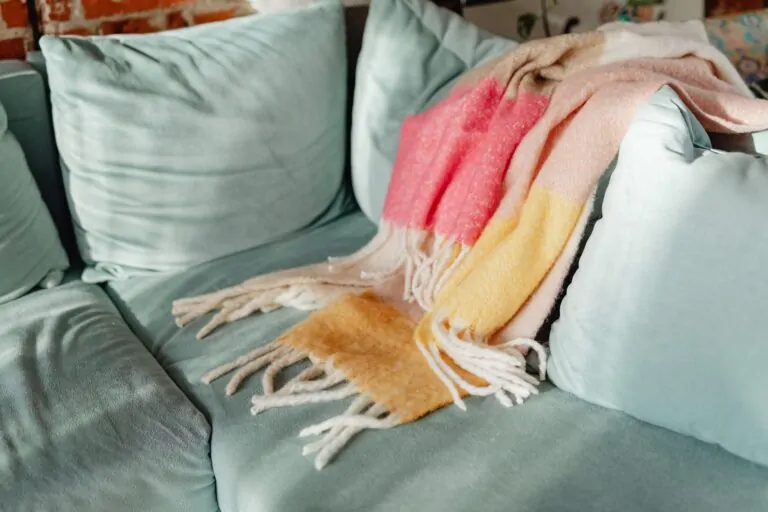
Styling the size without hiding the furniture
Use one deliberate placement. Fold the blanket lengthwise over a sofa arm for a tailored line, drop it loosely into one corner for a softer reading cue, or spread it across the lower bed and fold back enough to reveal the bedding beneath. The eye needs contrast between textile and furniture; covering every edge makes the piece look like protection rather than decoration.
Color can either connect the blanket to the room or give it a single point of contrast. Repeat one minor color from art, a rug or upholstery rather than matching every accessory. Texture is often enough: a quiet solid weave beside smooth leather or tightly woven upholstery can add depth without another pattern.
Care, shrinkage, and the real finished size
Natural fibers can change after washing, and even prewashed textiles may relax or contract. Follow the label, use the recommended temperature and reshape the blanket before drying when appropriate. Do not purchase an exact edge-to-edge fit if a small dimensional change would make the blanket unusable.
Large blankets also demand more drying space. Before sizing up, check whether the item is machine washable, whether the home washer can move it freely and whether line drying is practical. A slightly smaller blanket that is cleaned regularly often serves better than a dramatic size that becomes a maintenance problem.
Common buying mistakes
- Treating a marketing label as a fixed standard instead of checking inches or centimeters.
- Looking only at length and forgetting that width controls wrapping, sharing and side drop.
- Using staged photography as proof of fit without comparing real dimensions.
- Ignoring material weight, storage volume and washing instructions.
- Buying a throw when the intended result requires mattress-sized bedding.
Frequently asked questions
What is the standard stroller blanket size?
There is no single mandatory standard, but about 22–30 by 30–36 inches is a useful compact range.
Can a stroller blanket be used in a car seat?
Only over a correctly buckled harness and below the face. Do not place bulky fabric under the child or harness, and follow the seat manufacturer’s instructions.
Is a stroller safe for routine infant sleep?
No. AAP guidance says sitting devices such as strollers are not recommended for routine sleep; move a sleeping infant to a firm, flat, non-inclined surface as soon as practical.
Which fabric is best?
A washable, breathable fabric suited to the weather is usually easiest to manage. Avoid heavy or fuzzy layers that encourage overheating or obscure the child.
Bottom line
commonly about 22–30 inches wide by 30–36 inches long works best as a compact, portable baby blanket. Choose it when the priority is supervised stroller walks, a light layer placed over correctly fastened straps, tummy-time setup when appropriate, or a clean portable surface; choose a different category when you need routine infant sleep, placement beneath or behind a car-seat harness, covering the face, or fabric long enough to reach stroller wheels. Measure the real use, compare both dimensions and account for the material before ordering.










 Blankets and Throws
 Home Accessories
 Furniture
 Rugs
Rugs Cushions
 Kitchen
 Cutlery and Dinnerware
 Drinkware
 Table Mats and Coasters
 Dining Accessories
 Tablecloths and Napkins
 Decorative Items
 Vases and Planters
 Wall Decor
 Bathroom Accessories
 Bathroom Storage
 Bath and Shower Mats
 Towels