FREE WORLDWIDE TRACKED SHIPPING
White Interior Design: The Complete Palette Guide
 By Laura Jones
A white interior is harder to get right than it looks — here is how to layer whites so a room feels warm, not clinical.
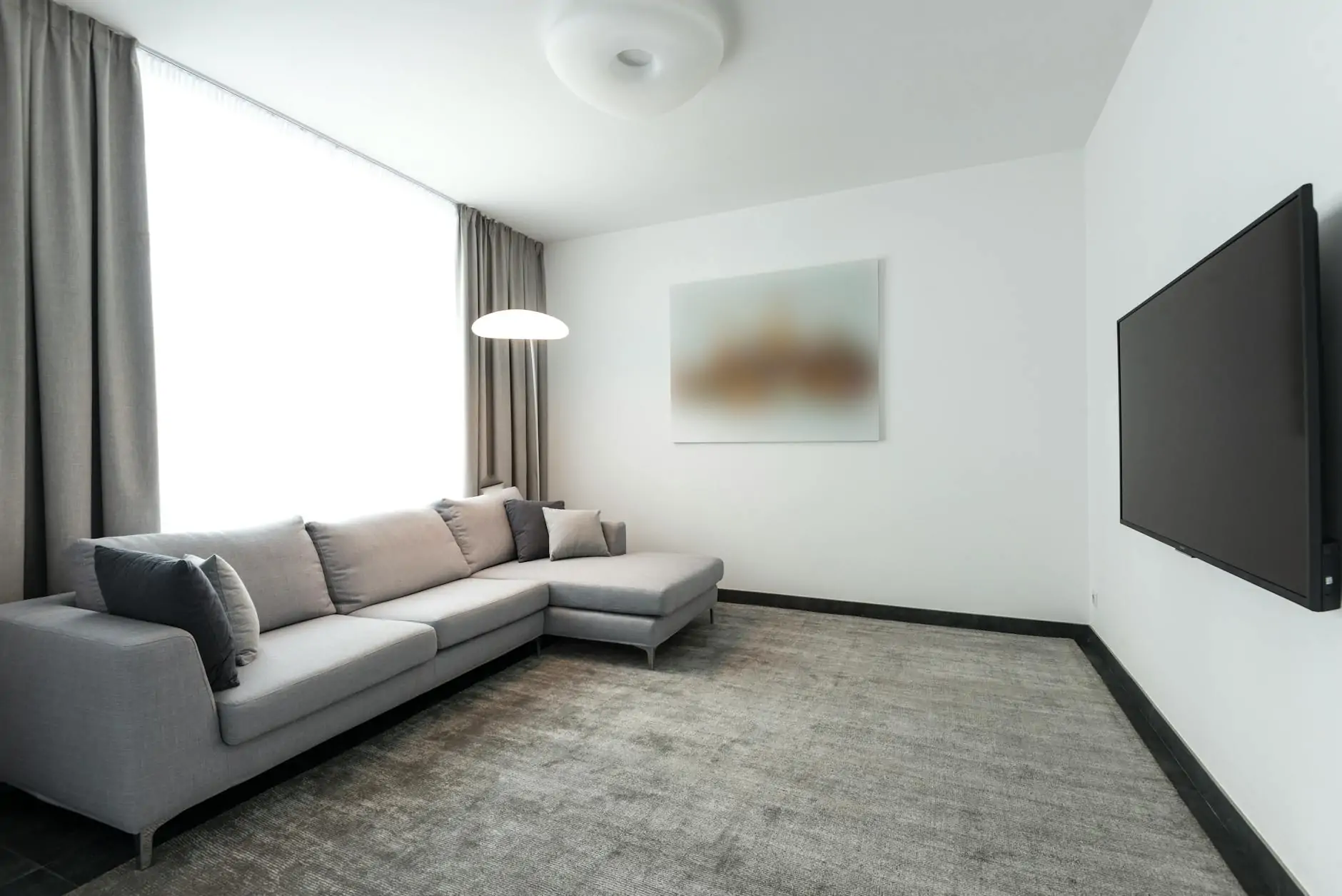
White interior design works when whites are layered, not matched.
White interior design is harder to get right than it looks. The internet is full of all-white rooms that photograph beautifully and feel cold and clinical to actually live in. The difference between a white room that hums and a white room that hides comes down to a few specific decisions: which whites you choose, how you layer them, what wood and metal tones you pair them with, and how you light the whole thing. Get those right and a white interior becomes one of the most timeless, quietly elegant looks you can build.
Why White Interiors Have Staying Power
Despite a decade of swings toward color drenching and dark moody rooms, white remains the default high-end interior choice for a reason. White walls bounce light, recede visually so furniture and art can lead, and pair effortlessly with virtually every wood, fabric, and accent color. They also age more gracefully than trend-driven palettes — a well-done white room from 1995 looks more current today than a sage-and-burgundy one from the same era.
The key word is well-done. White interior design rewards careful choices and punishes lazy ones. A rushed all-white room with the wrong undertones will feel cold within a year. A patiently designed white room will feel quietly luxurious for decades.
How to Choose the Right White
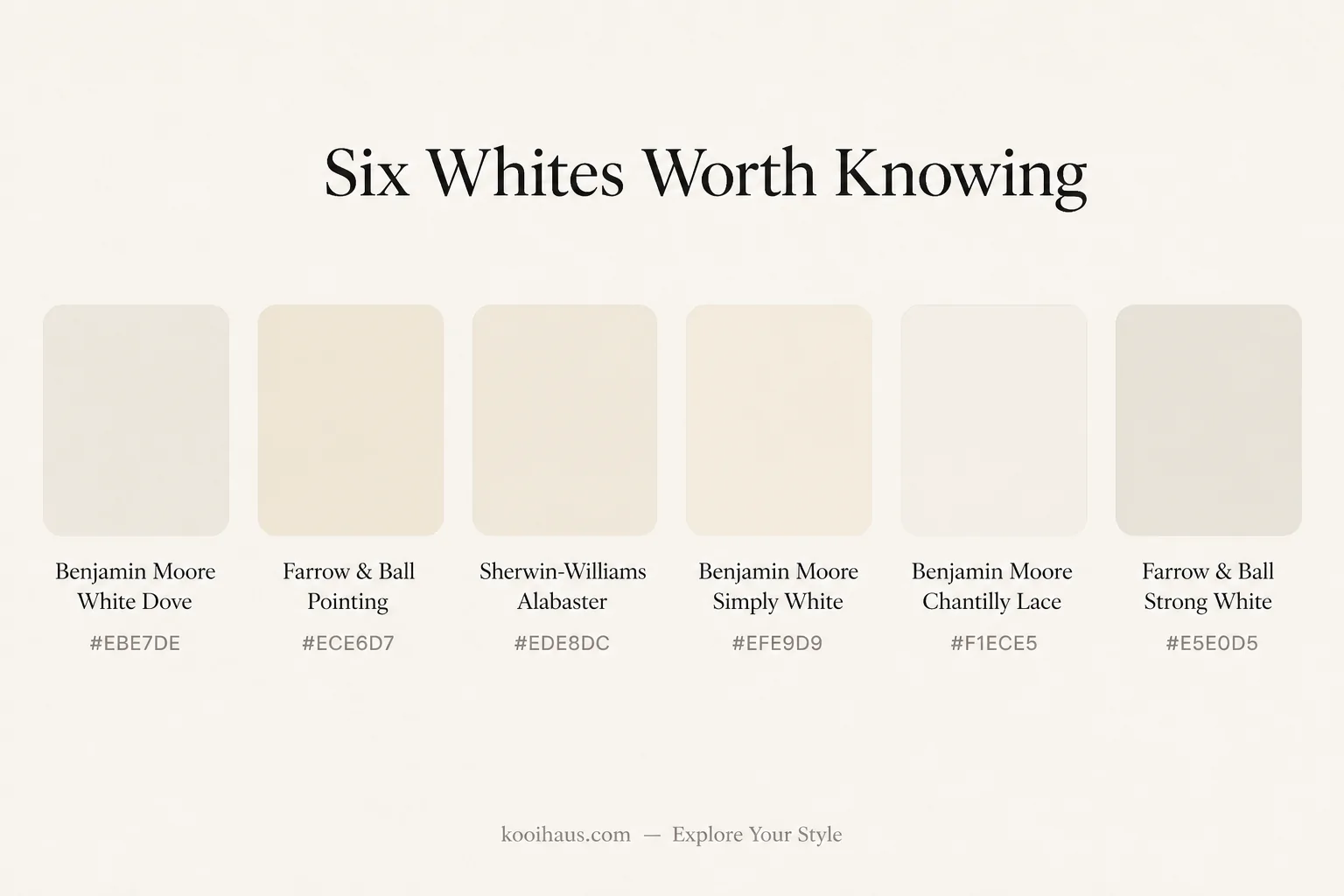
The first decision is which white. There are dozens of whites in any major paint catalog, and they are not interchangeable. Three categories cover most situations:
Warm whites. Off-whites with cream, yellow, or beige undertones. They flatter wood floors, brass fixtures, and natural fibers. Examples: Benjamin Moore White Dove, Farrow & Ball Pointing, Sherwin-Williams Alabaster.
Neutral whites. Whites with very subtle undertones that read clean without leaning warm or cool. Examples: Benjamin Moore Simply White, Farrow & Ball Wevet, Sherwin-Williams Pure White.
Cool whites. Whites with blue, gray, or green undertones. Best for very sunny rooms or for crisp modern spaces; risky in low-light rooms. Examples: Benjamin Moore Chantilly Lace, Farrow & Ball Strong White.
For most homes, warm or neutral whites are safer. They flatter human skin tones, mix with more wood species, and make the room feel warmer through the year — especially in winter when low natural light can make cool whites feel almost gray.
Why Undertones Matter More Than the Name
The same paint chip can look creamy in one room and almost gray in another. Undertones get amplified by the light bouncing off floors, fabrics, and adjacent walls. A white that reads neutral in a north-facing room may read pink in a south-facing one with terracotta floors.
The fix is simple but unpopular: always order at least three sample pots, paint big patches in the actual room, and live with them for two days. Look at them in morning light, afternoon sun, and evening lamplight. The right white will look right in all three. The wrong one will look fine in one and weird in the others.
Layering Multiple Whites in One Space
Single-white rooms read flat. The best white interiors layer two or three whites within the same family — a slightly creamier wall, a slightly brighter trim, an off-white upholstery — so the eye reads texture and depth even when no other color is in the room.
A reliable formula: walls in a soft warm white (something like White Dove), trim and millwork one shade brighter, and upholstery and bedding in a slightly warmer or grayer off-white. The differences should feel subtle in person but make the whole room read more dimensional than a single perfect-match palette.
Wood and Metal Choices in a White Room
White is a backdrop. The character of a white room comes from the woods, metals, and fabrics around it. Three combinations consistently work:
Warm and grounded. Warm white walls + white oak or walnut floors + unlacquered brass + linen and bouclé upholstery. Reads timeless and lived-in.
Cool and sculptural. Neutral white walls + pale ash or limewashed floors + matte black accents + white marble or travertine. Reads architectural and quietly modern.
Soft and Mediterranean. Warm white walls + terracotta or limestone floors + aged brass + textured plaster + soft white linen. Reads coastal-Mediterranean.
What rarely works in a white room: chrome and high-gloss nickel (too cold against most whites), red-toned woods like cherry (the warmth fights neutral whites), and high-saturation accent colors as the only color in the room (too jarring against the neutral background).
Adding Texture to Avoid the Gallery Look
The most common mistake in white interior design is mistaking white walls for a finished design. A white room with smooth painted walls, smooth white furniture, and a smooth white rug looks like a showroom. The fix is texture.
- Limewashed or plastered walls. Add depth that flat paint cannot.
- Bouclé, linen, and slubby cotton upholstery. Visual texture without color.
- Wool, jute, and sisal rugs. Heavy texture underfoot grounds an otherwise floating room.
- Hand-thrown ceramics, woven baskets, and aged wood objects. Each item adds tactile interest.
- Heavy linen drapery. Even closed and unobtrusive, it softens the architecture.
Lighting a White Room
Lighting is where white interiors are made or broken. Cool fluorescent or harsh LED lighting will turn the most carefully chosen white walls into something that feels like a hospital. Three lighting rules transform a white room:
- Use 2700K bulbs. Anything cooler will make whites look gray and wood tones look flat. 2700K is the warm, lamp-like temperature that flatters every white.
- Layer light sources. A single overhead fixture in a white room is the fastest way to make it feel cold. Add at least three light sources at different heights — floor, table, ceiling — all on dimmers.
- Skip recessed cans as primary lighting. They wash everything flat. Use them as accent layers if they exist; lean on visible lamps and pendants for daily light.
Bringing White Interior Design Into Each Room
The living room is the easiest place to start. White walls, white oak floors, a heavy linen sofa in cream, a wool rug in oat, a travertine or limewashed-oak coffee table, and one large piece of art with a strong dark element to ground the room. Add two warm-bulb lamps and a single sculptural plant.
The bedroom benefits from white walls, layered linen bedding in three shades of cream and oat, a white-oak platform bed, and unlined linen drapery. Skip matching pillow shams; mismatched off-whites read more luxurious than a coordinated set.
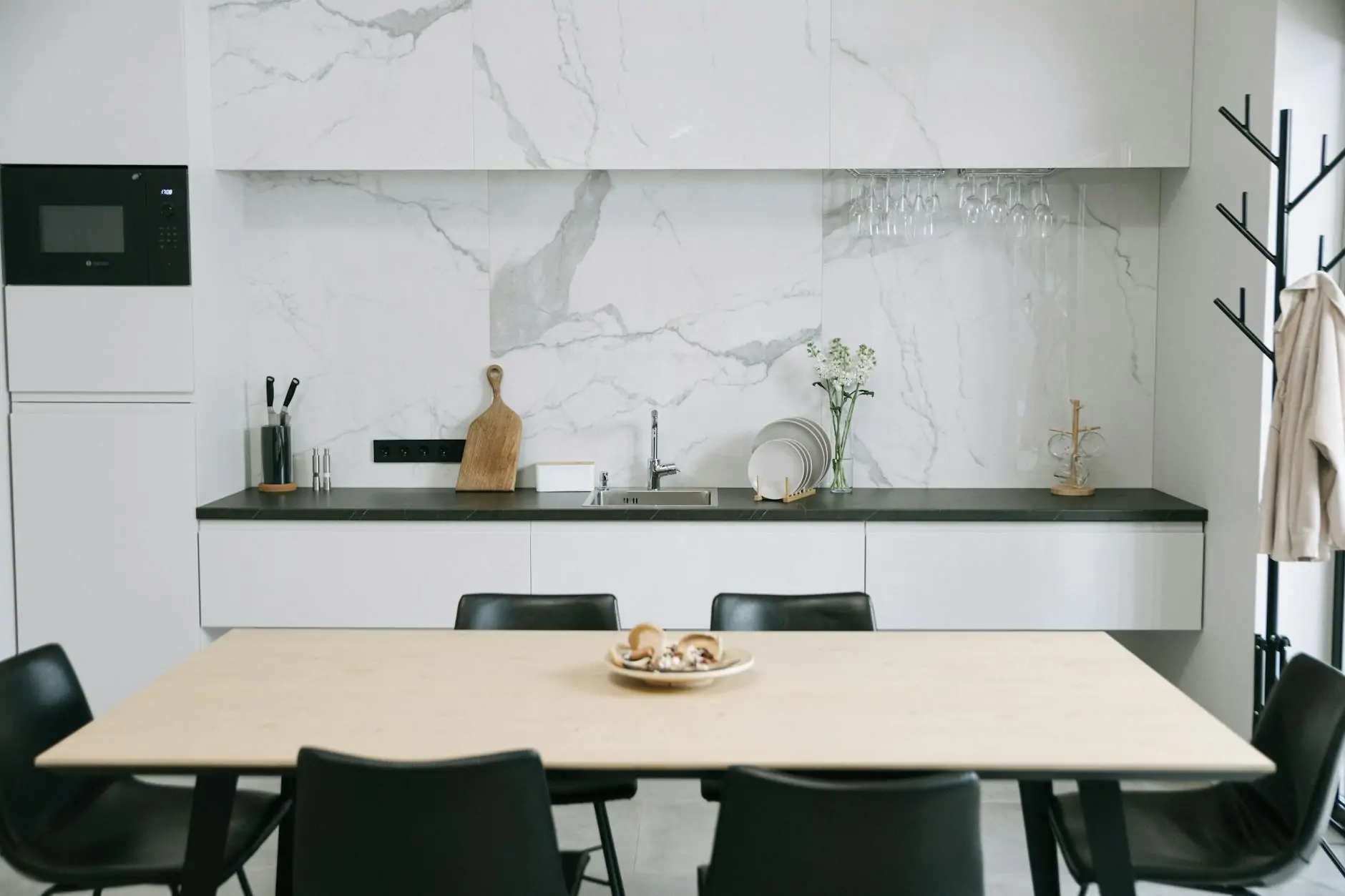
The kitchen is where white interiors got their reputation. White cabinets, white walls, and white counters can read clinical fast. Save the room with a real-wood island, a textured backsplash (handmade tile, plaster, or natural stone), and unlacquered brass hardware. A wood cutting board, a ceramic salt cellar, and a single vase of dried foliage on the counter does the rest.
Bathrooms in white reward a single textural moment — handmade zellige tile, a marble vanity, or a limewashed wall — paired with brass fixtures and a heavy linen towel. Avoid all-white-everything; one element of contrast keeps the room from feeling sterile.
Common Mistakes in White Interior Design
The first mistake is choosing white based on the paint chip alone. The chip lies. Always test in your real room, in real light, before committing.
The second is layering only one white. Even a beautiful warm white loses dimension when used on every surface. Add at least one slightly different shade — a creamier upholstery, a brighter trim, or a warmer rug — to keep the room from reading flat.
The third is forgetting warmth. Whites are cool by nature; the warmth has to come from elsewhere. Wood floors, brass fixtures, linen upholstery, and warm-bulb lighting are all non-negotiable for a white room that feels welcoming rather than clinical.
Frequently Asked Questions
Is white interior design out of style?
No. Despite several years of color drenching being trendy, white interiors continue to dominate high-end design publications and architectural projects. The style is timeless when done with care.
What is the most popular warm white paint?
Benjamin Moore White Dove (OC-17) is consistently among the most-used warm whites in residential design. It works in nearly every light condition and pairs with most wood tones.
Can a white interior work in a small, dark apartment?
Yes — but choose your white carefully. A warm white with slight yellow undertones brightens a dim room more effectively than a neutral or cool white, which can read gray in low light.
Are white interiors hard to keep clean?
White surfaces show wear faster than darker ones. Pair white with washable slipcovers, performance fabrics on upholstery, and leather or stone on high-touch surfaces to make the look livable.
What flooring works best with white interior design?
White oak is the most versatile. Pale ash, limewashed oak, and warm travertine also work beautifully. Avoid red-toned woods like cherry; they fight most neutral whites.
White interior design is one of the most flattering, flexible, and timeless styles you can choose — but only when you treat the whites themselves as a serious design decision. Choose your whites for the room you actually live in, layer them carefully, and lean on natural materials, warm lighting, and texture to keep the space from drifting clinical. Done right, a white interior is the kind of room that looks better at year ten than it did at year one.
Take the Quiz
Not sure if a white interior is really your thing? Take our Interior Style Quiz and find out which interior style and palette fit your home, your light, and the way you actually live.











 Blankets and Throws
 Home Accessories
 Furniture
 Rugs
Rugs Cushions
 Kitchen
 Cutlery and Dinnerware
 Drinkware
 Table Mats and Coasters
 Dining Accessories
 Tablecloths and Napkins
 Decorative Items
 Vases and Planters
 Wall Decor
 Bathroom Accessories
 Bathroom Storage
 Bath and Shower Mats
 Towels