FREE WORLDWIDE TRACKED SHIPPING
How Cooling Blankets Work: What Actually Keeps a Blanket Cool
 By Alex Carter
Cooling blankets do not create cold. This guide explains how airflow, moisture management, conductive fibers and phase-change materials affect overnight comfort.

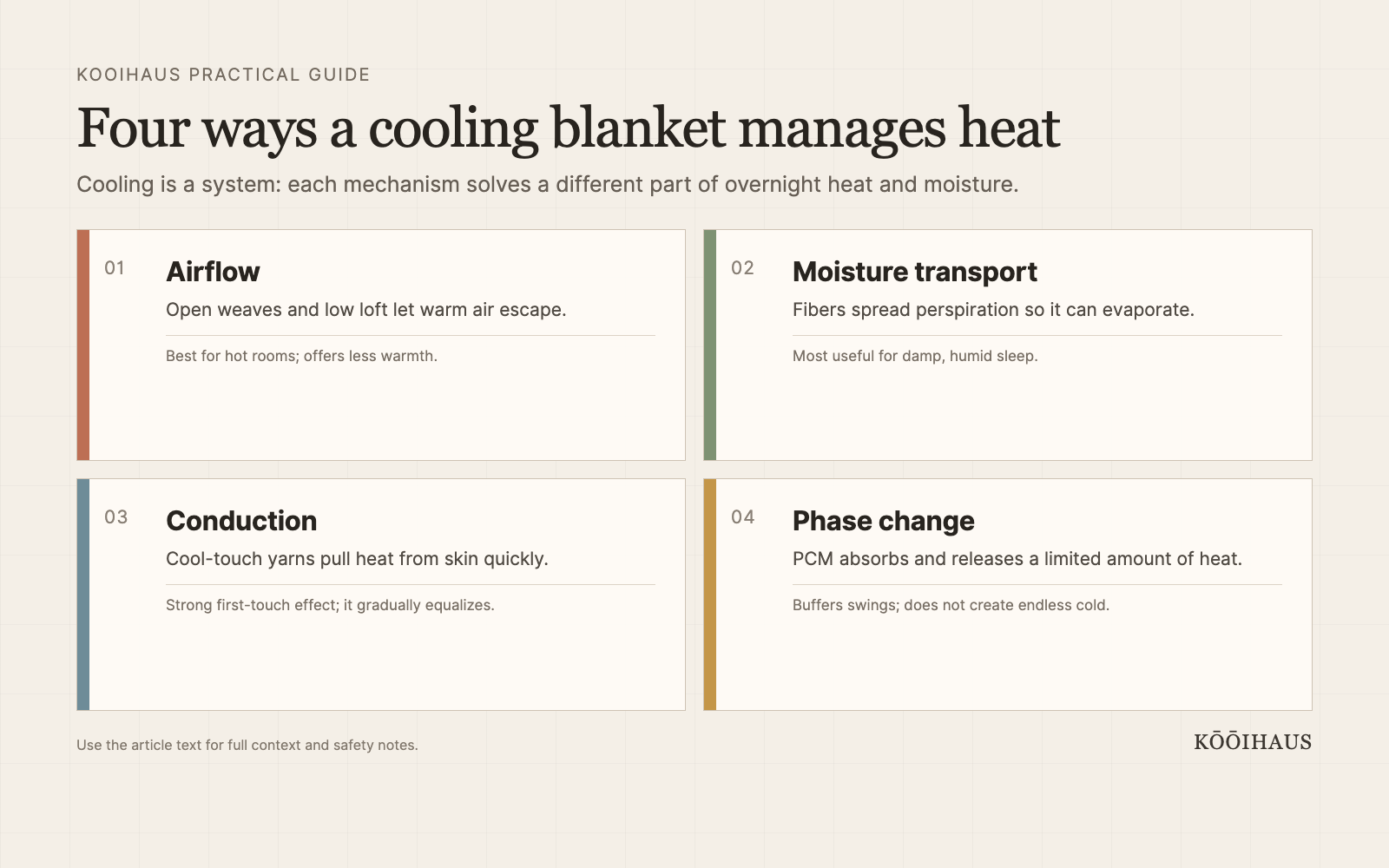
Cooling blankets work by helping heat and moisture leave the space around your body instead of trapping them. They may do that through an airy weave, moisture-moving fibers, heat-conductive yarns, phase-change coatings—or a combination of those mechanisms.
That distinction matters because “cooling” is a result, not a material. A blanket can feel cold when you first touch it and still become clammy at 3 a.m. Another can feel completely ordinary in your hand but remain comfortable because it is light, breathable, and quick to dry.
The useful question is not simply whether a blanket is cooling. It is how it cools, and whether that mechanism matches the reason you overheat.
Cooling is a system, not a magic fabric
Your blanket is only one layer in a small sleep environment that also includes your body, sleepwear, sheets, mattress protector, mattress, room temperature, and humidity. A breathable blanket cannot compensate for a dense foam mattress and a waterproof protector that hold heat close to the body. Likewise, an expensive cool-touch cover will not fix a room that remains hot and humid all night, so maintaining a comfortable indoor temperature also depends on effective home cooling.
The National Sleep Foundation notes that both temperature and humidity affect sleep comfort, and that cooling and moisture-wicking textiles can help manage the microclimate around the sleeper. The operative word is help. Bedding can reduce heat trapping; it is not an air conditioner.
Here is the practical difference between the main claims you will see:
| Cooling mechanism | What it actually does | Best for | Main limitation |
|---|---|---|---|
| Open weave and low loft | Lets warm air escape and reduces insulation | Hot rooms and people who dislike heavy bedding | Offers little warmth when the temperature drops |
| Moisture management | Moves perspiration away from skin and spreads it so it can evaporate | Humid nights and sleepers who wake feeling damp | Evaporation slows when the room is already very humid |
| Conductive or cool-touch yarns | Pulls heat from the skin quickly, creating an immediate cool sensation | People who struggle to settle because the bed feels warm | The first-touch effect may fade as temperatures equalize |
| Phase-change material (PCM) | Absorbs some heat as it changes state, then releases it later | Sleepers whose temperature fluctuates | Capacity is finite; it does not stay cold indefinitely |
The four mechanisms worth understanding
1. Airflow prevents unnecessary heat trapping
Every blanket insulates to some degree by holding still air. A thick fill, dense weave, or high pile usually holds more of it; a thin blanket with a relatively open structure usually holds less. This is why construction can matter more than the fiber name printed in large type on the packaging.
Light cotton, linen, gauze, and some knitted or cellular constructions can all make sense in warm conditions. But “natural” is not an automatic pass. A tightly woven, multi-layer cotton blanket may sleep warmer than a light, engineered synthetic mesh.
2. Moisture management keeps dampness from amplifying discomfort
Sweat cools the body when it evaporates. Bedding becomes uncomfortable when it absorbs that moisture but holds it near the skin, or when a non-absorbent surface lets it pool.
Moisture management involves more than raw absorbency. A useful warm-weather textile needs to pick up moisture, move it across a larger area, and release it fast enough to dry. That is why a fabric that absorbs a great deal of water is not necessarily the fabric that feels driest overnight.
Researchers developing an integrated cooling textile treated heat conduction and sweat transportation as separate but complementary jobs. Their peer-reviewed study is a helpful reminder that “wicking” and “cool to the touch” are not interchangeable claims.
3. Conductive fibers create the cold-hand effect
Some synthetic yarns and mineral-infused fibers move heat away from the point where your skin touches the fabric. That rapid transfer is what creates the satisfying cool sensation you notice in a showroom or during the first few minutes in bed.
It can be genuinely useful for settling down. It should not, however, be mistaken for endless refrigeration. Once the blanket and your skin move toward the same temperature, airflow and moisture management become more important.
If a product description talks almost entirely about a proprietary fiber but says nothing about blanket weight, weave, breathability, or care, treat the claim cautiously.
4. Phase-change materials buffer temperature swings
Phase-change materials absorb energy while shifting from one physical state to another, then release that energy as they return. In bedding, they are intended to smooth short temperature peaks rather than keep a surface permanently cold.
PCM can be helpful if you alternate between feeling warm and cool. It is less persuasive as a standalone answer for a consistently overheated room, especially when the rest of the blanket is thick or the sleeper uses several insulating layers.
Which materials make the most sense?
There is no universal winner, but there are useful patterns.
Cotton is familiar, washable, and capable of good airflow. Its performance varies enormously with yarn, weave, thickness, and finishing. Crisp percale and open cellular cotton feel very different from dense flannel or plush fleece.
Linen has a dry hand and works well in relaxed, breathable summer layers. It wrinkles, which is either a drawback or part of its appeal. Look at the actual blanket weight; linen can also be made into substantial cold-weather textiles.
Lyocell and other regenerated cellulose fibers are often smooth and effective at moisture management. Names on labels can be confusing: Tencel is a brand used for certain lyocell and modal fibers, while “bamboo” bedding is commonly a regenerated cellulose fabric rather than raw bamboo fiber. The exact construction still matters.
Engineered synthetics can deliver strong wicking, fast drying, or contact cooling. They are not automatically less breathable than natural fibers, but some hold odor more readily and may require gentler heat during washing and drying.
Blends can be the sensible choice. A manufacturer may combine a cool-touch face with a breathable backing, or mix fibers to balance softness, drying time, durability, and price.
The Sleep Foundation’s cooling-blanket guide reaches a similarly practical conclusion: breathable, moisture-wicking materials, blanket weight, and construction all influence performance.
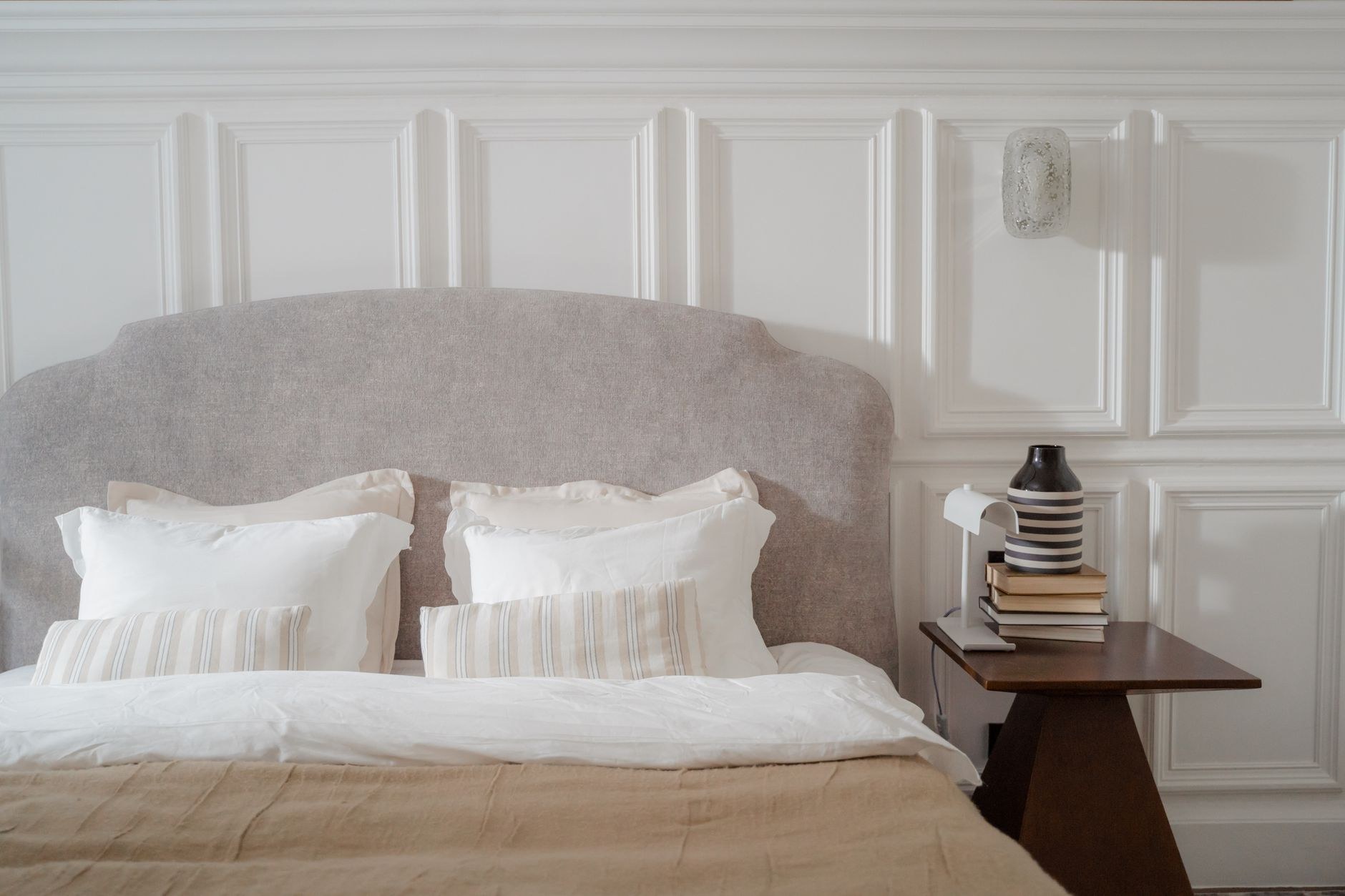
Weight and weave can matter more than the headline fiber
A blanket marketed as bamboo can still be warm if it is double-layered and heavy. A basic cotton blanket can work beautifully if it is light and porous. Before comparing brand technologies, compare the physical object.
Check four things:
- Total weight or grams per square meter. When all else is equal, less material usually means less insulation.
- Number of layers. Two airy layers can still trap more warmth than one.
- Surface and loft. Plush, brushed, and fuzzy finishes increase the volume of trapped air.
- Care instructions. High dryer heat can damage some finishes, coatings, and elastic or synthetic fibers.
Size matters too. An oversized blanket folded back on itself creates a double layer exactly where you may not want one. Use our blanket dimensions guide to choose enough coverage without unnecessary bulk.
A five-minute buying check
Ignore the lifestyle photograph for a moment and read the specification panel.
- If you wake hot but dry, prioritize low weight, open construction, and airflow.
- If you wake damp or clammy, look for moisture transport and fast drying, then reduce non-breathable layers underneath.
- If you struggle because the bed feels warm when you first get in, a conductive cool-touch face may be worth paying for.
- If your temperature changes through the night, consider a light blanket with phase-change material rather than a thick PCM product.
- If you still need the reassuring feel of weight, choose the lightest construction that provides it and avoid stacking several blankets.
Then look for the information the brand does not volunteer. Is the blanket weight listed? Is the cooling treatment on one side or both? Can it be tumble-dried? Does a trial period let you test it in your own room? Vague superlatives should count for less than a clear construction diagram and realistic care instructions.
The Kooihaus verdict
Worth it: a light blanket whose cooling claim names a mechanism you actually need—airflow for a hot room, moisture management for sweating, or contact cooling for a warm first touch.
Skip it: a thick blanket that leans on “ice,” “arctic,” or a proprietary fiber name while hiding its weight, layer count, and care limitations.
The best cooling blanket is not necessarily the one that feels coldest for ten seconds. It is the one that quietly prevents heat and dampness from building for the next seven hours. Keep the rest of the bed simple, too: one effective summer layer styled well is better than a photogenic stack you have to throw onto the floor. Our guide to styling a throw on a bed shows how to add texture without covering the entire sleep surface.
Frequently asked questions
Do cooling blankets stay cold all night?
Usually not in the literal sense. Passive bedding does not generate cold. It can reduce insulation, move moisture, conduct heat away from your skin, or buffer a limited amount of heat. The effect depends on the room and the other bed layers.
Are cooling blankets good for night sweats?
They may improve comfort by moving moisture and drying faster, but night sweats can have many causes. Bedding is a comfort measure, not a diagnosis; persistent or unexplained night sweats deserve medical advice.
Is a weighted cooling blanket a contradiction?
Not necessarily, but weight and fill increase insulation. A weighted model can use breathable shells and moisture-managing fabrics, yet it will usually feel warmer than an unfilled summer blanket. Compare construction, not just the cover fabric.
Should a cooling blanket go above or below a sheet?
Follow the maker’s intended use, but remember that every layer between your body and a cool-touch surface weakens the initial sensation. A breathable sheet can still work well with a light blanket because the complete system matters more than direct contact alone.
How should you wash a cooling blanket?
Use the care label. Gentle cycles, mild detergent, and low drying temperatures are common recommendations because high heat and fabric softener can reduce the performance of some finishes. Weighted constructions have additional handling limits; see our weighted-blanket washing guide.











 Blankets and Throws
 Home Accessories
 Furniture
 Rugs
Rugs Cushions
 Kitchen
 Cutlery and Dinnerware
 Drinkware
 Table Mats and Coasters
 Dining Accessories
 Tablecloths and Napkins
 Decorative Items
 Vases and Planters
 Wall Decor
 Bathroom Accessories
 Bathroom Storage
 Bath and Shower Mats
 Towels