FREE WORLDWIDE TRACKED SHIPPING

How to Choose the Right Commercial Door Hardware for Your Office
 By Alex Carter
A practical guide to matching commercial door hardware with office access, safety, accessibility and maintenance needs
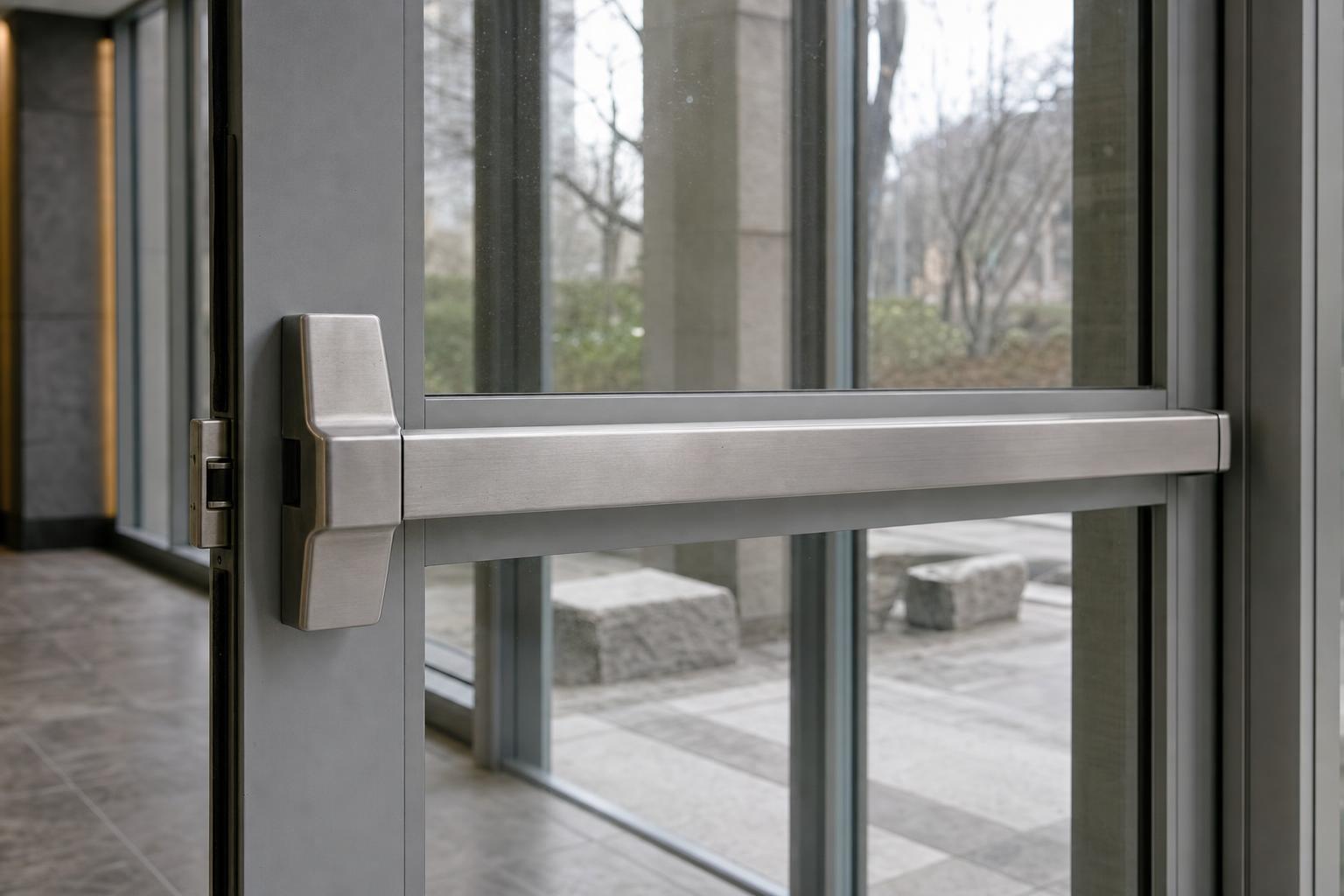
Image supplied by the contributor.
People notice a heavy door, a sticking lever, or a closer that slams behind them. Door hardware shapes how an office feels, but its role goes beyond appearance. It affects accessibility, emergency exits, security, and everyday maintenance. Choosing the right hardware starts with the opening and the people who use it, not the finish.
Start at the Opening
Before comparing products, identify the door and frame materials. Is the door wood, hollow metal, aluminum-framed glass, or all glass? Which way does it swing, how much traffic does it receive, and is it on a required exit path? Check for a fire-rating label, too.
Door construction determines compatibility. Cylindrical locks can fit wood and hollow metal doors with the correct preparation. Aluminum storefront doors often have narrow vertical frame sections that require specialized locks and operating hardware. All-glass doors usually need fittings or rails designed for glass. Confirm these details before choosing a style.
The Non-Negotiables
For U.S. offices, the 2010 ADA Standards address accessibility, while adopted building and fire codes govern emergency exits and other safety requirements. The U.S. Access Board provides guidance on accessible doors. Key points include:
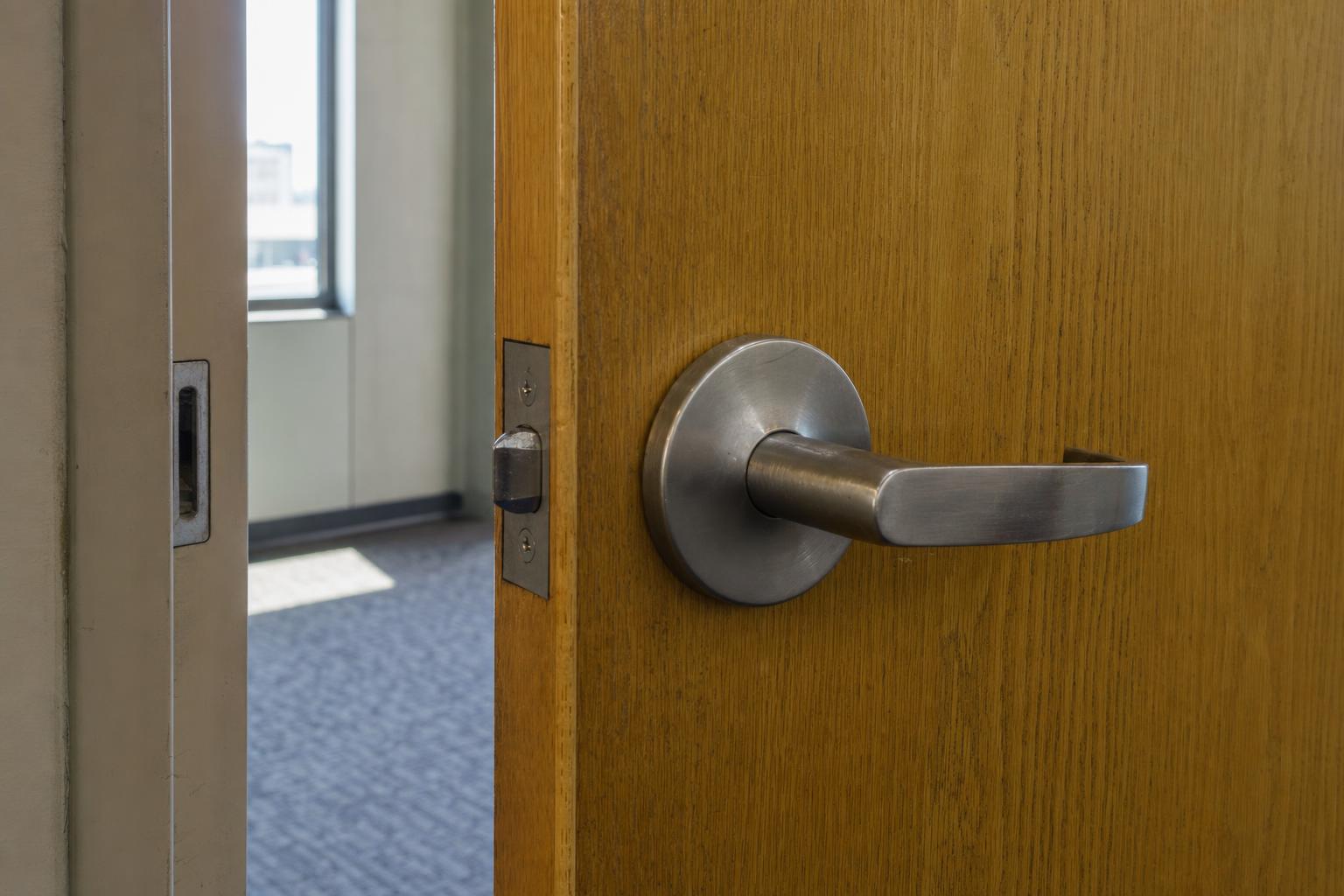
- One-hand operation. Accessible hardware must work without tight grasping, pinching, or twisting the wrist. Levers and push bars are common choices.
- Mounting height. Accessible door handles and other operable hardware generally must sit 34 to 48 inches above the finished floor.
- Operating force. Distinguish operating the hardware from pushing the door open. ADA requirements generally limit hardware operation to 5 pounds of force. Interior hinged doors, except fire doors, also have a 5-pound maximum opening force. Exterior hinged doors and fire doors need separate review.
- Closing speed. Door closers must take at least 5 seconds to move from 90 degrees open to 12 degrees from the latch. Spring hinges must take at least 1.5 seconds to close from 70 degrees.
- Thresholds. For typical new accessible doorways, thresholds cannot exceed 1/2 inch. Changes in level above 1/4 inch require a bevel.
- Panic hardware. Under many editions of the International Building Code (IBC), doors with locks or latches serving assembly or educational spaces with occupant loads of 50 or more require panic or fire-exit hardware. Other conditions can also trigger this requirement.
Requirements depend on the adopted code, occupancy, and door assembly. Confirm them with the local building or fire official before ordering.
Pick the Lock Function for the Space
Lock function describes how the hardware locks and unlocks from each side. Choose it according to how the room is used.
Storeroom. The outside lever stays locked, a key permits entry, and the inside lever remains free. This suits storage and IT rooms that should stay secured when the door closes.
Entrance/office. A key provides access from outside, while an inside button or turn controls locking. Exact operation varies by model, so check the manufacturer's function description.
Classroom. A key controls whether the outside lever is locked, while the inside lever remains free. This can suit meeting rooms where staff need to control access.
For typical office doors, occupants should be able to exit in a single releasing action without a key, tool, or special knowledge. Confirm any proposed exception with the local code official.
Grade Matters
ANSI/BHMA grades describe tested hardware performance, with Grade 1 generally representing the highest performance level within a product category. Compare locks with locks and closers with closers; their tests are different.
Grade 1 is a practical choice for busy lobbies and suite entries. Grade 2 may suit private offices and lower-traffic rooms where the project specifications allow it. A grade alone doesn't determine the security of the opening. The frame, strike, installation, and lock function also matter. A specialist such as DoorsForPros can help compare commercial door hardware with the opening's measurements.
Hardware by Opening
Use each door's purpose to build a compatible hardware set.
- Lobby or visitor entry. Match the latch, lever or pull, and closer to the door construction. Where panic hardware is required, select a listed exit device suited to the opening. Adjustable closing speed helps prevent slamming; backcheck slows the opening swing but doesn't replace a doorstop.
- Tenant suite door. An entrance-function lever may suit a conventional keyed opening. A keypad or card reader can control entry, but the complete arrangement must preserve compliant exit operation.
- Conference and meeting rooms. Choose privacy or key-controlled access based on how the room is used. Check emergency-access needs and whether the room's occupancy triggers exit-hardware requirements.
- IT, server, and storage rooms. Storeroom hardware keeps the outside lever locked. The door must also close and latch reliably. If access control is needed, confirm that the reader, lock, and release arrangement work together.
Access Control Without Headaches
Electrified hardware may be fail-safe or fail-secure. Fail-safe hardware unlocks when power is lost. Fail-secure hardware remains locked on the controlled side without power. That doesn't necessarily prevent exit: a compatible lockset can still let occupants leave mechanically from inside.
Magnetic locks require an approved release arrangement. Code requirements differ between systems released by door hardware and those released by sensors. Depending on the system, provisions may include a push-to-exit button that directly interrupts power, release on power loss, and a fire-alarm connection. Have a qualified installer confirm the applicable release rules and equipment listings.
Plan wiring, power supplies, exit-release devices, and required alarm connections before walls and ceilings are finished. Test both normal operation and power-loss behavior before the system goes into use.
Storefront and Narrow-Stile Realities
A narrow stile is the slim vertical aluminum section around a storefront door's glass. Standard cylindrical locks often won't fit it. Storefront locks use different cutouts and shorter backsets, the distance from the door edge to the lock's centerline.
Operating hardware may include paddles, narrow-stile levers, or pulls paired with a compatible locking arrangement. Match the existing cutout, backset, and operating hardware rather than ordering by appearance alone. Storefront exit devices also need to fit the door's profile.
Aesthetics That Age Well
Matte black creates contrast, satin stainless offers a restrained metallic look, and bronze tones can complement wood and brick. Choose a consistent finish family for visible hardware, including levers, pulls, closers, kick plates, and hinges. Check whether the finish suits the exposure and cleaning products it will encounter. For broader coordination, review office entrance design ideas when planning the entry.
Lever shapes that return toward the door can help reduce snagging. Allow enough clearance behind pulls for a comfortable grip, and verify that the selected hardware meets accessibility requirements.
Retrofit vs New
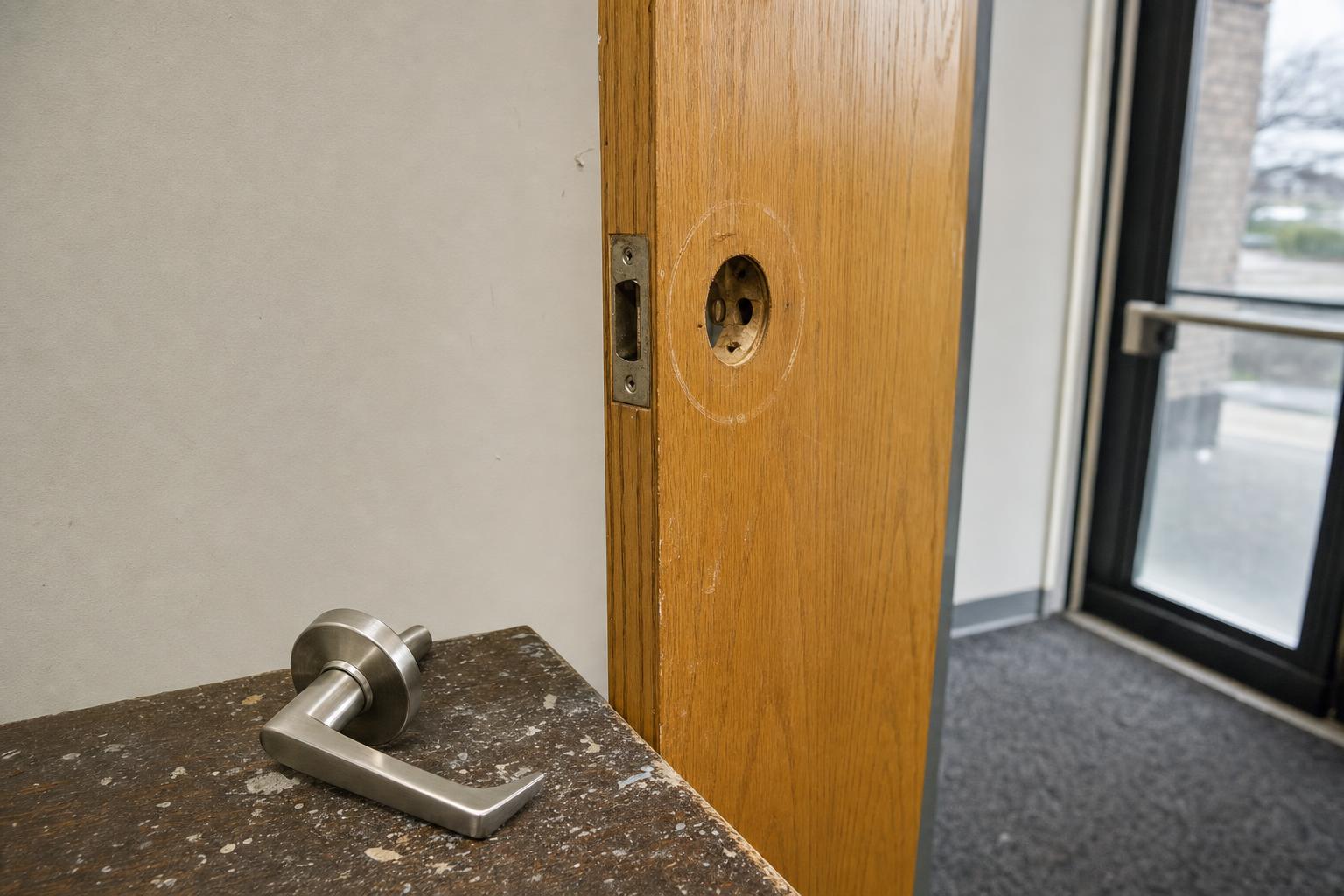
For an existing door, record its thickness, backset, existing holes or cutouts, and hinge dimensions. A lever replacement may be straightforward, while a different lock type or new exit device can require additional preparation.
Review the closer, strike, and hinges at the same time. Binding hinges or a misaligned strike can undermine otherwise suitable hardware. Sharing these measurements with a specialist gives you a practical starting point for confirming product fit.
For fire-rated openings, check the assembly's listings, manufacturer instructions, and applicable NFPA 80 requirements before replacing hardware or modifying the door. Don't assume that a part is suitable simply because its dimensions match.
Where to Source and What to Ask
A specialist supplier is a useful starting point for sourcing commercial door hardware against a clear set of specifications. Prepare a checklist for each opening:
- Performance grade suited to the traffic and project requirements
- Lock function matched to the room's use
- Door material, thickness, swing, and existing preparation
- Required fire-rating and electrical listings, including UL 294 or UL 1034 where applicable
- Compatible finish and operating hardware
- Lead time, keying requirements, and included cylinders, strikes, and fasteners
Ask the supplier to confirm product compatibility against your measurements. Keep code approval separate: questions about exit routes, fire-rated openings, or unusual locking arrangements belong with the appropriate local official.
Key Takeaways
- Identify the door construction, swing, traffic, and exit-path status first.
- Check accessibility and exit requirements before selecting hardware.
- Match lock function to room use and performance grade to expected wear.
- Plan electrified hardware as a complete system, including exit release and power-loss behavior.
- Verify narrow-stile compatibility and fire-door requirements before modifying an opening.
Before You Order
Create one hardware list for each door, with measurements, function, grade, finish, and required listings. That gives a specialist a clear basis for matching products to the opening. Resolve compatibility and code questions before ordering, then check operation after installation.





 Blankets and Throws
 Home Accessories
 Furniture
 Rugs
 Cushions

 Kitchen
 Cutlery and Dinnerware
 Drinkware
 Table Mats and Coasters
 Dining Accessories
 Tablecloths and Napkins

 Decorative Items
 Vases and Planters
 Wall Decor

 Bathroom Accessories
 Bathroom Storage
 Bath and Shower Mats
 Towels