FREE WORLDWIDE TRACKED SHIPPING

How Six Design Pros Light Small Rooms
 By Laura Jones
Six lighting and design pros share ways to light small rooms, from illuminating walls and layering lamps to choosing a bold fixture and reconsidering overlooked spaces
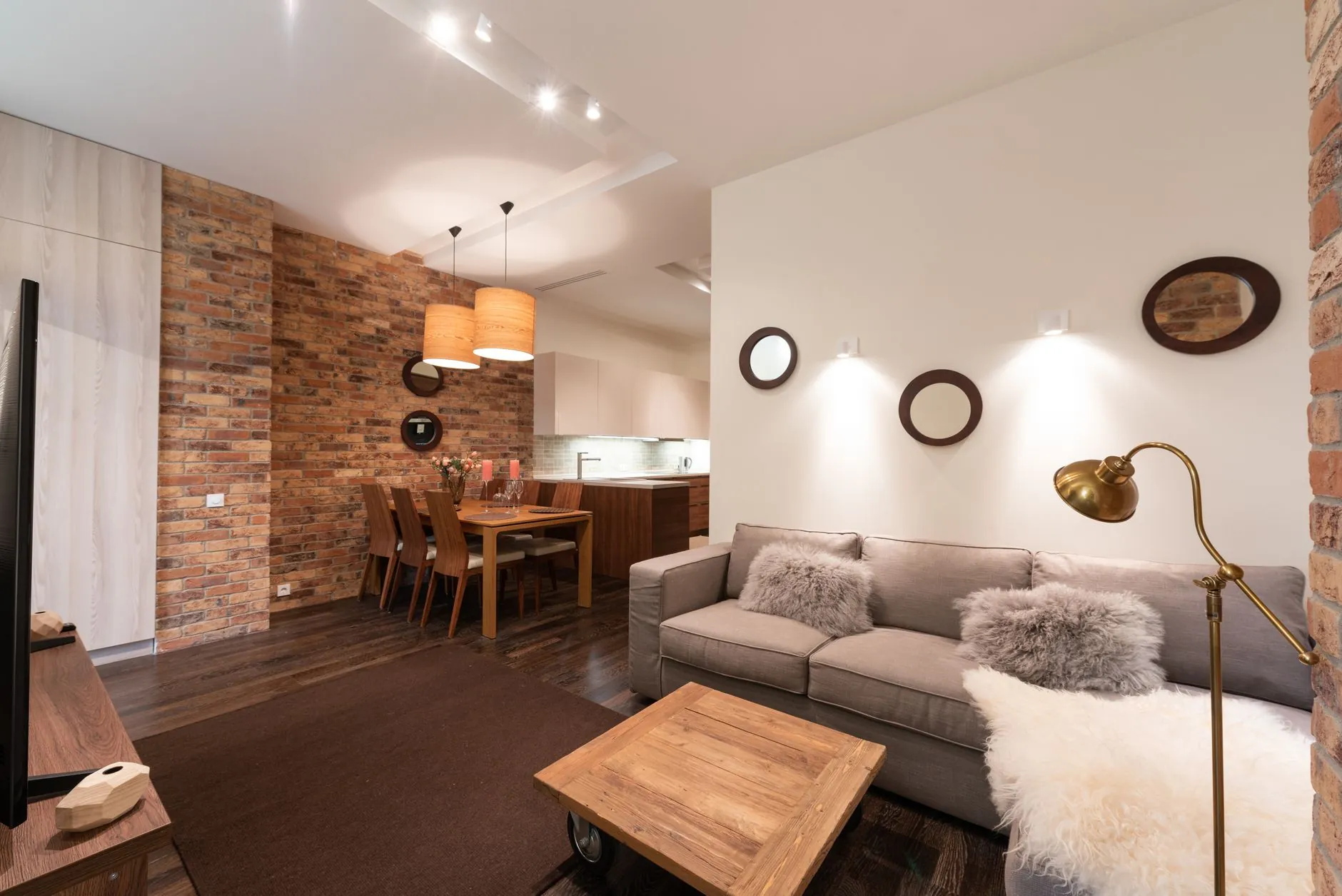
Photo: Max Vakhtbovych / Pexels.
It is evening, and the ceiling light is on. The center of the small room is bright, but the corners fall away, the walls seem farther from the glow, and the chair where you want to read is still in shadow.
When we asked six lighting and design pros about small room lighting mistakes, a recurring concern was where the light lands. Pete Romaniello, Nina Lichtenstein and Jeffrey R Dross all warn against concentrating it in the middle of the room. Sonya Lee makes a related point: one source is often not enough. Their suggestions range from lighting walls and ceilings to choosing a bold fixture or giving an overlooked room a well-placed sconce.
The problem starts in the middle
Pete Romaniello, IALD, CLD, of Conceptual Lighting, asks us to look beyond the center of the room: “There are two things that will make a room feel smaller…the first is having all of the lighting in the middle of a room instead of lighting the perimeter/walls of a room (that’s a basic concept of good lighting). The second is (more for high ceiling rooms) forgetting to have some light reflecting off the ceiling. Reflected light (off walls or ceilings) makes rooms feel open and bright…”
For Jeffrey R Dross of Lighting by Jeffrey, the kitchen offers a particularly useful test: storage, counters and the floor can all participate in the lighting plan: “Because a room is small, most people feel they only need one light, typically at the center. That should actually be avoided. Humans subconsciously dislike this type of illumination, preferring periphery lighting. Humans also have an aversion for the uniformity of ONLY recessed lighting. By combining lighting at the perimeter and different levels around the room, the size of the room will be of diminished concern. The same lighting applied in a large kitchen should be used in a smaller kitchen. It might actually have more meaning in smaller spaces. For example, Adding lighting over cabinets and at the toekick both visually expand the size of the room and make it feel larger. If glass front cabinets are used, add lighting inside for the same reason. Avoid a single light in the middle of a small kitchen.”
Reflected light (off walls or ceilings) makes rooms feel open and bright.
Pete Romaniello, Conceptual Lighting, LLC
That observation changes the question from how bright the fixture is to where its light lands.
Let light reach the edges
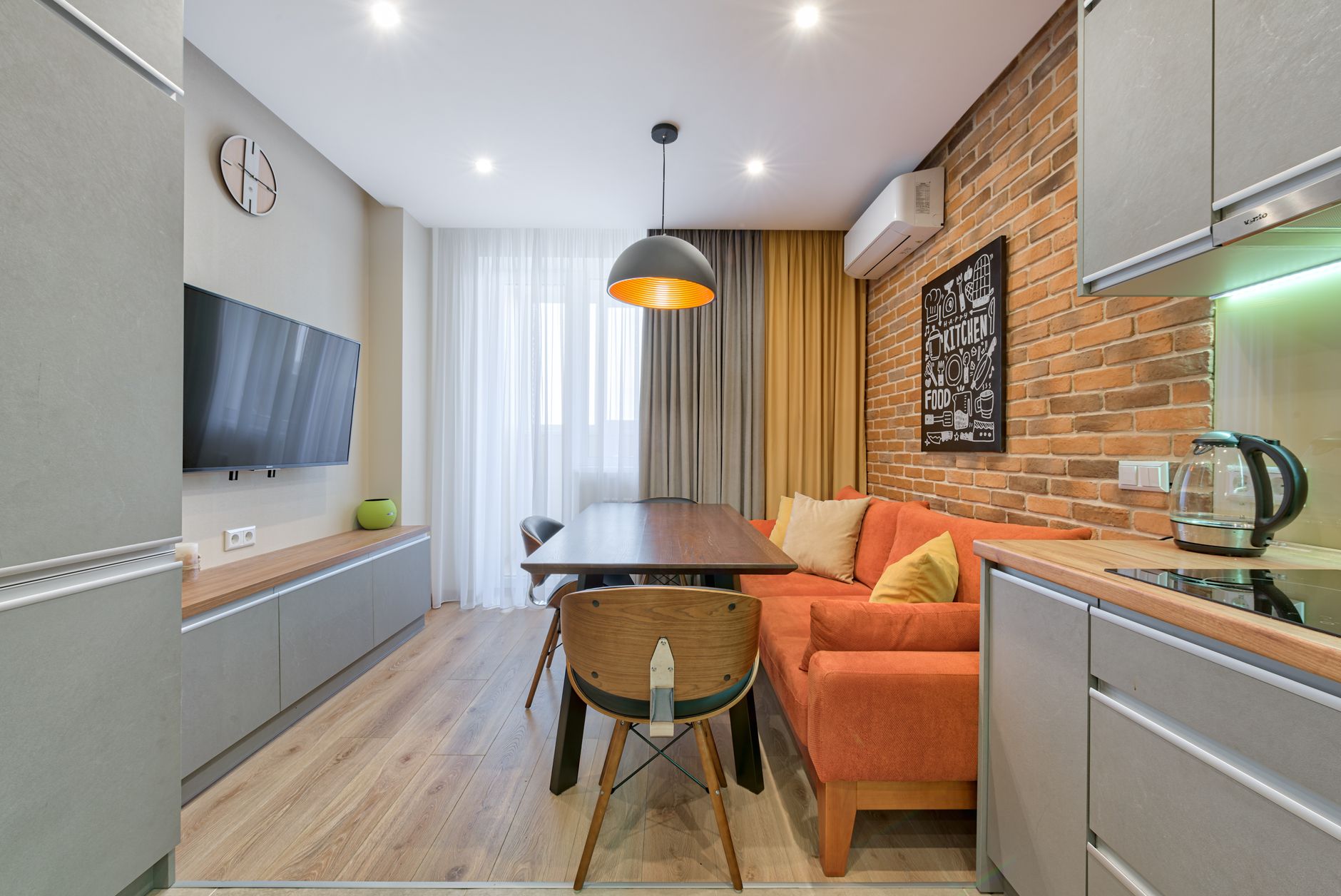
Nina Lichtenstein, SIDC, founder and principal home designer at Custom Home Design by Nina Lichtenstein, connects that distribution to the room’s edges: “One of the biggest lighting mistakes in a small room is relying on a single overhead fixture, which often creates harsh contrasts, leaves corners in shadow, and makes the space feel more confined than it actually is. Instead, I recommend layering light at different heights with wall sconces, table lamps, and strategically placed accent lighting to create a more balanced distribution of illumination. Washing walls with soft, diffused light can visually expand a room by making its boundaries feel less defined, while illuminating vertical surfaces draws the eye upward and enhances the perception of height. From a neuroaesthetic perspective, thoughtful lighting can influence not only how spacious a room appears, but also how comfortable and welcoming the space feels.”
Start with the places you use. Put a shaded table lamp beside a reading chair, try a wall light where it can cast a gentle wash, or use an upward-facing fixture to bring the ceiling into the composition. A movable lamp is a useful experiment: try it near different walls after dark and sit in your usual spot before committing to a permanent position.
From a neuroaesthetic perspective, thoughtful lighting can influence not only how spacious a room appears, but also how comfortable and welcoming the space feels.
Nina Lichtenstein, Custom Home Design by Nina Lichtenstein
Keep the overhead fixture if it earns its place. It can provide general light while a lower lamp makes a reading corner comfortable and a wall or cabinet light gives the edge of the room definition. Separate controls let you choose the combination for the moment, rather than turning every source on at once.
Small room, bold fixture?
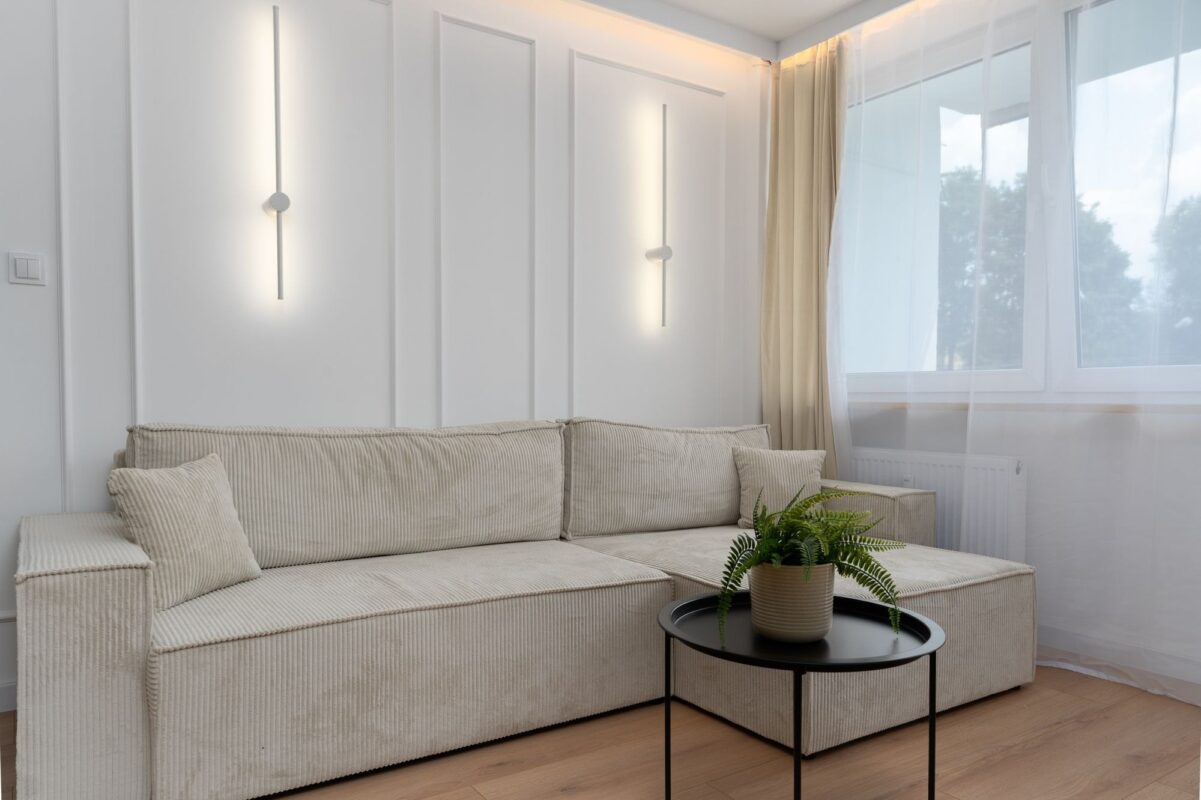
Architect Sarah Jacoby of Sarah Jacoby Architect makes the case for resisting the instinct to shrink every object to match the room: “People are often anxious about rooms feeling small and then tend to make ‘conservative’ choices—for instance, a smaller light. In general, a larger light can make the space feel more special and create a focus, while something smaller can in fact draw attention to the size of the room, so I’d advise big and bold!”
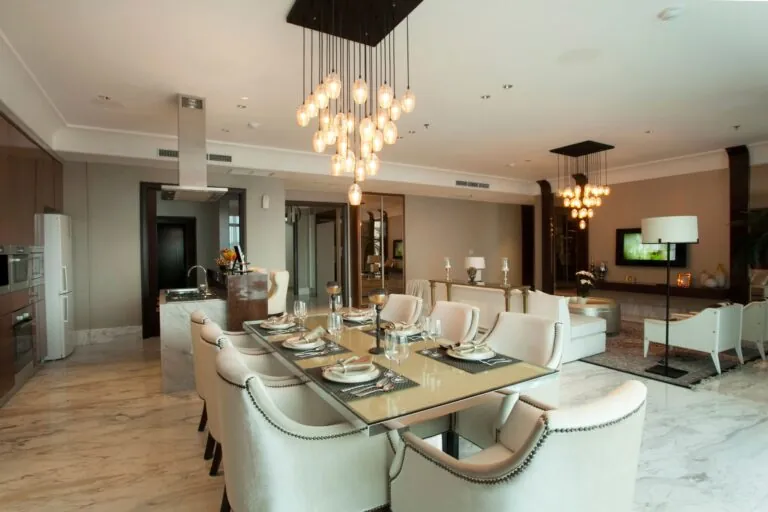
Jeffrey’s examples show how a bold fixture can fit a small room: a narrow, tall pendant fills vertical space, while an oversized semi-flush fixture sits close to the ceiling. Sarah’s advice to go big can work alongside that attention to shape and placement. Choose a bold silhouette where it has breathing room; choose a taller, narrower or ceiling-hugging form where circulation is tight.
People are often anxious about rooms feeling small and then tend to make ‘conservative’ choices—for instance, a smaller light.
Sarah Jacoby, Sarah Jacoby Architect
Make the plan fit the room
Jeffrey moves from the dining table to the bed and bathroom mirror, matching the fixture to the activity and the space around it: “In smaller dining room, opt for a pendant over the table, which will create less clutter. If the small room is combined with a tall ceiling height, look for pendants with tight diameters, but a tall height. This will fill the vertical space, but not the horizontal.”
“Oversized semi-flush lighting fixtures can reduce the visual confusion common in a smaller room. The light is tucked up near the ceiling, providing a beautiful point of interest, but not consuming valuable living space where people walk and congregate.”
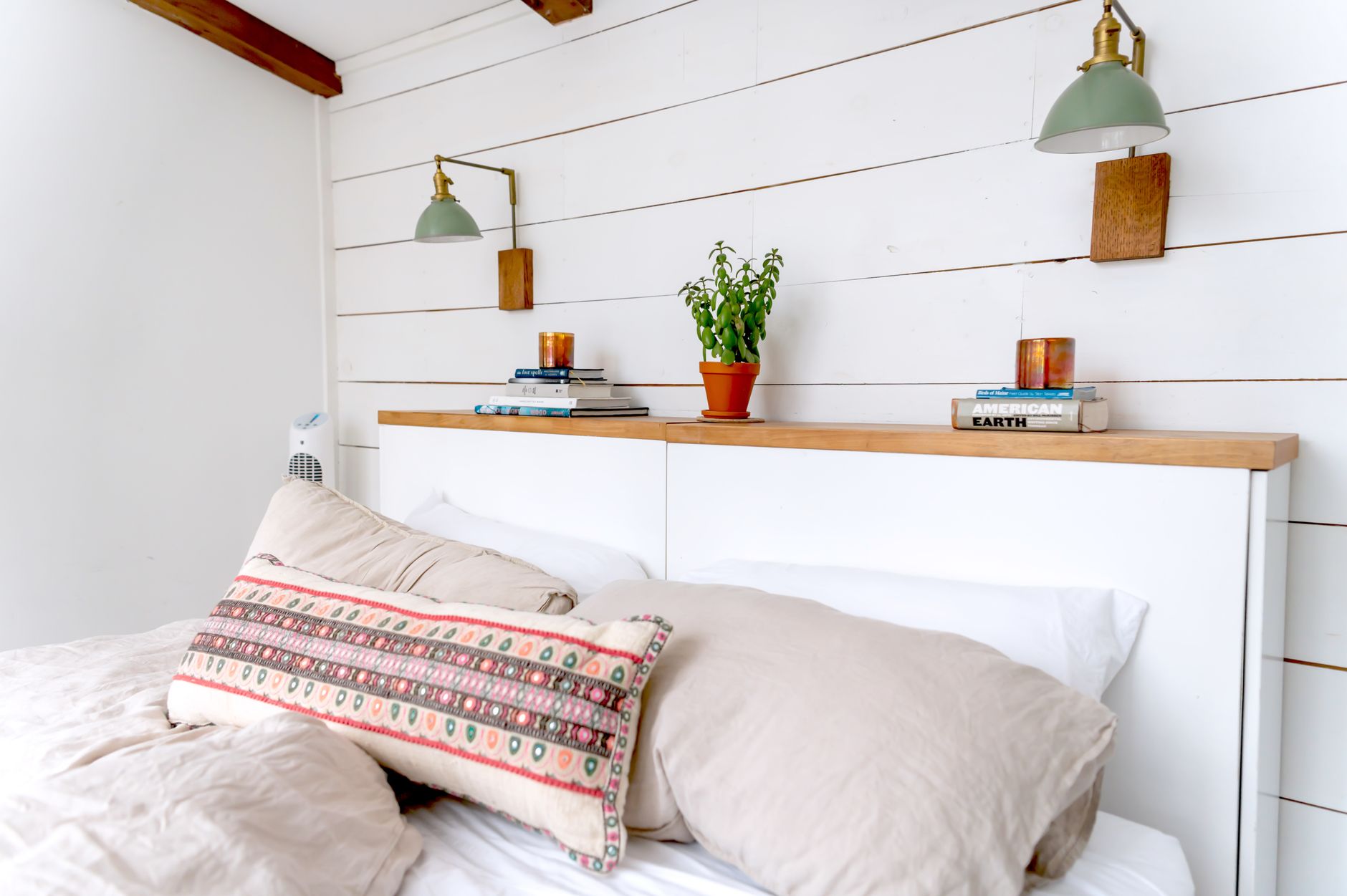
“In a small bedroom, eliminate the bed lamps on each side and install sconces on the wall, flanking the bed. This allows for the use of a smaller nightstand. Sconces with adjustable swing arms allow the lamp to be pushed against the wall when not in use, reducing their impact even farther.”
“In a bathroom, use slender, linear sconces on each side of the mirror. They consume almost no space, but provide excellent illumination for personal grooming.”
At a dining table, a pendant can define the eating area without taking up a surface. As a starting point, lighting retailer Lumens recommends hanging a fixture 30 to 36 inches above the table; adjust for the people using it, sightlines and the fixture itself. In a bedroom, check the reach of a swing arm from your normal reading position. At a mirror, look at how the light falls on your face, not only how the fittings look on the wall.
Check doors, furniture and walking paths before fixing a light in place. For hardwired work, hire a licensed electrician.
Avoid a single light in the middle of a small kitchen.
Jeffrey R Dross, Lighting by Jeffrey
Choose the color as well as the glow
Architect Sonya Lee, principal of Sonya Lee Architect llc, also starts with the limits of one source, then considers how color and controls affect the room: “Lighting can be one of the most transformative elements to a creating a warm, inviting space. One of the biggest mistakes that causes a small room to feel even more cavernous is providing only one source of light. Another common mistake is the wrong color temperature for the type of room or activity in the space (ie: a very cold color temperature of 4000k shouldn’t be used in a home with a lot of natural daylight, which is warm around 2800k). When lighting a small room, it’s best to provide multiple sources of light. This can really make the space feel larger, warmer and brighter. We balance this with a variety of options from diffused uplighting integrated in cabinetry to wall sconces, to table lamps to pinhole recessed lights on dimmers.”
The color appearance of a bulb is another choice to make in the room itself. ENERGY STAR identifies 2700–3000K as yellowish or warm white. Bring the choice back to the room and its use: try a bulb in the actual fixture and see how it looks against the walls and furnishings in the evening.
When lighting a small room, it’s best to provide multiple sources of light.
Sonya Lee, Sonya Lee Architect llc
If you want to dim it, look for a dimmable bulb and check the manufacturer’s compatibility information for the particular dimmer. A control that works smoothly makes it easier to move between a useful task setting and a softer evening one.
Don’t forget the secondary rooms
Architect Ravi Raj of Ravi Raj Architect turns to the smaller rooms that rarely get the same attention as a living room or kitchen: “I feel that smaller, secondary residential rooms often get neglected; the default is usually an affordable surface-mounted fixture centered on the ceiling. However, if the room is small enough, a simple wall sconce can illuminate the space while also giving the room a bit more character without being too costly.”
A small secondary room may need only a modest intervention. Look at the wall you see on entering, the place where you need useful light and the swing of the door.
I feel that smaller, secondary residential rooms often get neglected; the default is usually an affordable surface-mounted fixture centered on the ceiling.
Ravi Raj, Ravi Raj Architect
A sconce can be both a practical source and a deliberate detail, provided its location works for the room.
Five ideas for your lighting plan
- Do not rely on a single central light to do every job.
- Bring light to the perimeter, walls or ceiling as well as the center.
- Combine sources at different heights for different activities.
- Choose fixture shapes that suit the room and leave circulation clear.
- Give secondary rooms the same attention as the spaces you use most.





 Blankets and Throws
 Home Accessories
 Furniture
 Rugs
 Cushions

 Kitchen
 Cutlery and Dinnerware
 Drinkware
 Table Mats and Coasters
 Dining Accessories
 Tablecloths and Napkins

 Decorative Items
 Vases and Planters
 Wall Decor

 Bathroom Accessories
 Bathroom Storage
 Bath and Shower Mats
 Towels