FREE WORLDWIDE TRACKED SHIPPING

Curb Appeal Trends for 2027: Make the Walk to Your Door Count
 By Laura Jones
Explore 2027 curb appeal predictions and practical ways to make an entrance work beautifully every day
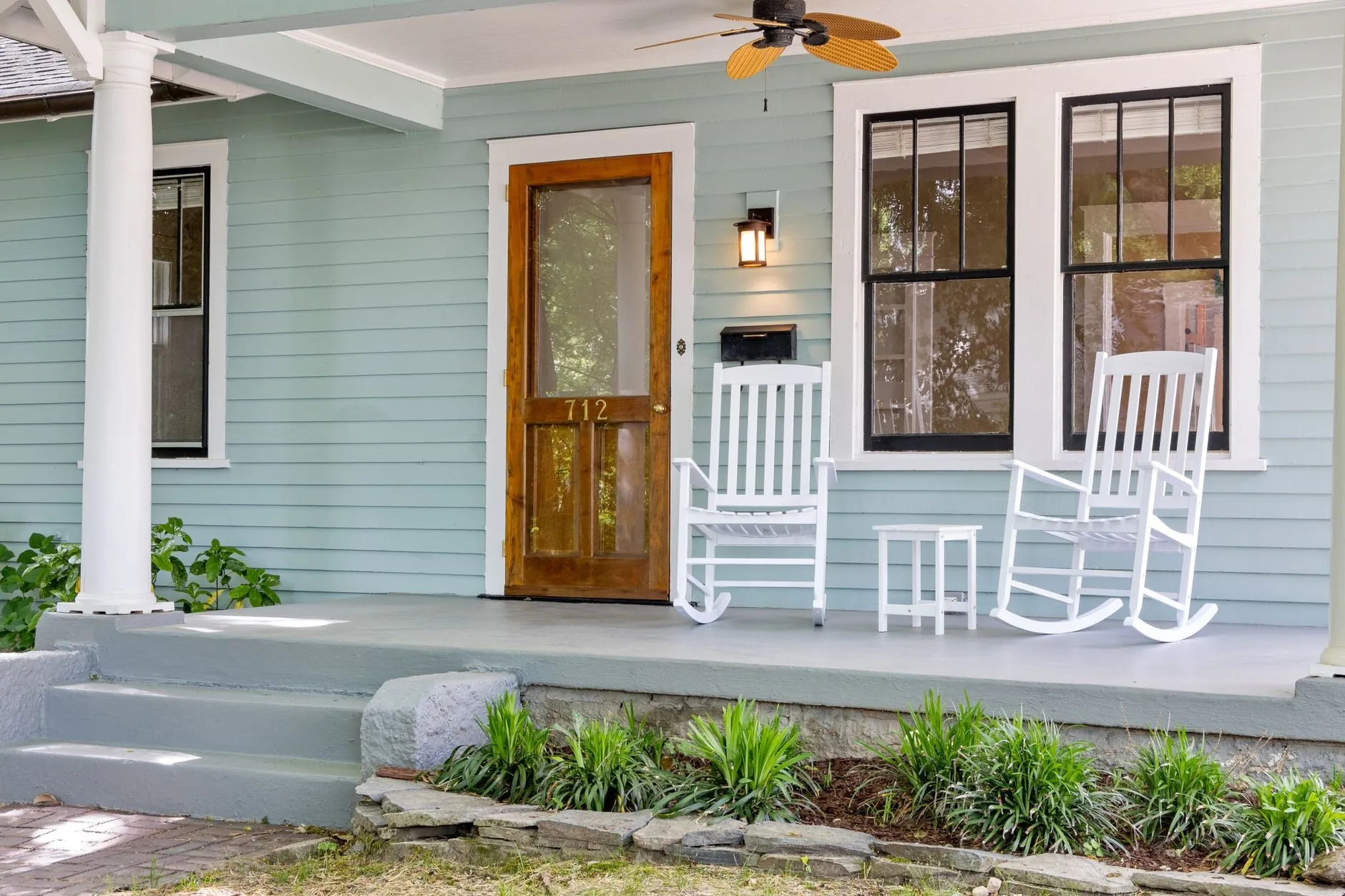
Photo by Curtis Adams on Pexels.
Walk from the sidewalk to your front door and notice where you slow down. Perhaps the path narrows beside a planter, the porch light shines into your eyes, or the door disappears against the siding. These small encounters tell you more about an entrance than a photograph taken from the street.
The most useful curb appeal trends for 2027 make that journey more considered. Designer forecasts point toward expressive entrances, layered planting, warmer exterior colors, and lighting with a purpose. The trick is to choose the idea that solves a real problem at your house, then leave enough space for people to move through it.
There is a useful distinction here: a forecast is a set of predictions, not proof that every homeowner will adopt a look. House Beautiful’s 2027 forecast draws on designers’ observations; Veranda’s forecast highlights everything from containers to lighting. We would start with changes that can be adjusted as a garden grows or a household’s needs change.
2027 curb appeal trends at a glance
| Direction | Try it first | Trade-off to consider |
|---|---|---|
| Layered planting | Rework one bed or a pair of containers | Plants need room and ongoing care |
| Warmer exterior color | Test painted samples beside existing materials | Light and adjacent finishes change the result |
| A more expressive entry | Choose one distinctive door, fixture, or planter | A focal point still needs clear circulation |
| Thoughtful lighting | See the path and door after dark | Brightness and glare are not the same thing |
| Garden structure | Plan for mature plant size before buying | Large plants cost more and may need professional installation |
| A considered walkway | Repair and make the existing route legible | Rebuilding paving can be disruptive and expensive |
Plant for layers, not a finished photograph
A front garden can do more than outline the house. Planting of different heights gives the eye a route from the street toward the door and offers the people inside something to look at through a window. The effect can be restrained or abundant; it does not require filling every patch of soil.
House Beautiful identifies native planting as part of the direction designers are watching. Start with plants suited to your region, the actual hours of light, and the moisture in your soil. A local extension service or nursery can help you identify species appropriate for your conditions. A native label alone does not guarantee that a plant belongs in every location.
Worth trying: choose a small area and repeat a few plants rather than buying one of everything. Check their mature width before setting them near a walk, window, or door. If the planting already obstructs the route, editing it may be more useful than adding to it.
For a quieter composition, our guide to a calm garden that does not feel bare looks at how structure and variation can work together.

Use warmth as a relationship between materials
Warmer exteriors do not mean every house needs beige paint. Look at the fixed materials first: brick, roof, paving, and neighboring landscape. A paint sample that seems soft on a card may look pink, yellow, or flat against those surfaces in daylight.
There is evidence of a shift among renovating homeowners, though it is not a universal forecast. In its 2026 outdoor trends report, Houzz says beige was selected for exterior walls by 24% of surveyed homeowners who had completed, were undertaking, or were planning an exterior renovation. That describes this survey group, not every US home or a guaranteed result for 2027.
Paint large samples on movable boards and view them beside the actual facade in morning and late-day light. If repainting the whole house is too much commitment, try the proposed palette on a door, a planter, or another small permitted surface first. Renters should check with their landlord before changing finishes.
If repainting is already on your list, understand the material and preparation differences in our guide to interior and exterior paint before choosing the color.
Give the entrance one clear point of view
A front door does not have to be the loudest object on the block to make an entrance memorable. The shape of a light, the finish of a handle, a well-scaled planter, or a deeper door color can give a familiar facade a specific identity.
House Beautiful’s designer reporting includes sculptural details and darker doors among its predictions. Veranda points to containers as another potential focal point. These are different ways of answering the same question: where should the eye land when someone arrives?
Choose one element first. If a colorful door already does the work, let the surrounding hardware and planting support it. If the architecture is quiet, a characterful light or pair of containers may be enough. Avoid placing pots so close to the door that deliveries, strollers, or mobility aids have to negotiate around them.
Skip the purchase if the front door sticks, the landing needs repair, or house numbers cannot be read. A beautiful object cannot fix those everyday irritations. Our existing front yard upgrades guide is a practical starting point for basic repairs and maintenance.
Make the evening approach easier to read
Landscape lighting appears in Veranda’s 2027 predictions, but more fixtures are not automatically better. Begin by identifying what someone needs to see: a change in level, the route to the entrance, the lock, and the house number. Then check whether existing light already covers those jobs.
Stand outside after dark and look toward the house as well as away from it. A lamp that appears attractive in daylight may put a bright point directly in a visitor’s line of sight. A fixture with a shielded source, positioned to light the surface below, can make an entrance feel calmer than a bare glare.
Portable or solar options can be a low-commitment way to test placement, provided they work reliably in the light available at your site. For permanent wiring or a replacement fixture, consult a qualified electrician and use products rated for their intended outdoor location. The aim is a legible route, not a floodlit lawn.
Think about the size a garden will become
Veranda’s forecast discusses mature trees as a way to give an exterior immediate presence. A larger specimen can change the scale of a yard quickly, but it brings a larger bill, more difficult installation, and a more consequential placement decision.
Before choosing a tree, consider its expected mature canopy and root space, local climate, overhead lines, underground utilities, and the distance from structures. A local arborist can help assess the site. A smaller, suitable tree may be the better decision when space or budget is limited, even if it takes longer to create shade.
The same principle applies to shrubs in containers. A pair that fits the porch today may crowd the steps later. Choose a container with drainage, plan for watering, and make sure the pot itself can tolerate local winter conditions. Seasonal planting is an option, not an obligation to replace an entire display every few months.
Let the path connect the ideas
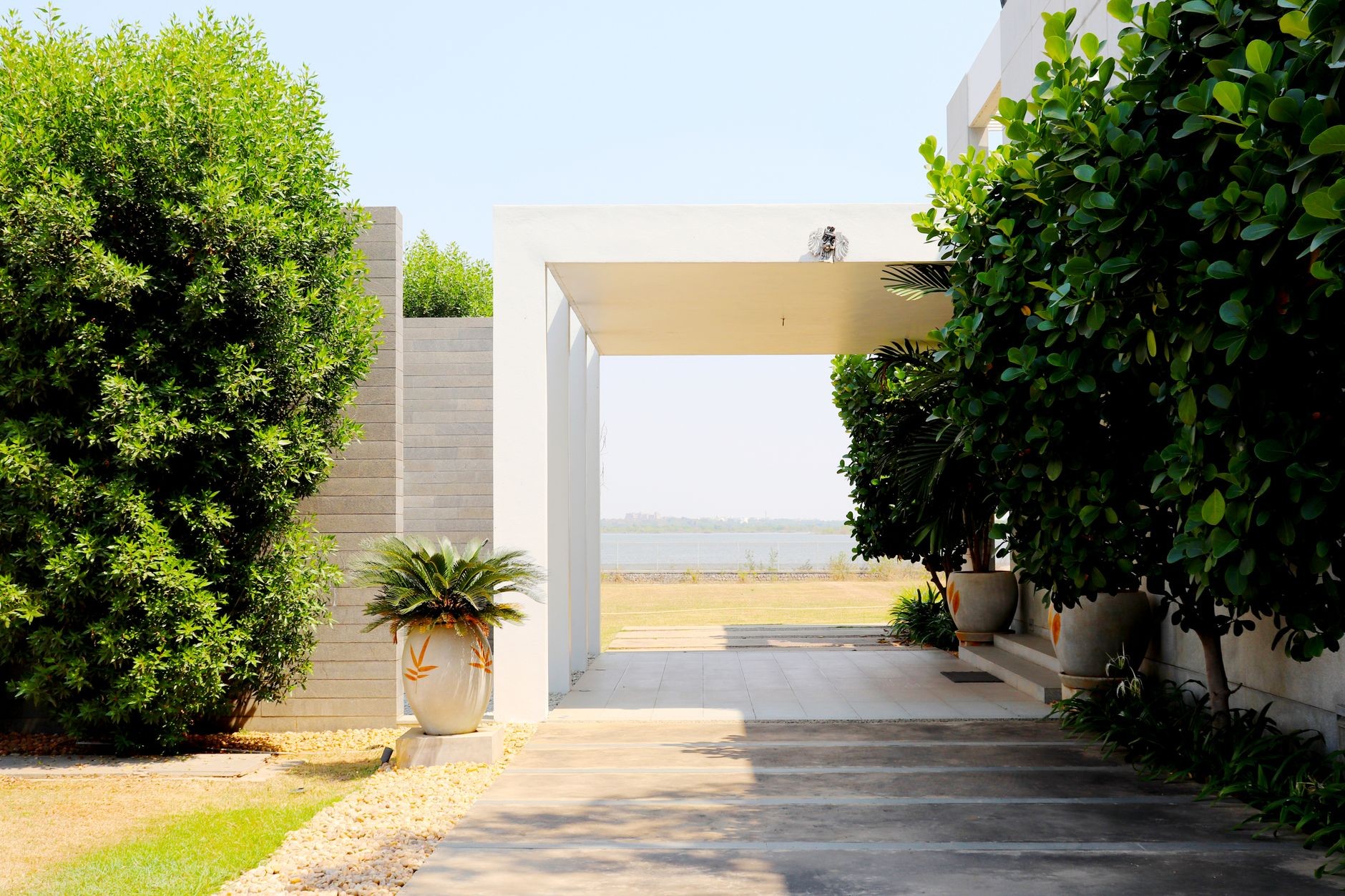
The walkway is where planting, lighting, and the door meet. It needs to make sense underfoot before it makes a statement from the street. Look for uneven surfaces, slippery areas, or edges that are becoming hard to see behind foliage; have repairs assessed for the conditions at your property.
When a path is sound, the better change may be modest: clean the surface using a method appropriate for its material, trim back planting, or improve the light at a change in level. When it needs replacement, compare the appearance and maintenance of options with drainage and the way people actually enter the home. Our guide to modern paving choices explores materials in more detail.
The garage door belongs in that composition too, particularly when it occupies a large part of the street view. A front door can be the focal point without making the garage look unrelated. Consider the colors and proportions together; our garage door design guide covers the choices.
How to choose a trend without redesigning everything
Take one photo from the street and another from the position where you open the door. The first shows the whole facade; the second shows what daily use feels like. List one issue visible in each view, then choose a change that helps at least one without making the other worse.
For a limited budget, start with maintenance and a reversible experiment: a paint sample, a container moved to a new position, or a lighting placement test. For a larger project, decide the route, drainage, and mature planting layout before ordering decorative details. If you belong to a homeowners association or live in a historic district, check applicable restrictions before committing to exterior changes.
A coordinated exterior does not need to copy the interior, but the two can share a material, color, or level of formality. Our guide to connecting exterior and interior style offers a useful way to start that conversation.
Frequently asked questions
What is the biggest curb appeal trend for 2027?
There is no single verified winner. The designer forecasts we reviewed emphasize more personal entrances, layered planting, and considered lighting. Choose the direction that addresses your own entrance rather than treating any prediction as a requirement.
Can I update curb appeal without repainting the house?
Yes. Cleaning and repairing existing surfaces, adjusting planting, improving the visibility of the entrance, or changing a movable container can alter the approach without a full exterior repaint. Check permissions before changing fixed features.
Are native plants always low maintenance?
No. Maintenance depends on the species, local conditions, establishment period, and the design of the planting. Select plants for your specific site and ask a local expert about their mature size and care.
Which improvement should come first?
Start with a problem affecting use: a difficult door, an uneven route, or poor visibility. Once the approach works, choose one visual change that makes it feel more like your home.
Walk the route again after the change. The best detail is the one that still earns its place when you are carrying groceries through the door.



 Blankets and Throws
 Home Accessories
 Furniture
 Rugs
 Cushions

 Kitchen
 Cutlery and Dinnerware
 Drinkware
 Table Mats and Coasters
 Dining Accessories
 Tablecloths and Napkins

 Decorative Items
 Vases and Planters
 Wall Decor

 Bathroom Accessories
 Bathroom Storage
 Bath and Shower Mats
 Towels