FREE WORLDWIDE TRACKED SHIPPING

Pattern Scale in Small Rooms: How to Pick the Wallpaper Print That Fits
 By Alex Carter
Learn how wallpaper pattern scale changes the look of a small room and affects the amount of material you need
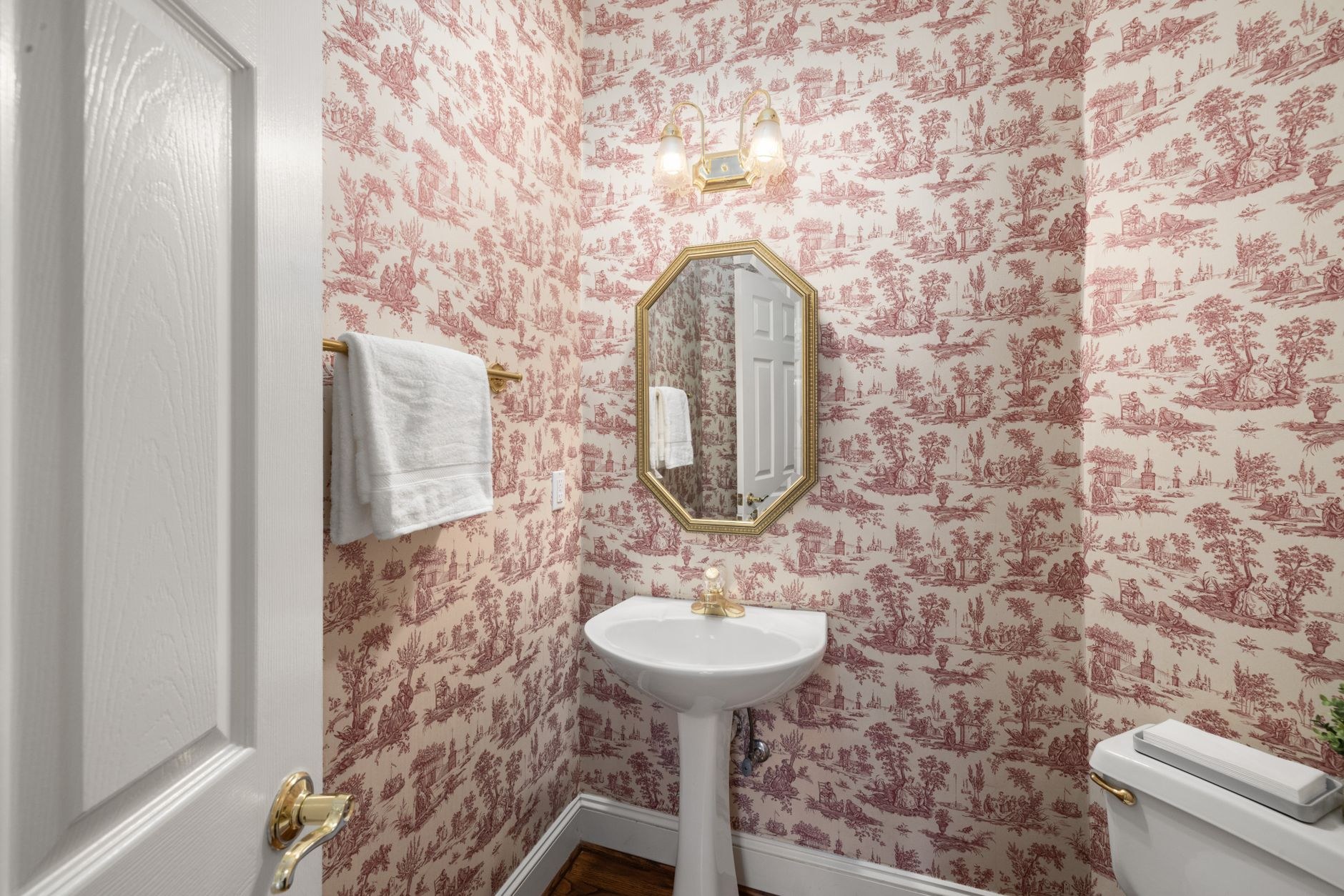
Photo: Curtis Adams / Pexels
Most wallpaper mistakes in small rooms come down to one thing. The color was fine, the style was fine, and the print was the wrong size. A pattern that looked graceful on a swatch ends up shouting from a narrow bedroom wall, or dissolves into beige noise from across a hallway.
Scale is the part of wallpaper choice that no photo shows you honestly. This guide gives you a way to judge it before you order, including the arithmetic that shows how scale changes the amount of wallpaper you need.
Scale depends on distance, not just size
Every print has a repeat, which is the vertical distance before the design starts over. A pattern with a 6 inch repeat is made of small, busy units. One with a 48 inch repeat is made of large shapes that you see one at a time.
What matters is how many of those units you can take in from where you actually stand. In a small room, you rarely stand far from the wall. A bold 48 inch repeat viewed from four feet away shows you a fragment of a leaf or a stripe, not the whole design. A fine 6 inch repeat from the same spot reads clearly as a pattern.
The same print can look completely different in a long living room, where the viewing distance is ten feet or more.
Count the repeats across the wall
Here is a quick test you can do with a tape measure. Divide the width of your wall by the horizontal pattern repeat, which may differ from the vertical repeat, to see how many repeats appear across it.
Fewer than about two: the print behaves like a single large picture. It can look striking behind a bed or sofa, but it is hard to live with on a wall broken up by windows.
Between about three and ten: the pattern reads as a pattern. This range is the most forgiving for small rooms.
More than about twenty: the print starts to read as texture. It is calm, and it suits minimalist and Japandi rooms where you want depth without a focal point.
Treat these numbers as a rough guide rather than a rule. Contrast matters as much as size, and a pale, low-contrast print can carry a larger scale than a dark, high-contrast one.
A worked example: one 11 by 8 foot wall
Say the wall is 11 feet wide and 8 feet high. That is 132 inches by 96 inches. You want about 4 inches of extra length per panel for trimming, so each panel needs at least 100 inches. Assume the panels are 20 inches wide, which means 7 panels to cover 132 inches.
Panels cannot be cut at any length, because the pattern has to line up from one panel to the next. For this straight-match example, round each panel’s required length up to a whole number of vertical repeats. Here is what that does to the material you need:
A 6 inch repeat: 17 repeats per panel (102 inches), so 714 inches in total, or about 59.5 feet.
A 24 inch repeat: 5 repeats per panel (120 inches), so 840 inches in total, or 70 feet. That is about 18 percent more than the 6 inch print.
A 48 inch repeat: 3 repeats per panel (144 inches), so 1,008 inches in total, or 84 feet. That is about 41 percent more than the 6 inch print.
The wall is identical in all three cases. A large repeat leaves more leftover length on every panel, and the leftovers add up. Patterns that shift half a repeat from one panel to the next, called half-drop matches, usually need more again.
Check the repeat and the match type on the product page before you commit to a budget. When you compare peel-and-stick wallpaper, look for the repeat in the product details, and ask the seller if it is not listed. It tells you more about the finished look than the thumbnail does.
Match the print to what is already in the room
A wall does not exist alone. Three things in the room should influence the scale you choose.
Furniture is the first. A large sofa and a tall headboard can hold a big print, because their mass balances it. A room with a small desk and a single chair usually looks better with a smaller repeat.
Windows and doors are the second. Every opening cuts the pattern, and big motifs lose their shape when a window slices through the middle of them. If a wall has two windows, go smaller.
Existing pattern is the third. Curtains, rugs and bedding already add rhythm. If they are busy, a quiet scale or a tone-on-tone print gives your eye somewhere to rest.
Test the scale at full size
Do not decide from a thumbnail or a small sample. A two-inch square tells you the color and the texture, but almost nothing about scale.
Print or sketch one full repeat at actual size and tape it to the wall at eye level. If the repeat is 24 inches, tape up a 24 inch strip.
Stand in the doorway and then at the spot where you usually sit. Look at it again in morning light and at night.
Step back to your normal distance and ask whether the shapes are still recognizable or have blurred into a single tone. Both can be right, depending on what you want.
If you are buying a panel, hang a single one before you commit to the whole wall, and live with it for a couple of days.
The short version
Choose the scale for the distance you will actually view it from. Count the repeats across your wall. Work out the extra material a large repeat needs before you set a budget. Then test the real size with tape and a pencil. A small room can carry a bold print, and it can carry a quiet one, as long as the scale matches how you see it.
About the author
Patrick writes about wallpaper, wall decor and DIY room updates for Wallanza (wallanza.com).





 Blankets and Throws
 Home Accessories
 Furniture
 Rugs
 Cushions

 Kitchen
 Cutlery and Dinnerware
 Drinkware
 Table Mats and Coasters
 Dining Accessories
 Tablecloths and Napkins

 Decorative Items
 Vases and Planters
 Wall Decor

 Bathroom Accessories
 Bathroom Storage
 Bath and Shower Mats
 Towels