FREE WORLDWIDE TRACKED SHIPPING
The Photo Test: How Renters Can Preview Décor Changes Before Buying Anything
 By Laura Jones
Use one honest room photo to test rugs, curtains, art and AI restyles before buying, so rental décor choices feel safer and more considered
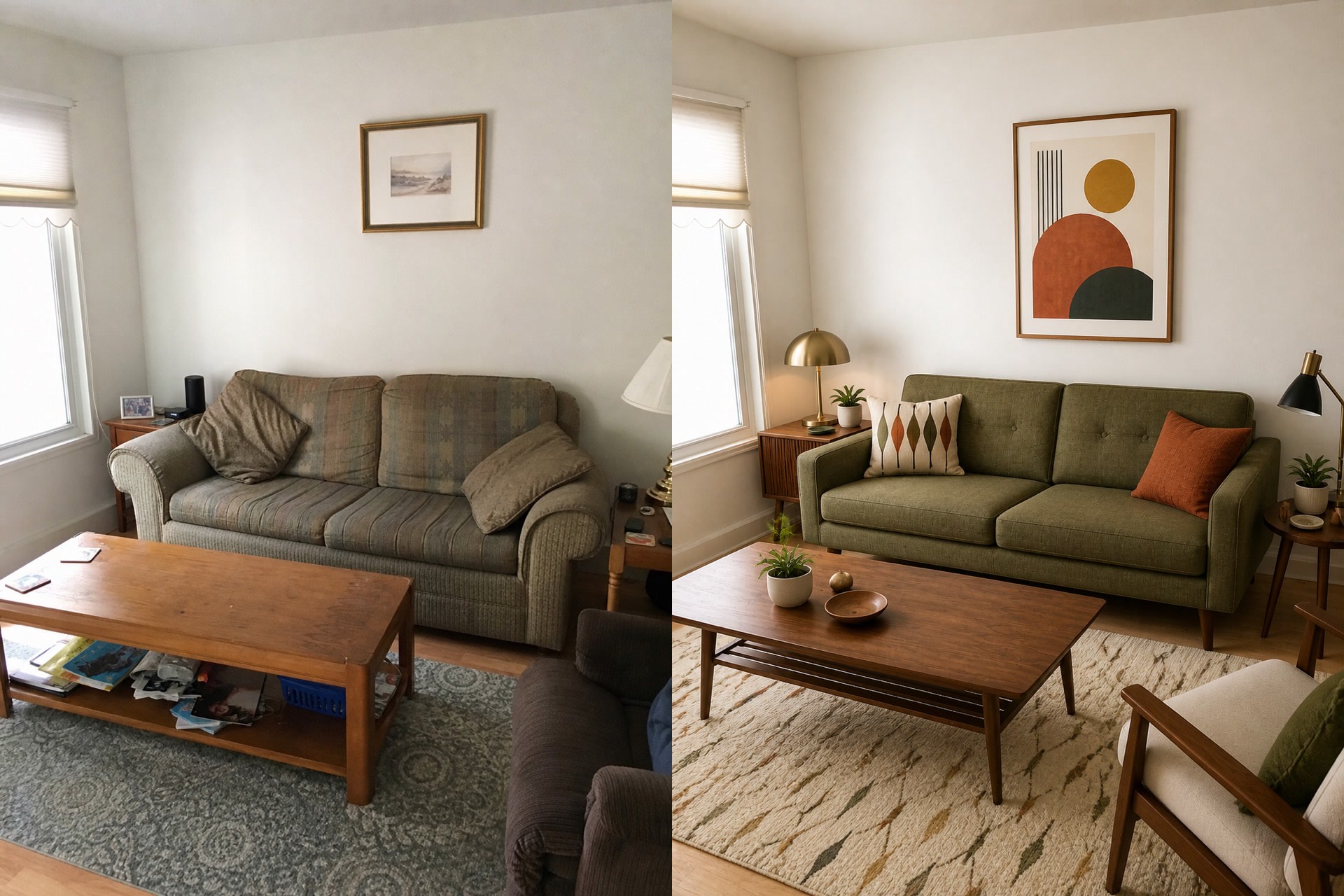
A real rental living room, left, and an AI restyle of the same room, right. Image supplied by Roomvana and used with permission.
A rug can read as warm terracotta online, then turn an entire room orange once it is unrolled across the floor. Suddenly, a perfectly good sofa looks tired and grey, and the rug goes back minus the return shipping. Renters run into this more than most, not because they are careless, but because they are decorating around finishes and fixtures they did not choose.
A homeowner who guesses wrong on a colour can repaint the wall and move on. A renter is negotiating with a room somebody else decided years ago: the beige the landlord buys in bulk, honey-oak laminate, or a ceiling fixture that makes everything faintly green after dark. Every purchase has to work with those fixed notes, yet none of them travel with you to the store. You stand in the aisle holding a cushion, trying to recall a wall colour from memory. Memory loses.
Start with one honest photo
The cheapest tool for this problem is already in your pocket. Before shopping for anything, photograph the room you are shopping for. Stand in the doorway, hold the phone at chest height, and shoot in daylight with the overhead lights off. Aim for one wide frame that catches the wall, floor, and window in the same exposure. The doorway angle matters more than it seems. It is the view you actually get a hundred times a day, and decorating for that view beats decorating for an imaginary centred vantage point where no one ever stands.
Take a second frame after dark, too, under the lights you actually live with. Rental lighting is rarely flattering, and a fabric that glows in daylight can go muddy by evening. Two photos, one honest morning and one honest night, catch most of the surprises before they cost anything.
A photograph flattens the room into something you can actually study. In person, your eye auto-corrects: it forgives the green cast of the light and fills in the colour you wish the wall were. The camera does not. That flat, honest image is the surface you can test every idea against, and it goes with you everywhere the room cannot.
Mock it up before you pay for it
With the photo in hand, auditioning a change becomes almost free, and there is a whole ladder of ways to do it. The old-school end still works: cut paper to the size of the framed print you are considering and tape it to the wall for a week, or lay a bedsheet roughly where a new rug would sit. Retailer apps handle the middle ground. Several furniture chains let you drop their catalogue pieces into a photo of your room to check scale. They are good at answering “will it fit?” and less reliable at “will it belong?” because the piece may retain its studio lighting. Trust them on dimensions and stay sceptical about colour.
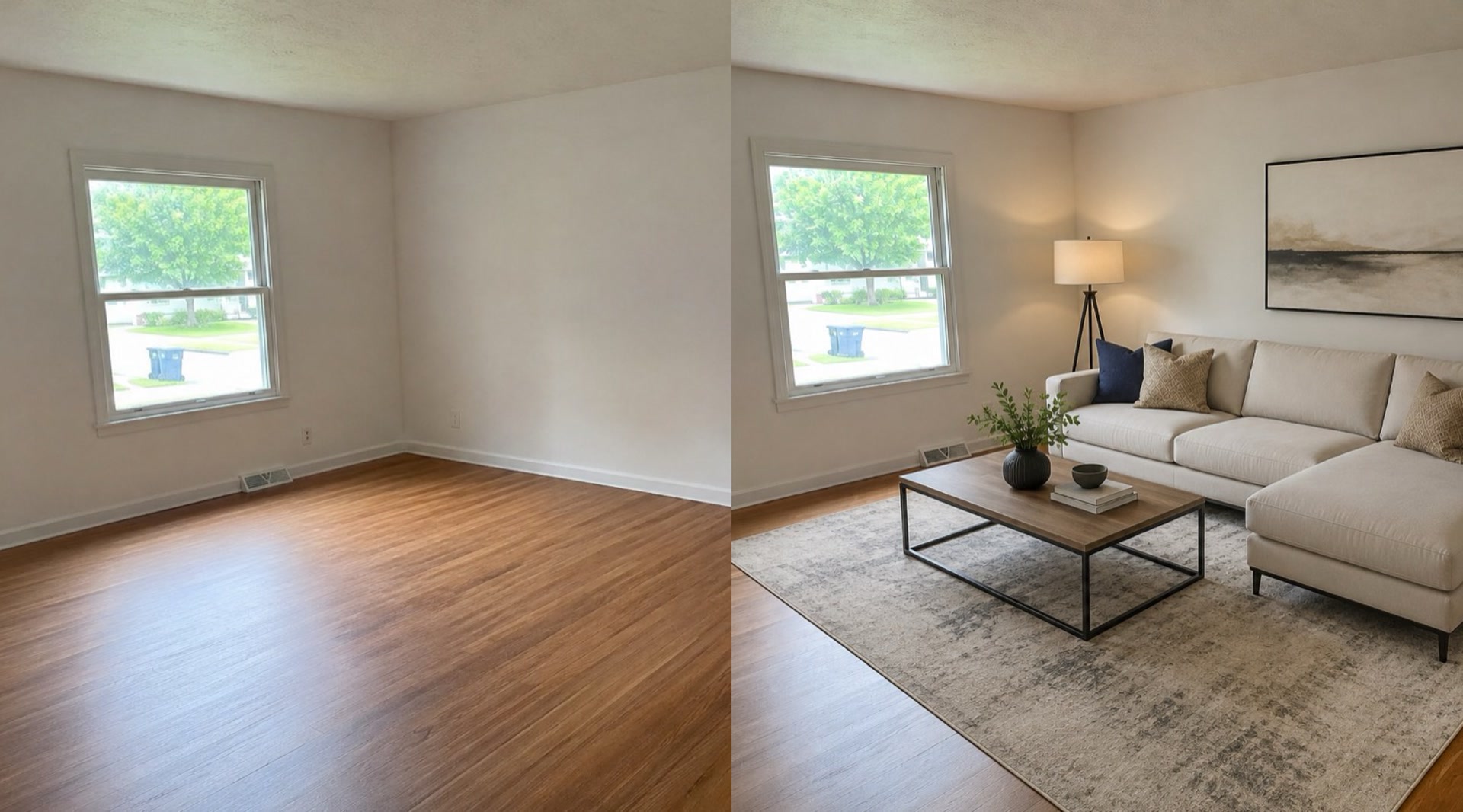
The newest rung is AI. Upload one room photo to Roomvana and it produces a realistic restyle in roughly 20 to 30 seconds while aiming to keep walls, windows, doors, and the overall layout in place. That turns “would velvet curtains be too much?” from an abstract debate into a picture you can assess.
Whichever rung you use, the discipline is the same: live with the mock-up for a few days before spending. Glance at it over morning coffee, then again at night under the bad ceiling light. A change that still pleases you on day four is a much safer bet than one that thrilled you for 90 seconds in a store. In practice, a mock-up week may kill more purchases than it approves, which sounds like failure and is actually the point.
What if you can only afford one change?
This is where previewing earns its keep. Rank the options in the photo: rug, curtains, art, or a slipcover. It quickly becomes clearer which single change carries the room. In many rentals, the window is the strongest candidate. Curtains hung high and wide in a fabric with some weight can do more to soften a rental than another furniture purchase. Your photo may argue for something else. Let it argue; that is the point of the exercise.
The method works whether you eyeball the idea with paper cut-outs or hand the photo to an algorithm. It is simply cheaper to be wrong in a picture than in a purchase. When the walls must stay beige and the deposit must come back, the photo test can prevent an expensive decorating guess.
Before adding anything else to a cart, stand in the doorway of the room that bothers you most and take the picture.












 Blankets and Throws
 Home Accessories
 Furniture
 Rugs
Rugs Cushions
 Kitchen
 Cutlery and Dinnerware
 Drinkware
 Table Mats and Coasters
 Dining Accessories
 Tablecloths and Napkins
 Decorative Items
 Vases and Planters
 Wall Decor
 Bathroom Accessories
 Bathroom Storage
 Bath and Shower Mats
 Towels