FREE WORLDWIDE TRACKED SHIPPING
Lighting Design Trends for 2026: Layering, Warm Dimming, and the Numbers That Matter
 By Alex Carter
To make sense of layered lighting, warm dimming and the numbers behind a reliable fixture, we invited Sonny Yu of Zerouno Lighting to explain what matters most.
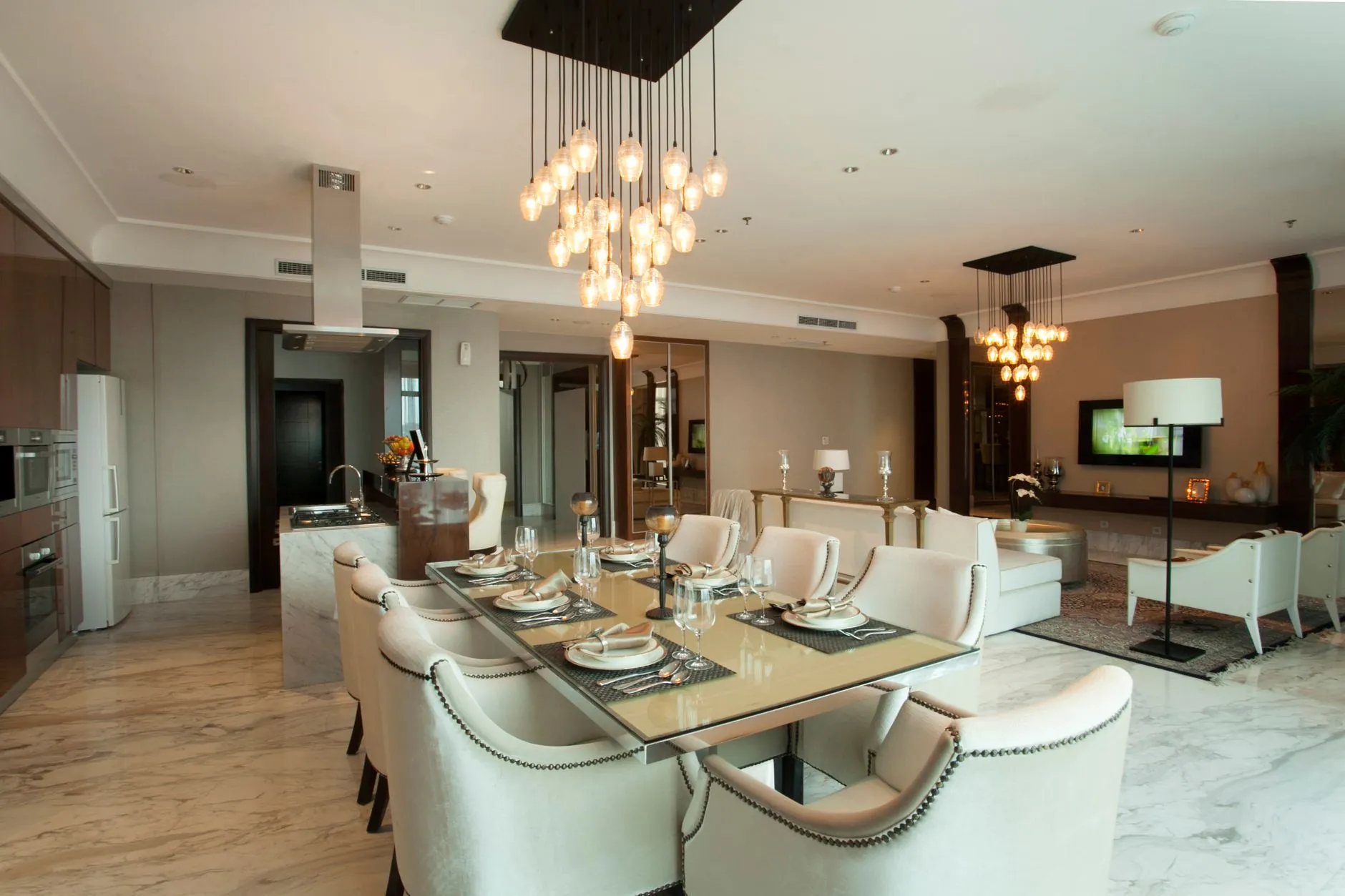
Layered lighting in an open-plan dining and living area. Photo by Jeffry Surianto on Pexels.
Nothing revolutionary happened to the light bulb this year. What happened is quieter and more useful – the specification logic of a good hotel room became something you can order for a house.
There is a test I run on every hotel room I walk into, and it works just as well on houses. I turn everything off, then bring the lights up one switch at a time. If the only thing that changes is more light, the room was designed by someone who never had to sit in it. If the room gets deeper and more specific as each layer comes on, someone thought about it.
I have spent the last decade on the manufacturing side of lighting – guestrooms, corridors, lobbies, and more recently residential work built to the same standard. Hotel jobs teach the same lesson twice: once while the specification is written, and again a year after opening, when someone calls about the fixture that buzzes. Most of what follows is residential advice. The physics does not care whether the ceiling belongs to a hotel or a house.
Why One Ceiling Light Stops Working
For about thirty years the default was one centered fixture per room: cheap, easy to permit, and almost always the wrong color temperature. It makes a living room look like a lobby at 6 p.m.
The fix is not a better fixture but three fixtures doing three jobs. Ambient is the base – a ceiling wash, wall sconces, or an uplight bouncing off the ceiling instead of firing down onto your head. It should be dim enough that you notice it when it is gone rather than when it is on. Task is light aimed at a surface: a countertop, a desk, the page of a book. This is where the money goes if you want a room to feel expensive, because task light is what makes things legible – a $60 picture light on a plaster wall does more than a $600 chandelier in the middle of the ceiling. Accent gives a room its focal point: a narrow beam on artwork, an uplight behind a plant, a slim linear fixture under a floating shelf. It is high contrast and low coverage, which is why it reads as designed, and why it is the layer that goes wrong most easily.
Put every layer on its own switch or dimmer, and on separate circuits if you are renovating. A four-gang dimmer plate costs very little while the drywall is open and a great deal when it is not.
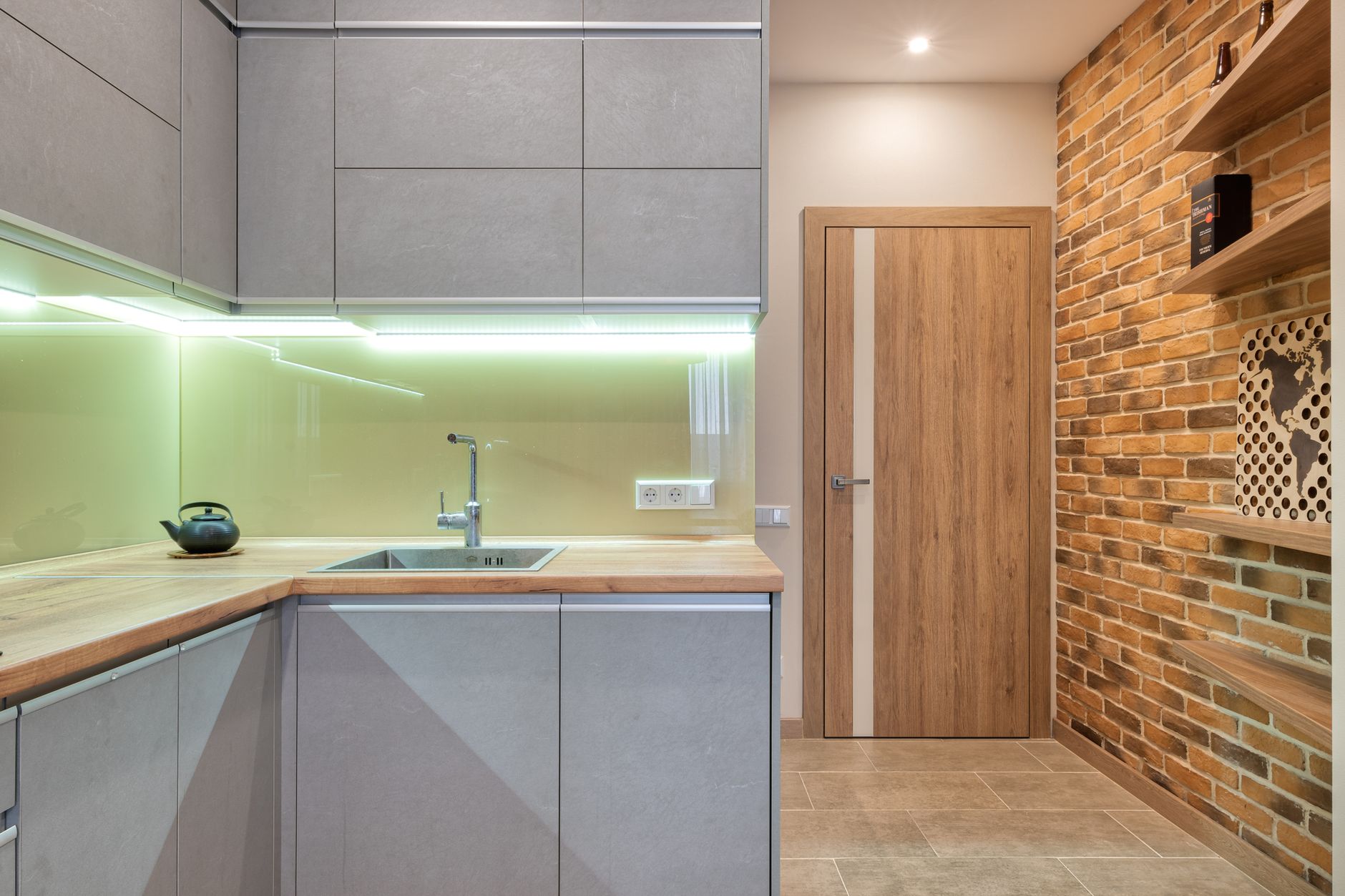
Four Formulas for One Chandelier
Ask five lighting people how big the chandelier should be and you will get five numbers. Nobody is guessing. Four rules are in circulation, they answer slightly different questions, and almost nobody tells you which one they are using.
| Rule | How it works | Worked example |
|---|---|---|
| Length + width | Add the room’s length and width in feet; the total is your starting diameter in inches | 14 × 18 ft room → start at 32 in |
| Length + width, corrected for height | Same rule, plus 2 in for every foot of ceiling above 10 ft (one variant adds a flat 20% above 15 ft) | 14 × 18 ft room, 20 ft ceiling → start at 52 in |
| Half to two-thirds the table | Over a dining table, ignore the room: diameter is ½-⅔ the table’s width | 36 in table → 18-24 in; 42 in table → 21-28 in |
| A foot smaller than the island | Measure the island’s narrowest width, then go about a foot smaller | 6 ft island → roughly 5 ft fixture |
Two more cover the rooms these handle badly. For a stairwell or open stair hall, add the well’s width and depth in feet and read the total as inches of diameter; a 13 × 16 ft well starts around 29 in (73 cm), and this is the one place where going 20-30% larger usually looks better, because you are filling a void rather than sitting over furniture. For a double-height foyer, the formula becomes volume-based and the number gets large quickly – at that point you should be asking about drop length and the rigging point rather than diameter.
Here is what the formulas will not tell you. They are a floor, not a ceiling. When the proportions are normal and you are hesitating between two sizes, the habitual advice among people who do this daily is to take the larger one: a chandelier 10% undersized visually collapses a room’s vertical dimension, while an oversized one usually just wants more clearance. And clearance is the part no formula covers – six inches (150 mm) of extra drop is enough to turn a fixture from fine into one that everyone walks around.
Warm Dimming, and Why It Is Not Tunable White
Warm dimming does more for how a house feels at night than any other single specification, and most people who have it cannot tell you what it is.
An incandescent bulb gets warmer in color as you dim it, sliding toward deep amber as the filament cools. LEDs do not do this on their own. Dim an LED and it stays the same color, only darker – which is why so many LED-lit rooms feel flat and faintly clinical after dark. Warm-dim fixtures are engineered to reproduce the incandescent curve, commonly running from around 2700K at full output to roughly 1800K near the bottom. The room does not simply get darker. It gets warmer.
If you are shopping for this, ask what the bottom of the curve actually is. Plenty of fixtures advertise warm dim and stop around 2200K, which is a visible improvement and not the same thing. Good ones publish a range rather than a single number.
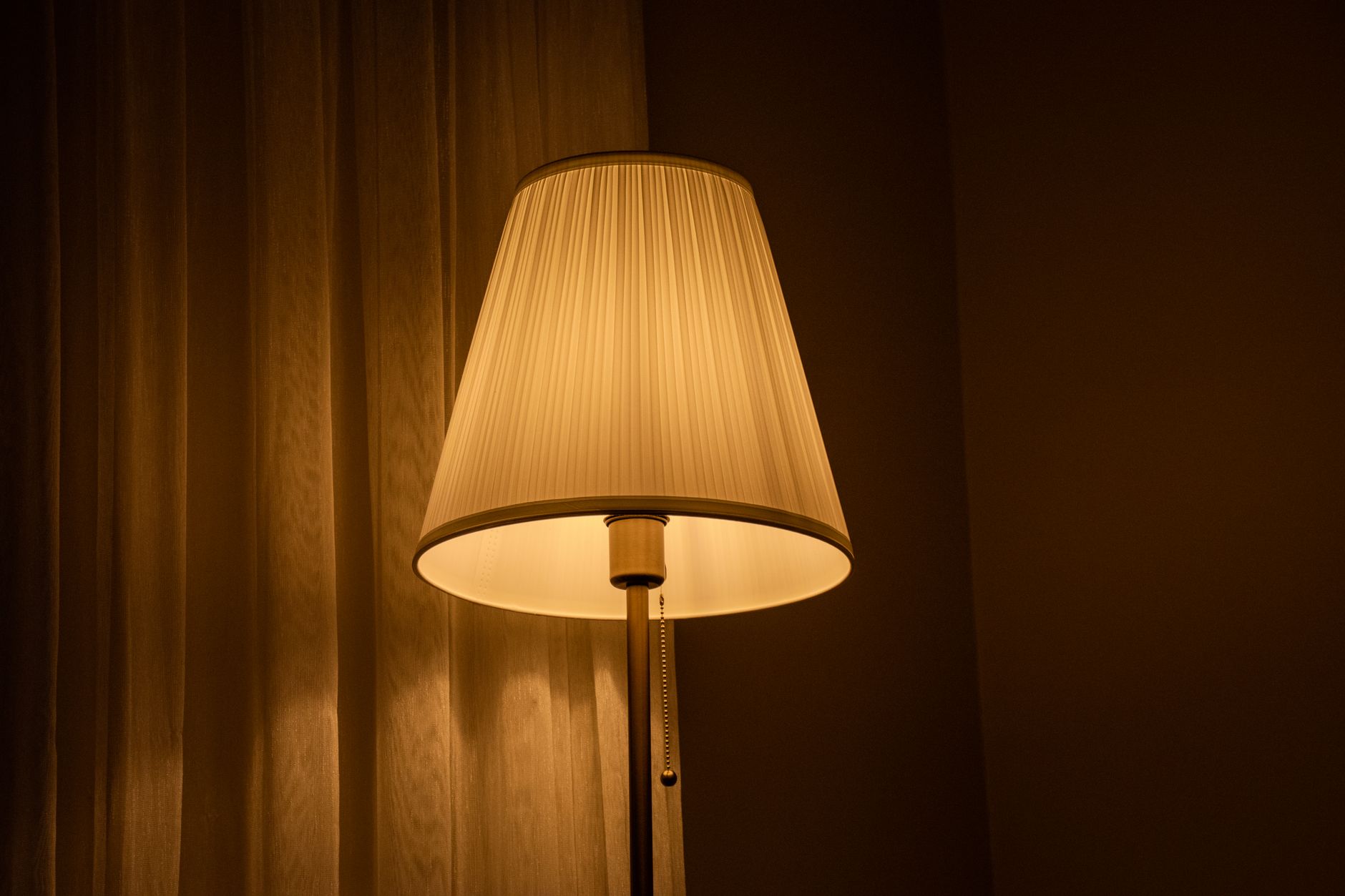
Tunable white is a different product, though the two get conflated constantly, including by people selling them. Warm dim changes color temperature automatically as a function of brightness – one control, no decisions, which is what you want in a bedroom or dining room. Tunable white sets color temperature independently of brightness, so you can have 4000K at full output at 8 a.m. and 2200K at 20% after dinner. That earns its place in a home office or bathroom. It also costs more, needs a compatible control system, and adds a failure point.
The Numbers That Actually Predict the Result
Most of a spec sheet is decoration. Four measurements do the real work, and three are usually missing.
CRI, and specifically R9. CRI’s headline number averages eight test colors, and all eight are low-saturation pastels. Reds are excluded from that average – R9 is reported separately and is often omitted on inexpensive fixtures. A fixture can post a respectable 90 overall and a low R9, which is why some LEDs flatten reds and make walnut look gray. Look for a CRI of 90 or higher, then ask for the R9 value rather than assuming the headline number tells the whole story.
Rf and Rg. CRI was designed in the 1960s and is a blunt instrument for LEDs. IES TM-30 is a more detailed modern method: it reports Rf (fidelity – how faithfully colors are rendered) and Rg (gamut – how saturated they appear against a reference). A fixture rated Ra 90 / Rf 80 is a different fixture from one rated Ra 90 / Rf 92, and only one of those numbers is normally on the box. Ask for both.
Color consistency, listed as SDCM or MacAdam steps. Two fixtures from the same order should look like the same white. Three steps or tighter is close enough that you will not notice; at five steps you start seeing one fixture read greener or pinker than its neighbour on the same wall. This matters most when you are buying the same fixture across several rooms – buy them in one order, from one production batch, if you can.
Flicker. Ask for a measurement, not the phrase “flicker-free,” which is marketing rather than a number. The two figures that matter are percent flicker and flicker index, and they should be quoted at several dim levels. IEEE 1789 is one reference for evaluating modulation-related risk, and it considers flicker metrics together with modulation frequency – the point most spec sheets miss. A driver can test acceptably at 100% and perform poorly at 15%. Cameras can also reveal flicker at frequencies or shutter combinations the eye may not notice, so anyone who films at home should test the exact driver and dim level on camera. If you want the mechanism rather than the summary, how color temperature behaves as output drops is worth understanding properly, and it works the same way in a house as in a hotel.
Human-Centric Lighting, Minus the Gimmicks
Human-centric lighting means light that tracks the body’s daily rhythm – brighter and cooler in the morning, warmer and dimmer at night. In commercial buildings it is a real discipline. In homes it is oversold.
The parts worth doing are the free ones. Open the blinds, and if you work from home put the desk where daylight reaches it; a bright kitchen at breakfast does more for a circadian rhythm than any app-controlled bulb. Then dim and warm everything in the last two hours before bed, which is where warm dim earns its keep.
Keep the bedroom boring: no cool-white fixtures, no blue glow strips under the bed, no LED clock aimed at the pillow. If a bedroom fixture cannot go below about 15% output, it is the wrong fixture – which is the reason a properly designed bedside reading light is a small piece of optics rather than a bulb in a shade. You want the light on the book, not on the person holding it.
The parts to skip for now: color-tuning programs on a schedule you will stop noticing within a week, sunrise simulation in a city where the sun is not visible in winter, and anything that needs an app to switch on a light you could have put on a wall switch.
What Fails First
Often, it is not the LED package. It is the driver.
The driver converts mains AC into the current an LED needs, and it contains the electrolytic capacitors – components that age badly when they run hot. A serviceable fixture uses a separate, replaceable driver. Some inexpensive fixtures bury it inside a sealed housing, which can make the whole fixture disposable when the driver fails. If a product page does not say whether the driver is replaceable, ask the manufacturer before buying.
You can judge thermal design by hand. Aluminum acting as a heat sink, and enough of it, is what keeps that driver cool; a fixture that is entirely plastic and weighs almost nothing has nowhere for the heat to go. It is also why a dimmable LED that gets uncomfortably warm to the touch is worth returning rather than living with.
Read the warranty the way you read the price. Three years covering the driver and the LED together is a reasonable bar. Watch for the version that sounds identical but is not: three years covering only “the LED,” with the driver quietly excluded, is worth very little, because the driver is the part that fails. Lumen-maintenance data is another useful signal. LM-80 data for the LED package, together with a TM-21 projection, gives you a defined test and projection basis to examine rather than a vague lifetime claim.
Dimmer compatibility surprises almost everyone. “Dimmable” on a box means dimmable with a compatible dimmer, and the dimmer already in your wall was probably chosen for an incandescent load. Retrofitting LEDs onto an old dimmer is the most common cause of flicker, buzzing, and a fixture that will not dim below about 30%. Two things help. Many residential LEDs work better with a compatible trailing-edge dimmer, but follow the fixture or lamp manufacturer’s compatibility list. Then check the dimmer’s published LED load range, which may be very different from its incandescent rating. Budget for replacing an old dimmer when you retrofit LEDs.
Where I work, we test every fixture off the line rather than a sample, and this is the reason. The failures above are individual-unit failures. A driver that misbehaves at 5% output, a batch that reads slightly green against last month’s – neither shows up in an average. They show up on one fixture in a hundred, which is exactly the one that ends up over the dining table.
One more thing that catches bathroom renovations: a location rating is a safety requirement, not a quality badge. Requirements vary by jurisdiction. In IEC and BS systems, bathroom zones define the needed ingress protection; in North America, fixtures are marked for damp or wet locations. Use a qualified electrician and the local code for the exact placement.
What to Ask Before You Buy
| Ask | A good answer looks like |
|---|---|
| What is the color temperature range? | A range such as 2700K-1800K, not a single number |
| What is R9? And Rf? | Numeric values, not “high CRI” |
| What is the SDCM bin? | Three steps or tighter |
| What are the flicker figures at low dim? | Percent flicker and flicker index, measured at 10-25% |
| Is the driver replaceable? | A replacement part number plus service instructions |
| What does the warranty cover? | Driver and LED together, in years |
| Is there LM-80 / TM-21 data? | LM-80 data with TM-21 projection details |
| Which dimmers are approved? | A published compatibility list |
| Is it rated for this location? | An IP rating, or a wet/damp-location listing |
Frequently Asked Questions
Is warm dimming the same as tunable white?
No. Warm dim changes color temperature automatically as a function of brightness – one control, no decisions. Tunable white sets color temperature independently of brightness. If all you want is for evening light to feel right, you want warm dim.
What CRI should I look for?
90 or higher, and then ask for R9 separately, because the headline number excludes it. If a manufacturer also publishes Rf and Rg from IES TM-30, that tells you more than any single CRI figure.
Why does my LED fixture buzz, or refuse to dim below about 30%?
It is often a dimmer-driver compatibility problem rather than the LED package itself. Many residential LEDs work better with a compatible trailing-edge dimmer, but start with the manufacturer’s compatibility list and published LED load range.
How big should a chandelier be?
Add the room’s length and width in feet for a starting diameter in inches, then add 2 in for every foot of ceiling above 10 ft (2.44 m). Over a dining table, use ½-⅔ of the table’s width instead. Treat any of these as a floor rather than a target.
Do bathroom fixtures need a special rating?
Yes – it is a location requirement, not a quality upgrade. The exact rule varies by jurisdiction: IEC and BS systems use bathroom zones and ingress-protection ratings, while North American fixtures are marked for damp or wet locations. Follow the local code and a qualified electrician’s advice for the exact placement.
How can I tell whether the driver is replaceable before I buy?
Ask for a replacement part number and service instructions. Clear documentation for both is good evidence that the driver is replaceable; if neither is published, ask the manufacturer before buying.
None of this is new. What is new is that these options have moved out of the specification documents of commercial projects and into fixtures a homeowner can order. Which is good news, because the difference between a room that feels considered and a room that feels like a showroom display is almost never the fixture itself. It is the layering, the color, and the dimming behavior – and all three are decisions you make before you open the box.
About the author: Sonny Yu works with Zerouno Lighting, a lighting manufacturer in Zhongshan, China, building fixtures for hotel projects and residential specification. He writes about the practical side of specifying light.











 Blankets and Throws
 Home Accessories
 Furniture
 Rugs
Rugs Cushions
 Kitchen
 Cutlery and Dinnerware
 Drinkware
 Table Mats and Coasters
 Dining Accessories
 Tablecloths and Napkins
 Decorative Items
 Vases and Planters
 Wall Decor
 Bathroom Accessories
 Bathroom Storage
 Bath and Shower Mats
 Towels