FREE WORLDWIDE TRACKED SHIPPING
Waffle Napkins Are the Low-Effort Way to Make a Table Feel Less Formal
 By Laura Jones
Waffle napkins bring relaxed texture and useful absorbency to everyday tables. Learn how to choose the right fiber, scale, color and care routine.
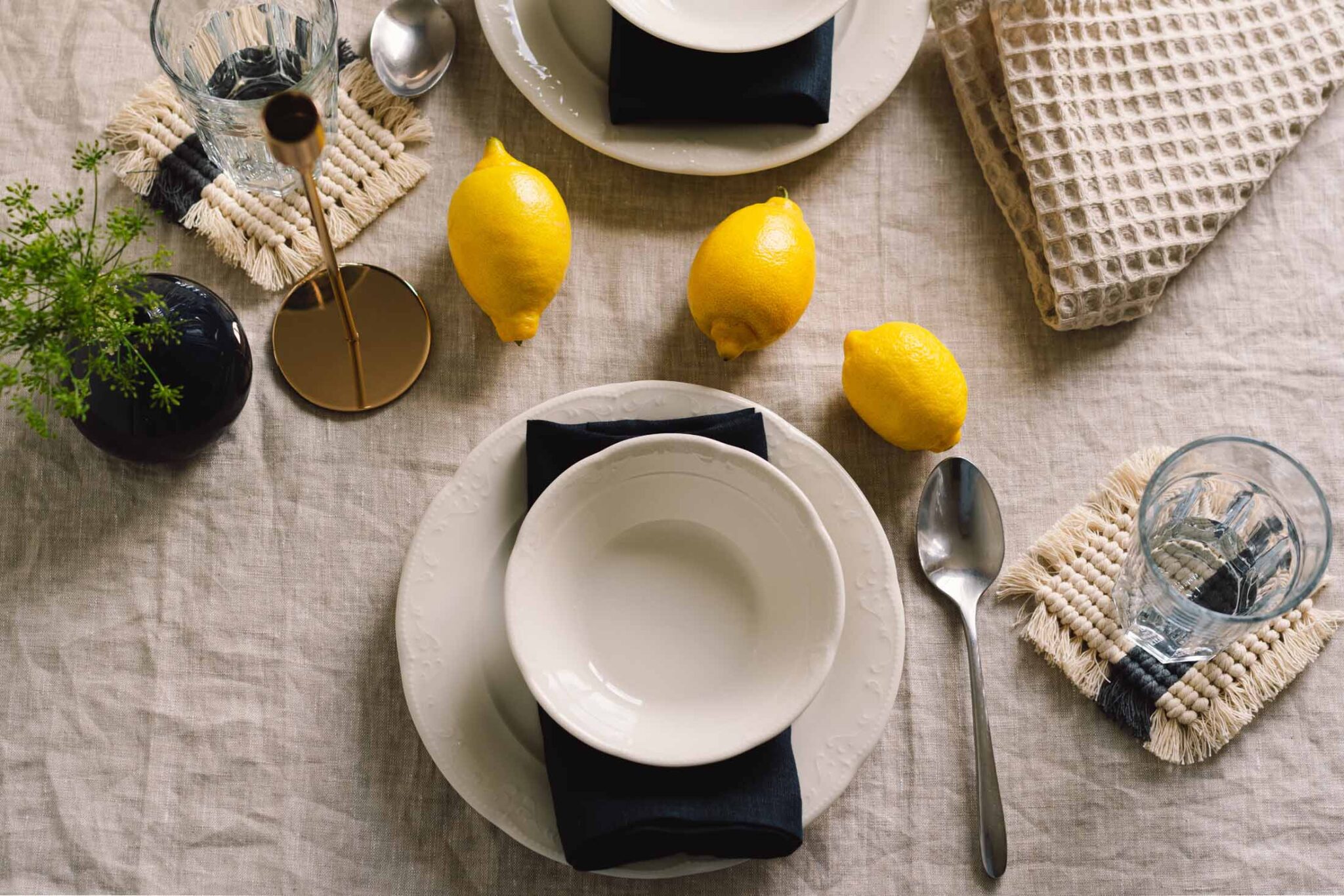
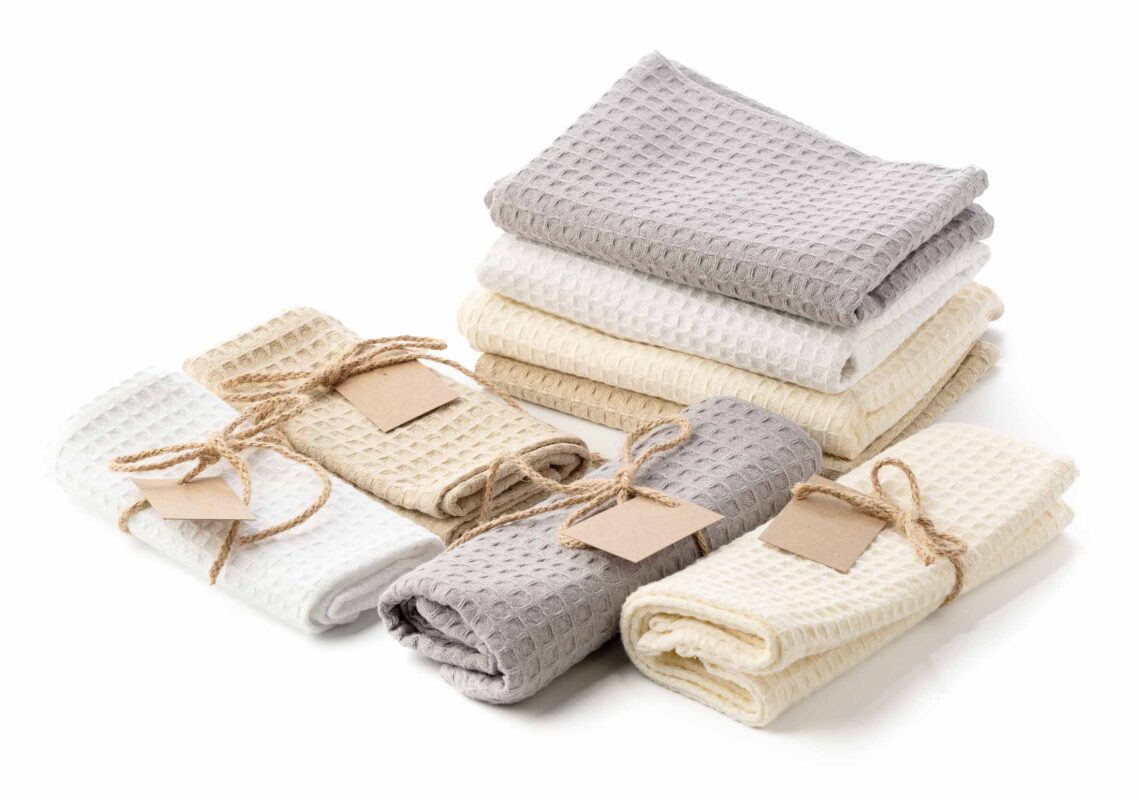
Waffle napkins are cloth napkins woven with a raised grid that adds volume, airflow, and a deliberately relaxed texture. They are the right choice when a table needs softness but not another crisp, ironed surface.
That makes them unusually good at solving a common dining-room problem: the plates, glasses, and cutlery are all technically coordinated, yet the table still feels like a display. A waffle weave interrupts that perfection. It looks tactile, usable, and ready for an actual meal.
The catch is equally clear. Waffle napkins will never behave like smooth hotel linen, and asking them to do so defeats their best quality.
Choose them for texture first
Waffle weave is constructed from combinations of plain weave and longer yarn floats that form small cells. Washing allows those cells to contract and become more three-dimensional, according to Bawn Textiles’ weave overview. The resulting surface creates more visual shadow than a flat cloth and more exposed area for moisture to spread and dry.
That does not make every waffle napkin identical. Cell depth, yarn thickness, fiber, finishing, and overall weight can produce anything from a delicate honeycomb to something that feels more like a kitchen towel.
| Choice factor | What it changes | Best use | Kooihaus verdict |
|---|---|---|---|
| Small, shallow grid | Neater outline and easier folding | Dinner settings and smaller tables | Most versatile |
| Deep, chunky grid | Strong texture and absorbent hand | Casual brunch, outdoor meals, family table | Use with simple dishes |
| 100% cotton | Softness, easy washing, potential shrinkage | Everyday rotation | Safest default |
| Cotton-linen blend | Drier hand and more irregular texture | Natural, tonal tables | Best-looking relaxed option |
| Polyester-rich blend | Fast drying and shape stability | High-frequency use | Practical, but inspect the feel |
| Strong saturated color | Makes the napkin a visual anchor | Plain dinnerware and neutral cloth | One bold textile is enough |
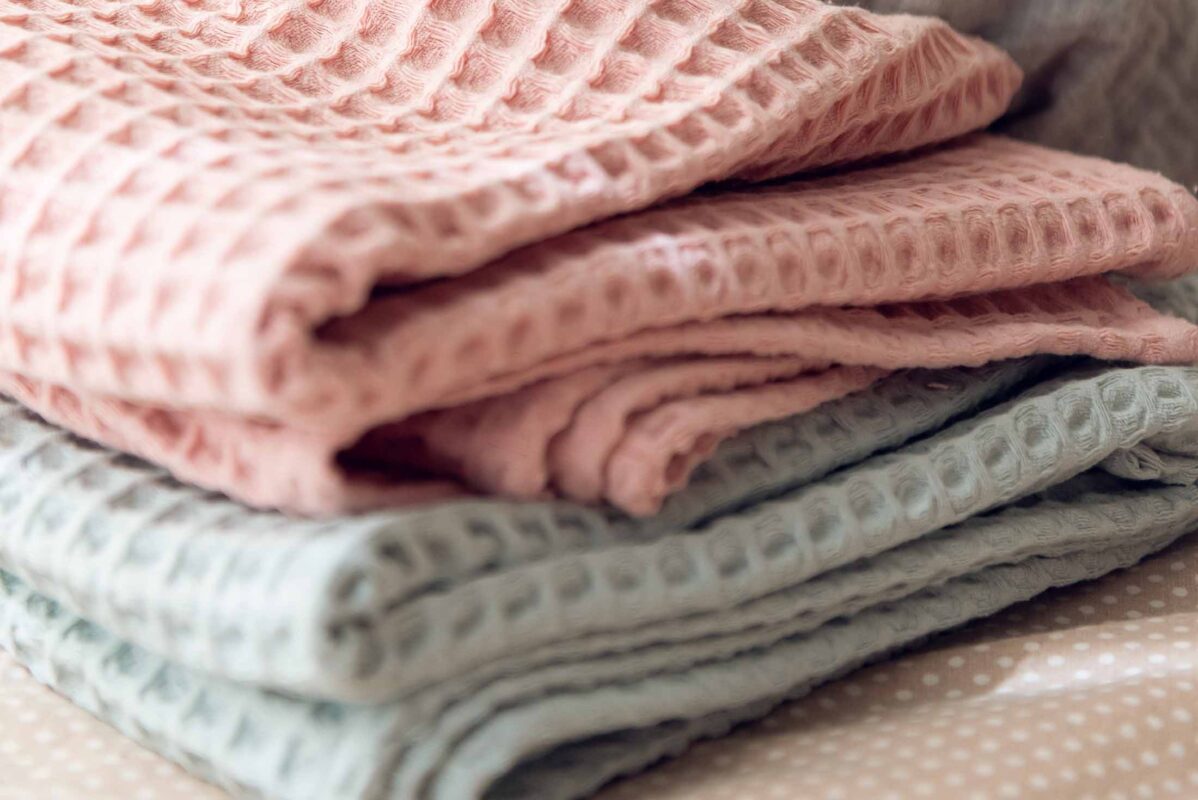
Why waffle weave feels different
A flat napkin relies mainly on color, print, edge detail, and folding for visual interest. Waffle cloth builds interest into the structure itself. Light catches the raised squares while the recesses create a quiet pattern, even in a single solid color.
The grid also increases surface area. Textile references commonly connect that structure with absorbency, airflow, and quicker drying; KINTO’s waffle-textile description, for example, explains how raised cells create channels for air to pass through.
For a napkin, that has two practical consequences. It feels substantial without needing a heavy print, and it can handle small spills better than an ultra-fine decorative cloth. But deep texture can also trap crumbs and hold stains in the recesses. A waffle napkin is functional, not maintenance-free.
Cotton is the best default—but read beyond the fiber label
Cotton waffle is easy to understand and usually easy to launder. It softens with use, takes dye well, and suits the everyday-table character of the weave. Expect some dimensional change, especially after the first wash, and never buy to an exact finished measurement without checking the maker’s shrinkage guidance.
Cotton-linen waffle tends to feel drier and look slightly more irregular. It is a beautiful choice for Japandi, rustic-modern, and Mediterranean tables because it brings character without print. Linen content can increase the price and make edges or corners look less obedient; that is part of the expression, not necessarily a defect.
Synthetic or synthetic-rich waffle can dry quickly and resist shrinkage. It makes sense for a busy household, but touch the fabric before committing to a full set. Some blends feel slick or hold oily marks more visibly than cotton.
Fiber percentages do not tell the whole story. A fine cotton waffle can feel more refined than a coarse linen blend, while a very heavy cotton cloth may be too bulky to sit comfortably on a lap. The best test is to scrunch one napkin in your hand: it should compress easily and open without becoming a rigid mound.
Get the size right after washing, not before
Traditional dinner napkins are often generous squares; one linen maker lists 22 by 22 inches as its most popular traditional dinner size. Waffle napkins do not need to follow that exact convention. Their texture creates volume, so a slightly smaller cloth can still feel substantial.
For everyday dining, focus on three questions:
- Does the napkin unfold to cover a lap comfortably?
- Does the folded or gathered version leave enough room around the plate?
- Is the listed size measured before or after washing?
Buy one sample if the set is expensive. Wash and dry it exactly as you plan to care for the whole set, then measure it. A seller who gives both pre-wash and expected finished dimensions is providing more useful information than one who promises “oversized luxury” without numbers.
If your table is compact, a giant square can overwhelm the place setting. If the weave is especially chunky, choose the smaller of two viable sizes and let the texture provide the visual weight.
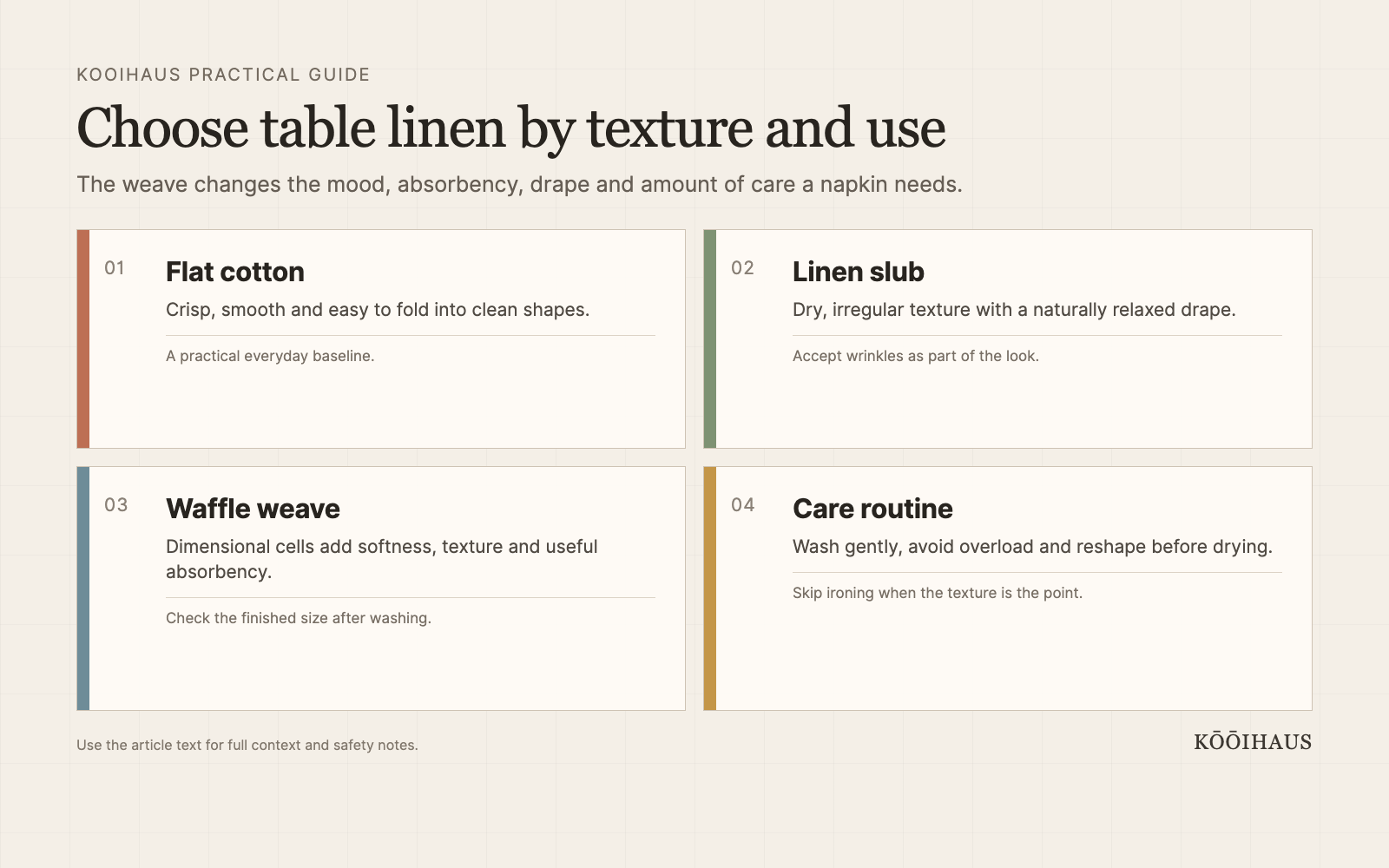
Four ways to style waffle napkins without elaborate folding
1. The loose rectangle
Fold the napkin into thirds, then in half, without pressing the folds flat. Place it to the left of the plate or centered beneath the cutlery. The grid supplies enough detail; no ornament is required.
This is the best option when patterned dinnerware already carries the table. Our guide to contemporary dinnerware patterns shows why adding another motif can quickly become visual noise.
2. The soft knot
Tie one loose knot near the center and place the napkin on the plate. This works with a light or medium-weight waffle cloth that compresses easily. Stop if the knot looks like a ball of fabric; deep-grid napkins are better folded.
The knot belongs at a casual lunch, not a formal dinner. That is not a lesser use—it is simply an honest one.
3. The relaxed gather
Pinch the middle and feed it through a plain wood, ceramic, or metal ring. Let the ends remain uneven. Choose a ring with enough internal diameter that it does not crush the cells into a dense rope.
Pair warm oatmeal or flax-colored napkins with matte black or brushed steel cutlery. For lighter Scandinavian settings, muted sage, clay, or dusty blue can be the only color on a white table.
4. The under-plate layer
Open the napkin into a loose diamond or rectangle and let part of it sit under the plate. This creates a broad patch of texture without a tablecloth, which is especially useful on a hard stone or wood surface.
Keep the overhang controlled and make sure the plate sits level. A very deep waffle or thick hem can create a wobble; use the loose rectangle instead.
Color rules for a calm table
Waffle texture already reads as a pattern, so color should usually do less.
- With patterned plates, choose one quiet color pulled from the design.
- With plain white or cream dishes, a darker napkin can define each place setting.
- With a colorful centerpiece, use oatmeal, stone, warm gray, or off-white.
- With several wood tones, avoid matching them literally; a muted green or blue creates separation.
For a Japandi table, repeat no more than two materials across accessories. A ceramic bowl, wood napkin ring, and textured cloth are enough. The restraint in our Japandi centerpiece guide applies just as well to each place setting.
Wash them like working textiles
Always begin with the care label. Cotton waffle may contract during the first washes, and high heat can exaggerate shrinkage. Wash colors with similar tones, treat food stains promptly, and avoid packing the machine so tightly that rinse water cannot move through the textured cells.
Fabric softener is not a useful shortcut for an absorbent cloth. It can coat fibers and reduce their ability to take up moisture; Martha Stewart’s towel-care guidance similarly recommends skipping softeners and dryer sheets to preserve absorbency. The product is about towels, but the fiber-care principle is relevant to an absorbent cotton napkin.
Reshape each napkin while damp and dry according to the label. If you want a crisper outline, press only the hem and outer edge. Ironing the entire face flat can erase the three-dimensional character you paid for.
Store waffle napkins folded loosely rather than compressed under heavy linens. Make sure they are completely dry; the same cells that create texture should not trap residual dampness in a closed drawer.
The Kooihaus verdict
Worth it: small- or medium-grid cotton waffle in a solid, forgiving color. It makes an everyday setting feel considered without demanding starch, elaborate folds, or a full tablecloth.
Worth the upgrade: a soft cotton-linen blend when the weave compresses easily and the maker provides honest finished dimensions.
Skip it: an oversized, very deep waffle sold as formal dinner linen. It will dominate the plate, resist neat folds, and look more like toweling than tableware.
The point of waffle napkins is not to make dinner ceremonious. It is to make an ordinary meal feel as though the table was touched by a human hand before everyone sat down.
Frequently asked questions
Are waffle napkins formal enough for a dinner party?
They suit relaxed dinner parties, brunches, and contemporary natural tables. For black-tie formality or intricate folds, smooth linen is a better tool.
Are waffle napkins more absorbent than flat cotton napkins?
The raised structure increases surface area and can support absorbency, but performance still depends on fiber, weight, finishing, and laundering. A coated or very lightweight waffle cloth may underperform a good flat cotton napkin.
Do waffle napkins need ironing?
Usually not. Reshape them while damp and press the hem only if you want a cleaner edge. Flattening the whole face reduces their defining texture.
Do cotton waffle napkins shrink?
They can, particularly in the first wash and with high heat. Check the maker’s care instructions and finished-size guidance; sample-washing one is the safest route for a costly set.
What is the easiest fold for a waffle napkin?
A loose rectangle is the most reliable. It respects the volume of the weave, works beside or beneath cutlery, and does not require a sharply pressed crease.












 Blankets and Throws
 Home Accessories
 Furniture
 Rugs
Rugs Cushions
 Kitchen
 Cutlery and Dinnerware
 Drinkware
 Table Mats and Coasters
 Dining Accessories
 Tablecloths and Napkins
 Decorative Items
 Vases and Planters
 Wall Decor
 Bathroom Accessories
 Bathroom Storage
 Bath and Shower Mats
 Towels