FREE WORLDWIDE TRACKED SHIPPING
West Elm x Russ & Daughters Gets Nostalgia Right — But Don’t Buy the Whole Table
 By Alex Carter
The West Elm x Russ & Daughters collection gets nostalgia right, but the smartest table uses one story piece—not the whole matching set.

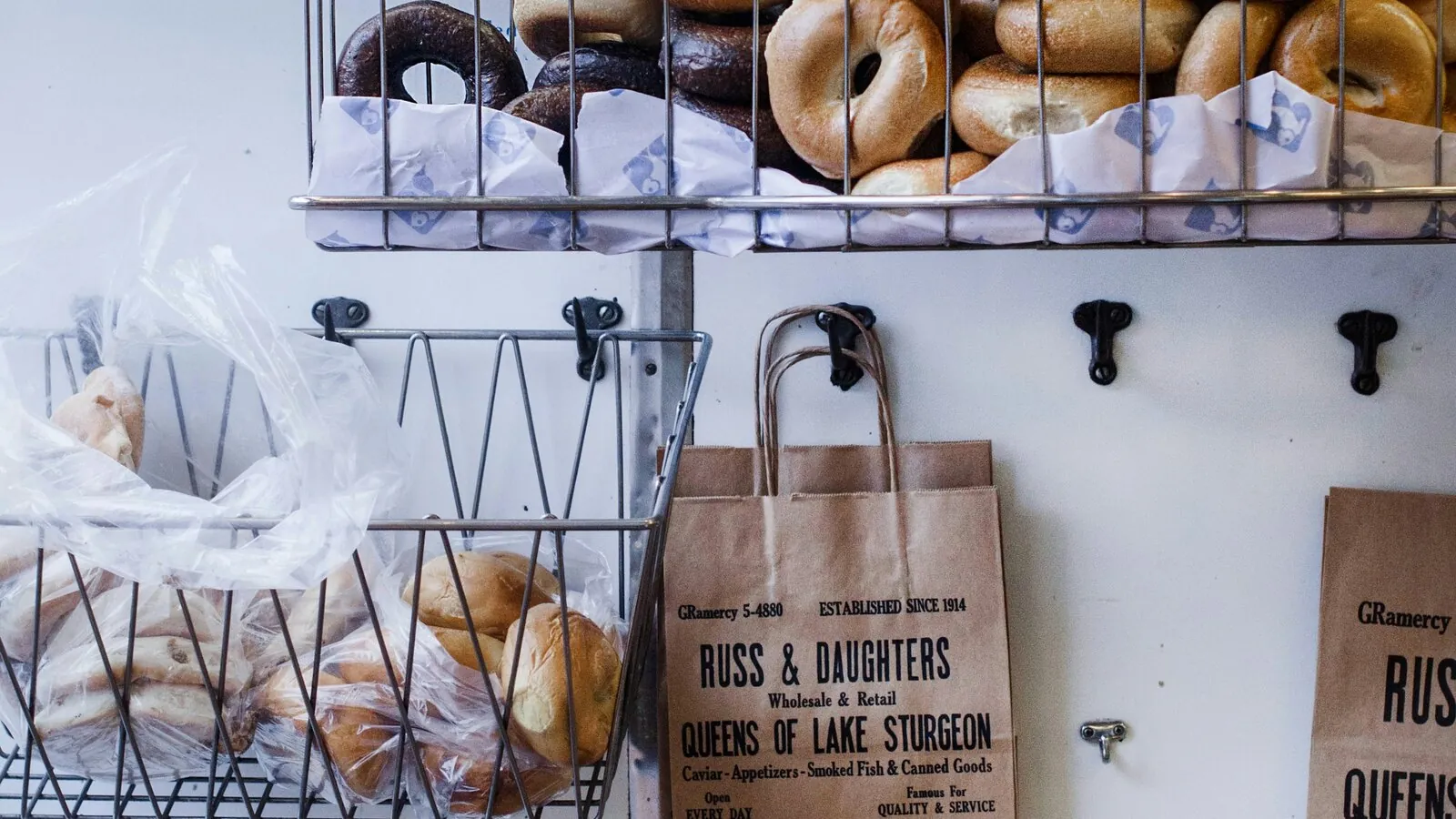
Photos: Koushalya Karthikeyan & Josip Ivankovic via Unsplash. Composite by Kooihaus. Illustrative context, not official product photography.
The smartest thing about the new West Elm x Russ & Daughters collection is not the fish platter, the bagel board, or even that instantly recognizable blue-and-white palette. It is the reminder that a memorable table begins with a ritual.
I went through the collection and the launch coverage, and my verdict is simple: choose one piece that tells the story, then let ordinary, quieter tableware do the supporting work. Buy the complete matching scene and a real dining table can start to feel like a themed display. Edit it, and the same nostalgia feels personal.
What launched — and why it feels different
West Elm describes the collaboration as a tabletop collection built for casual brunches and holiday entertaining, with references to New York appetizing-shop culture. Launch coverage published on August 24 lists stoneware dinnerware, serving platters, bagel and challah boards, trinket trays, a tea-light holder, a menorah, and other small pieces in Russ & Daughters’ characteristic blue and white.
That subject matters. Russ & Daughters is not a mood board assembled around a generic “New York” idea; it is a family institution associated with appetizing culture, smoked fish, bagels, and gathering around food. The collection works best when it carries that specific history into something people will actually use.
The official West Elm collection page emphasizes serving and entertaining, while Hey Alma’s launch overview confirms the wider mix of dinnerware, boards, platters, and ritual objects. That makes this more convincing than a logo dropped onto a mug. The forms have jobs.

The design lesson is ritual, not matching
There are two kinds of nostalgia in home decor. One recreates an image so literally that the room becomes a set. The other borrows a useful habit: how food is served, how a table gathers people, or how one familiar object can carry a whole memory.
This collection is strongest in the second category. A fish-shaped platter tells you what the table is for. A bagel board gives breakfast a center. Blue-rimmed white ceramics recall a lunch counter without requiring the rest of the dining room to participate.
That is also why the collection translates well beyond a New York apartment. You do not need neon, checkerboard floors, or a dozen novelty objects. You need one piece with enough character to start the conversation and enough function to earn its storage space.

My five-piece edit: what earns the space
Prices below were visible in launch coverage or on West Elm when checked on August 25, 2026, and may change. More important than the number is the role each piece can play after the launch moment passes.
See the actual pieces on West Elm’s own feed. Product photography belongs to West Elm / Russ & Daughters.
| Piece | Observed price | Best for | Kooihaus verdict |
|---|---|---|---|
| Wood Bagel Board | $59.50 | Weekend breakfast, bread, small serving jobs | Best everyday buy if it will leave the cabinet often |
| Ceramic Fish Serving Platter | $69.50 | A dramatic food-first centerpiece | Best statement piece for regular hosts |
| Stoneware Salad Plate Set | From $60 | Daily use with an easy blue-and-white layer | Most versatile, but less distinctive on its own |
| Mug Tea-Light Holder | $45 | A small pool of light on a dinner table | Charming accent, not a priority buy |
| Pickle Trinket Tray | $59 | Keys, rings, olives, or a very small serving moment | Skip unless the joke and the job both fit your home |
The wood board wins because it is visually quieter than the novelty ceramics and useful across breakfast, bread, cheese, and snacks. The fish platter is the opposite choice: expressive, unmistakable, and good only if you are comfortable letting one object lead the table.
The stoneware is the safe bridge. It gives you the blue-and-white language without making every place setting perform. It would also sit comfortably beside textured glassware; our guide to choosing ripple glassware explains how to keep that extra texture from turning into visual noise.
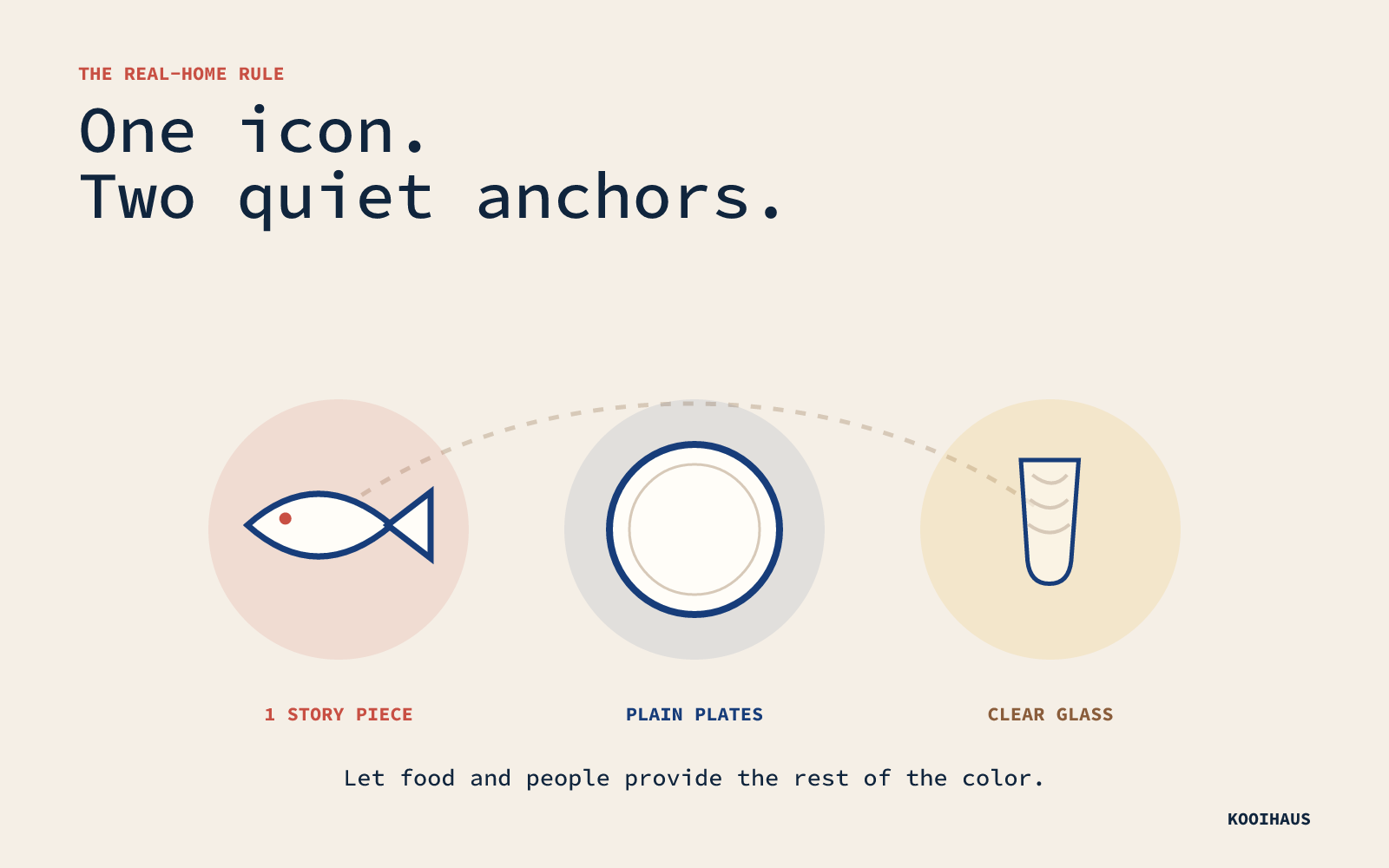
Use the one-icon, two-anchor rule
The easiest way to style a characterful collaboration is to assign three roles:
- One icon: the recognizable object — perhaps the fish platter or engraved board.
- Two quiet anchors: plain white plates and clear or lightly textured glasses.
- One warm counterpoint: wood, natural linen, or food itself.
This is not a formula for making the table boring. It is a way to protect the special piece from competition. A platter reads more clearly against white stoneware. Cobalt details look richer beside warm wood. And the meal remains the most colorful thing on the table.
For a softer layer, use a neutral runner or napkin rather than another printed motif. Our waffle napkin styling and care guide is useful here because texture can provide depth without adding another illustration or color story.
How to get the look without buying the collection
The collection’s most portable idea is a palette with discipline: white, cobalt blue, a small red accent, and warm wood. You can build that feeling with things you may already own.
- Start with white everyday dinnerware rather than a full decorated set.
- Add one blue-rimmed bowl, plate, or serving piece.
- Use a wood board to interrupt all the cool ceramic surfaces.
- Keep glassware clear; ripple or fluted texture is enough detail.
- Let tomatoes, citrus, herbs, pastries, or smoked fish supply the changing color.
A fruit bowl can play the same role between meals, especially when the rest of the counter is quiet. The principles in our guide to styling a fruit bowl on the kitchen counter apply here too: treat the object as part of a working surface, not a permanent stage set.
The one thing I would not copy is “collection completeness.” Retail photography needs a fully coordinated scene because it has seconds to communicate an idea. A home has years. Pieces arrive at different times, carry different memories, and look better when the mix feels earned.
Small-space tables need an even harder edit
On a compact dining table, every object consumes both physical room and attention. A runner, printed placemats, decorated plates, novelty serveware, candles, and food may each be attractive alone, but together they reduce the open space that makes a small setting feel generous.
Use the largest serving piece as the visual ceiling. If the fish platter is out, skip printed placemats. If the decorated plates are out, use a plain wood board. If the table runner carries the story, let the dinnerware recede.
This is where the collection’s smaller objects can be deceptive. A trinket tray does not take much room, but it adds another visual sentence. Small homes rarely suffer from a shortage of sentences; they benefit from better editing.
A note on the ritual objects
The collaboration also includes objects connected to Jewish holidays and home rituals, including a menorah and a decorated matchbox. These should not be treated as generic seasonal props. They make sense when they support a real practice, a gift with context, or a family tradition.
That distinction is part of good decorating. Meaning is not a color palette. A culturally specific object becomes richer when its use is understood, and thinner when it is purchased only because it happens to fit a shelf.
What I would skip
I would skip the whole matching table unless collecting Russ & Daughters pieces is itself the point. I would also pass on the most single-purpose novelty item if it needs an explanation every time it appears or if a cabinet is already crowded with “conversation pieces.”
The collection’s broad entertaining range runs from small accessories to a grouped entertaining set listed by West Elm at $19–$198. That makes it easy to add one affordable token and just as easy to keep adding. The edit matters more than the entry price.
Before buying, ask three questions:
- Will I use it at least monthly?
- Does it do a job my current tableware does not?
- Can it look at home beside things I already own?
Three yeses make a purchase defensible. One yes means you are probably buying the launch story rather than the object.
The verdict: buy the story piece, steal the restraint
The West Elm x Russ & Daughters collection succeeds because it connects recognizable design to recognizable use. It does not merely say New York; it says brunch, appetizing, holidays, and the table as a place where culture is repeated.
My pick is the wood bagel board for everyday usefulness, followed by the fish platter for someone who hosts and wants one unapologetic centerpiece. But the best idea costs nothing: one icon, two quiet anchors, and enough empty space for the food and people to matter.
That is how nostalgia belongs in a real home — not as a complete set, but as one well-chosen object that earns the right to stay.
Kooihaus is not affiliated with or endorsed by West Elm or Russ & Daughters. Storefront and context photography via Unsplash (Koushalya Karthikeyan, Josip Ivanković, Jennifer Burk); the actual products are shown through West Elm’s own social post embedded above. Prices were checked on August 25, 2026 and may change.











 Blankets and Throws
 Home Accessories
 Furniture
 Rugs
Rugs Cushions
 Kitchen
 Cutlery and Dinnerware
 Drinkware
 Table Mats and Coasters
 Dining Accessories
 Tablecloths and Napkins
 Decorative Items
 Vases and Planters
 Wall Decor
 Bathroom Accessories
 Bathroom Storage
 Bath and Shower Mats
 Towels