FREE WORLDWIDE TRACKED SHIPPING
Oversized Throw Blanket Sizes: How Big Should You Go?
 By Laura Jones
Oversized throws start where a standard 50x60 blanket stops. Compare practical sizes for tall adults, sharing, sofas, and bed-foot styling.
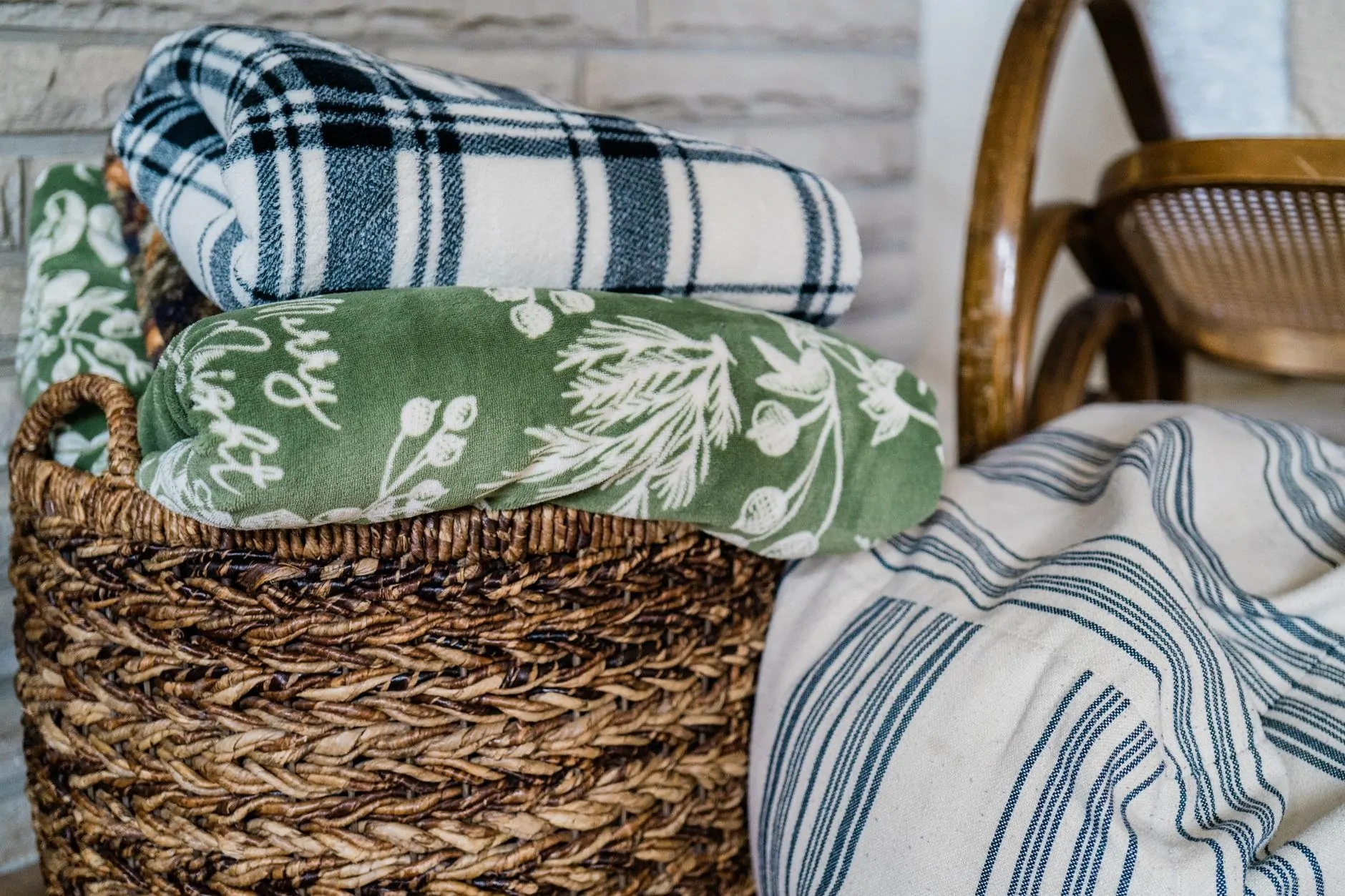
The best oversized throw is not the largest one you can find. It is the smallest size that gives the intended person or furniture enough coverage without becoming heavy, awkward to wash, or visually dominant.
The label is only a starting point. A useful decision combines exact dimensions, fiber content, construction, care, visual scale and provenance. Those checks prevent an appealing image from becoming a textile that is too small, too heavy, too fragile or too generic for the room.
The quick decision framework
| Option | Design and use note |
|---|---|
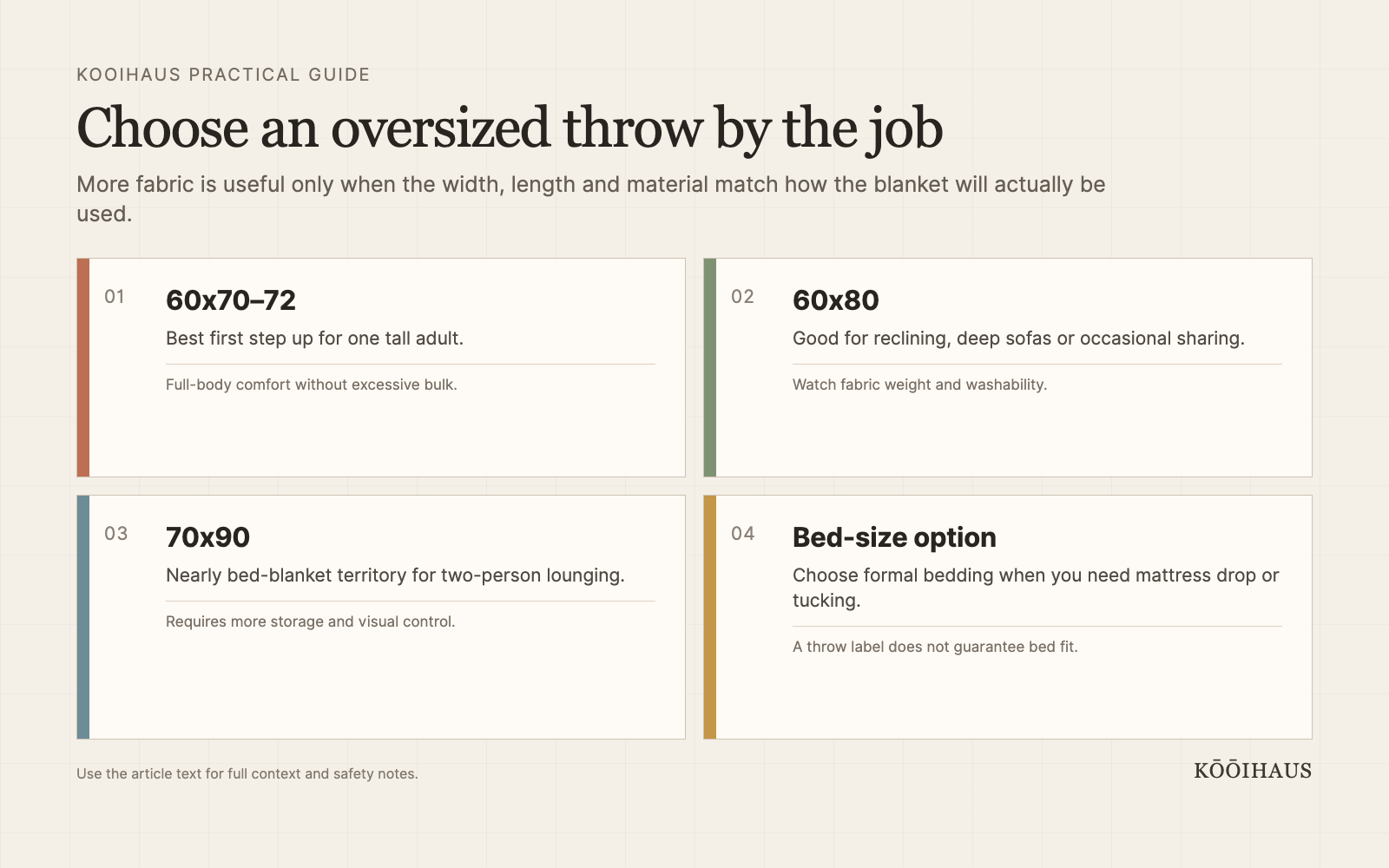
| 50×60 in | Standard throw — One seated adult, chair, compact sofa |
| 60×70–72 in | Oversized personal throw — Tall adult, generous sofa use, bed foot |
| 60×80 in | Extra-long throw — Reclining, deep sofa, light sharing |
| 70×90 in | Very large throw — Two-person lounging, informal bed layer |
Begin with the practical job. Decide who will use the blanket, where it will live, how often it will be washed and whether it should disappear into the room or provide contrast. Then compare materials and style. Reversing that order—falling for a motif and inventing a use later—is how decorative textiles become permanent clutter.

Start with the standard you are outgrowing
A familiar 50×60-inch throw is easy to carry and style, but it can leave a tall adult’s feet exposed and rarely supports relaxed two-person use. Moving to 60×70 or 60×72 solves length first without radically changing the way the blanket behaves. A 60×80 throw adds more reclining room, while 70×90 begins to act like informal bedding. The progression matters because every increase also adds weight, laundry volume and fabric to manage on the sofa.
Put that principle into practice by testing the item in its daily position, not only in a styled photograph. Check scale from the doorway, from the main seat and under evening light. The right choice should still make sense when the room is untidy and the textile is being used rather than displayed.
Choose width and length separately
Length determines whether the blanket reaches from shoulders to feet. Width determines whether it wraps around one person, spans two laps or creates a broad furniture drape. A tall solo user may need length more than width, while a couple sharing a sofa needs width first. Read both dimensions rather than treating the word oversized as a measurable standard; retailers use that label inconsistently.
Put that principle into practice by testing the item in its daily position, not only in a styled photograph. Check scale from the doorway, from the main seat and under evening light. The right choice should still make sense when the room is untidy and the textile is being used rather than displayed.
Match the sofa, not the showroom fold
A compact loveseat can disappear beneath a 70×90 blanket, while a deep sectional can make a 60×70 throw look restrained. Measure the visible seat and arm, decide whether the blanket will live folded, casually dropped or stored in a basket, and leave enough upholstery visible for the room to breathe. The goal is useful softness, not covering the sofa like a protective sheet.
Put that principle into practice by testing the item in its daily position, not only in a styled photograph. Check scale from the doorway, from the main seat and under evening light. The right choice should still make sense when the room is untidy and the textile is being used rather than displayed.
Account for material weight
A loosely woven cotton throw and a dense wool or plush synthetic blanket can share dimensions yet feel completely different. Larger sizes amplify weight, drying time and storage needs. If the blanket moves daily, prioritize a material you can lift, fold and wash easily. If it stays in one reading corner, a heavier textile may be welcome. Always follow the care label before assuming a large blanket will fit a home washing machine.
Put that principle into practice by testing the item in its daily position, not only in a styled photograph. Check scale from the doorway, from the main seat and under evening light. The right choice should still make sense when the room is untidy and the textile is being used rather than displayed.
Know when to choose bedding instead
An oversized throw remains an informal layer. If the objective is symmetrical side drop, full mattress coverage or tucking under the foot, use a blanket sized for the mattress. Throws are strongest at the lower third of a bed, across a bench or as a loose evening layer. Asking a 60-inch-wide throw to behave like queen bedding creates predictable disappointment.
Put that principle into practice by testing the item in its daily position, not only in a styled photograph. Check scale from the doorway, from the main seat and under evening light. The right choice should still make sense when the room is untidy and the textile is being used rather than displayed.
A practical room test before buying
Mark the listed dimensions with a sheet, towel or painter’s tape. Sit where the blanket will be used, fold it the way it will be stored and look at it from the room entrance. If the item is for comfort, test shoulder-to-foot length and wrapping width. If it is for styling, note how much sofa, chair or bed remains visible.
Next, audit the care path. Read the label, compare the blanket’s folded volume with your storage and check whether your washer can handle the material. Wool, cotton, blends and plush synthetics have different relationships with heat, moisture, pilling and drying. The most sustainable purchase is usually the textile you can maintain and keep using.
Common mistakes to avoid
- Buying the regional style label without checking fiber, maker or country information.
- Assuming oversized means the same dimensions across brands.
- Repeating one pattern across the throw, cushions and rug until the room feels themed.
- Ignoring how a larger or denser textile changes laundry and storage.
- Styling the blanket so carefully that nobody feels permitted to use it.
Make the choice last beyond one season
A durable textile decision does not require a neutral color, but it does require a reason that survives the current campaign image. Look at the room without the product and identify what is missing: warmth, length, softness, pattern, acoustic absorption or a portable layer. Then ask whether the proposed blanket supplies that quality without creating a new maintenance problem.
Compare at least two sizes and two materials. Inspect close photographs of the weave, edge and reverse side, not only the styled front. Read customer information critically: comments about pilling, shrinkage and hand feel are more useful than general praise, but care mistakes and individual sensitivity can also shape reviews. If provenance is part of the price, expect specific names and manufacturing details.
Finally, plan where the blanket goes when it is not being photographed. A dedicated basket, shelf or sofa arm prevents the textile from migrating into a permanent pile. Use it for a week before buying matching cushions or a second color. One object that earns daily use creates more atmosphere than a coordinated set that exists only to complete a look.
Editor’s checklist
- The exact dimensions suit the person and the furniture.
- The fiber and care routine match the household.
- The color works in daylight and evening light.
- The room retains negative space after the textile is added.
- The product information supports any provenance claim.
Frequently asked questions
What size is an oversized throw blanket?
There is no regulated definition. In practice, 60×70 inches and larger is a useful starting point because the common standard throw is around 50×60.
Is 60×80 big enough for two people?
It can cover two laps and support close sofa lounging. For two adults reclining independently, 70×90 or bed-size bedding is more comfortable.
Can an oversized throw cover a queen bed?
It can decorate the foot or lower third, but most throws are too narrow for full queen coverage with balanced side drop.
How do I stop a large throw from looking messy?
Use one deliberate fold or a single loose cascade, keep a clear section of upholstery visible, and store extra blankets rather than layering all of them at once.
Bottom line
Use the label as an invitation to inspect the object more closely. The lasting choice is the one whose material, dimensions and construction support daily life while adding one controlled layer of color or texture. A room does not become more considered by accumulating references; it becomes more considered when each object has a clear role.











 Blankets and Throws
 Home Accessories
 Furniture
 Rugs
Rugs Cushions
 Kitchen
 Cutlery and Dinnerware
 Drinkware
 Table Mats and Coasters
 Dining Accessories
 Tablecloths and Napkins
 Decorative Items
 Vases and Planters
 Wall Decor
 Bathroom Accessories
 Bathroom Storage
 Bath and Shower Mats
 Towels