FREE WORLDWIDE TRACKED SHIPPING
West Elm x Lone Fox Holiday Collection: What Works Beyond Christmas
 By Laura Jones
A practical review of the West Elm x Lone Fox holiday collection, from faux bois and tapestry to the pieces that can keep working after Christmas.
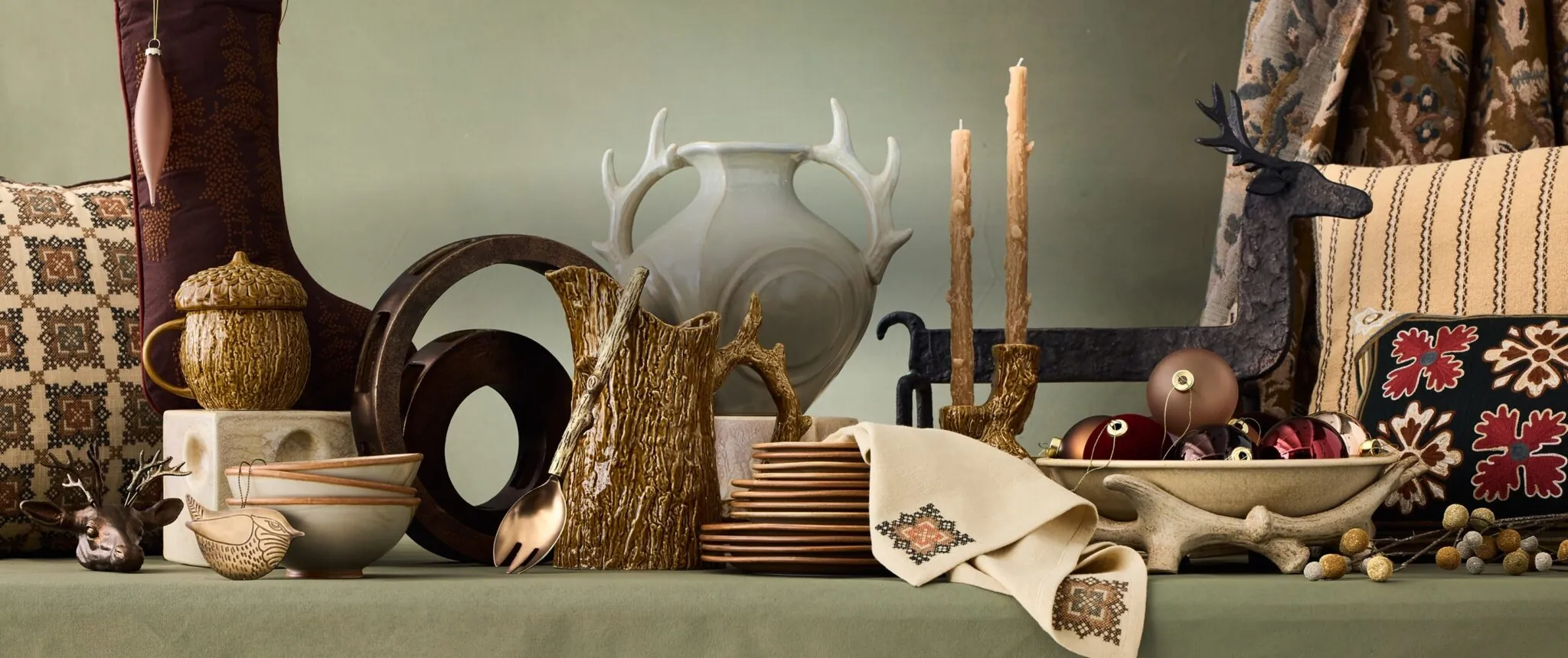
Image: West Elm.
Prices and availability were checked on the West Elm US site on September 30, 2026, and may change.
West Elm’s first holiday collection with Lone Fox founder Drew Michael Scott lands at exactly the moment when Christmas decor is moving away from perfect matching sets. The assortment uses faux bois ceramics, tapestry textiles, cross-stitch details, branch-like greenery, woodland animals, and warm earth colors to create a room that feels accumulated rather than installed for one month.
Campaign styling makes almost every piece look convincing. In a real home, the better test is which parts can stay after the ornaments are packed away. Textiles, tableware, and functional sculptural objects have the best chance because they behave like winter decor first and Christmas decor second.
What is in the West Elm x Lone Fox holiday collection?
West Elm presents the collaboration as A Very Lone Fox Holiday, with an explicit invitation to mix rather than match. The wider Lone Fox collection page spans tabletop, textiles, ornaments, candleholders, wreaths, garlands, decorative branches, and woodland objects.
The collaboration is also a full-circle project. Scott has explained that he worked at West Elm as a sales associate before building Lone Fox. In a launch interview with Livingetc, he describes the goal as holiday atmosphere without an aggressively Christmas-only palette. Browns, ochres, softened greens, cream, and muted red do most of the work.
That restraint is important. A bright red cushion with a Santa motif has one job and a short season. A tapestry pillow in ochre or a faux bois bowl can support holiday greenery in December, then return to a normal room in January without looking stranded.
The five pieces and categories with the longest life
The filter here is versatility: how easily can the object lose its Christmas context and still earn its space?
1. Faux bois tableware
Faux bois makes ceramic look like cut or swirling wood. In this collection it appears on appetizer plates, bowls, and a pitcher. The appetizer plate set was listed at $60, while the cereal bowl set appeared at $64 when checked.
This is probably the clearest year-round buy. The pattern supports a woodland table in December, but it also works with linen, stoneware, fruit, and garden flowers for the rest of the year. It has enough movement to animate a neutral place setting without requiring matching plates underneath.
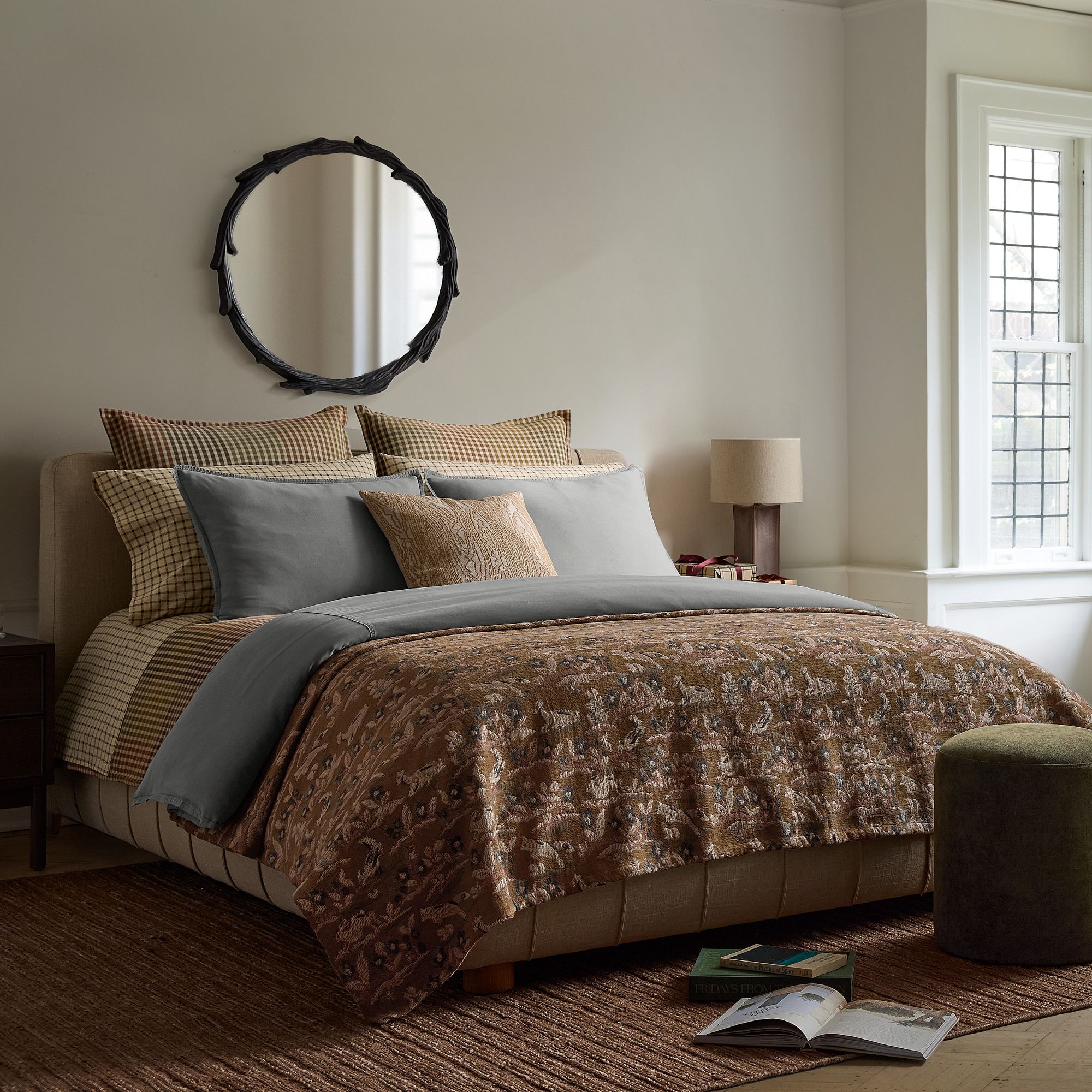
2. Tapestry blankets and pillow covers
The Forest Jacquard Tapestry Blanket was listed from $179, and several pillow covers sat roughly between $59 and $79.50 depending on style and insert. Tapestry brings color, texture, and a slightly pictorial surface to rooms dominated by plain upholstery.
Use one tapestry piece as the room’s patterned anchor. A blanket at the foot of a bed, a single pillow on a plain sofa, or a textile over the back of a chair is enough. Buying every related pattern would erase the collected effect the collection is trying to create.
3. The faux bois taper holder
The sculptural centerpiece taper holder was listed at $45. It carries the collection’s forest idea without using a literal Christmas symbol. In December it can hold ivory or burgundy candles beside evergreen cuttings. In January the greenery can disappear and the object still reads as an unusual piece of tabletop sculpture.
Its main limitation is scale. A long centerpiece only earns its keep if it fits the dining table, sideboard, or mantel without forcing everything else to move. Measure first, especially in a narrow dining area.
4. Woodland vessels rather than woodland novelty
The Woodland Deer Vase was listed at $99 and the Centerpiece Bowl at $119. These are less flexible than the tableware, but more useful than a purely decorative figurine because they have a function. Fill the vase with bare branches or winter foliage, then use it for leafy stems later in the year.
The test is whether the animal form already belongs in your home. In a room with dark wood, folk art, vintage brass, or nature prints, it can feel intentional. In a very spare room, it may look like seasonal merchandise that was never put away.
5. Sparse greenery that follows the architecture
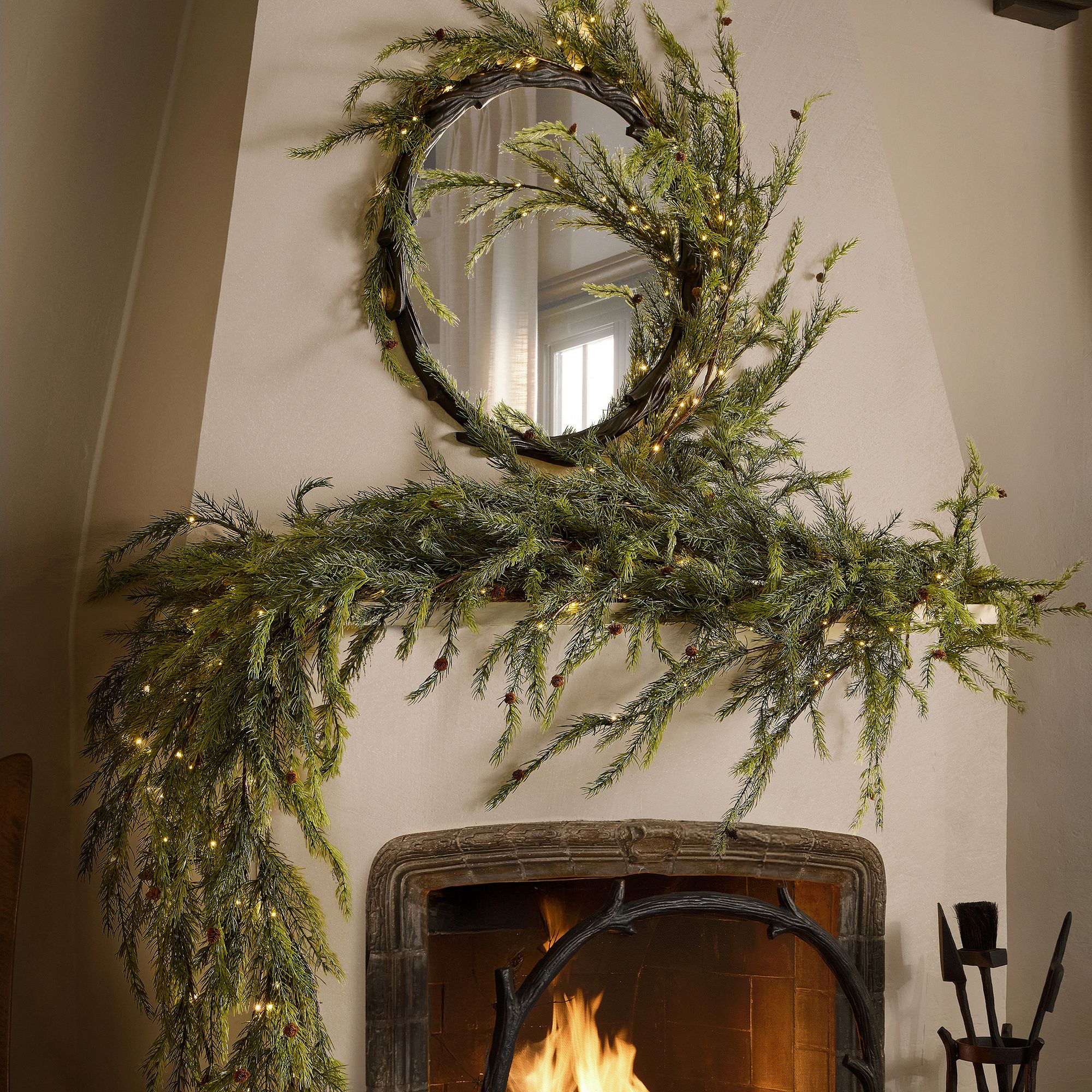
The Faux Twisty Stick Garland was listed at $129, its matching wreath at $149, and the oversized garland at $199. Their advantage is a loose, branch-like silhouette rather than a dense artificial hedge.
Domino’s launch interview highlights Scott’s habit of running greenery along mantels, arches, bookcases, and windows. That is the right approach. Follow an existing architectural line instead of placing garland in the middle of a wall simply because there is empty space.
What to skip if storage and budget matter
The collection is broad, and its styling can make small novelty objects feel more essential than they are. Three categories deserve a pause.
- Large Christmas-only structures: a tree skirt, tree stand, or fireplace screen can be beautiful, but it needs storage for most of the year.
- Sets of tiny ornaments: these work when they fill a specific gap in an existing tree. They are less useful when they start a new color story that requires more purchases.
- Too many woodland characters: one deer vessel or animal ornament is a detail. Repeating the motif across the mantel, table, and tree turns a subtle idea into a theme.
The expensive greenery also needs scrutiny. A $199 garland is only a strong buy if the length, lights, and shape solve a recurring decorating problem. If the goal is simply organic scale, a real branch, reusable wire, and a smaller amount of greenery can create a similar leading line for much less.
Why the collection feels current without looking trend-led
Recent coverage has focused on the nostalgia in the collection, but the more durable idea is contrast. House Beautiful identifies the same mix of warmer neutrals, earthy tones, patina, and texture in its fall and winter trend analysis. Those elements matter because they resist the flatness of an all-new holiday scheme.
A room feels collected when objects do not share the same age, finish, or pattern scale. Smooth glass needs rough textile. New ceramic needs worn wood. A formal taper looks better beside an irregular branch than beside five identical candles. The collection packages those contrasts, but the styling principle does not require buying the package.
This is also why the range reads differently from a minimal beige holiday. The palette is quiet, but the surfaces are active. Tapestry, cross-stitch, faux bois, metal, glass, and greenery give the eye several textures to register even when the colors stay close.
How to use the look without buying the whole collection
- Choose one permanent anchor. Start with a pillow, blanket, vessel, or tableware that can remain after December.
- Add one truly seasonal layer. A stocking, ornament set, or garland can provide the Christmas cue without controlling the whole room.
- Repeat color, not product. Carry ochre, brown, muted green, or burgundy through books, ribbon, candles, and existing textiles.
- Leave mismatches visible. Different candlesticks, mixed plates, and varied ornaments are part of the point.
- Remove one motif before adding another. If the table already has faux bois and deer, the mantel does not need more woodland figures.
Kooihaus verdict
The collection’s best idea is seasonal editing. Reproducing the whole set would undermine its mixed, accumulated character. Faux bois tableware, one tapestry textile, and a functional vessel offer the best chance of surviving January. The more literal ornaments and oversized greenery can still work, but only when they fill a known gap and have a storage plan.
If you buy one piece, choose the object you would still want in the room with the tree removed. That simple test protects the collected look from becoming another coordinated holiday theme.
Frequently asked questions
When did the West Elm x Lone Fox holiday collection launch?
The collection launched in the United States on September 28, 2026. The full assortment was presented online, with selected pieces also appearing in stores.
Who is Lone Fox?
Lone Fox is the interiors and lifestyle brand founded by designer and content creator Drew Michael Scott. Before developing the brand, Scott worked at West Elm as a sales associate and in-home stylist.
Is the collection only for Christmas?
No. The range includes overtly seasonal ornaments, stockings, and tree pieces, but its faux bois ceramics, tapestry textiles, vessels, and some greenery can work through winter or all year. The deciding factor is whether the object still functions without a Christmas tree nearby.
Are the photographs in this article from the collection?
Yes. The photographs are official West Elm images of the Lone Fox holiday collection and its campaign.











 Blankets and Throws
 Home Accessories
 Furniture
 Rugs
Rugs Cushions
 Kitchen
 Cutlery and Dinnerware
 Drinkware
 Table Mats and Coasters
 Dining Accessories
 Tablecloths and Napkins
 Decorative Items
 Vases and Planters
 Wall Decor
 Bathroom Accessories
 Bathroom Storage
 Bath and Shower Mats
 Towels