FREE WORLDWIDE TRACKED SHIPPING
A Rug on the Wall Can Look Like Art—If You Hang It Like One
 By Alex Carter
A rug can become powerful wall art when its weight, condition, light exposure and mounting method are treated seriously. Compare safer display options before hanging.
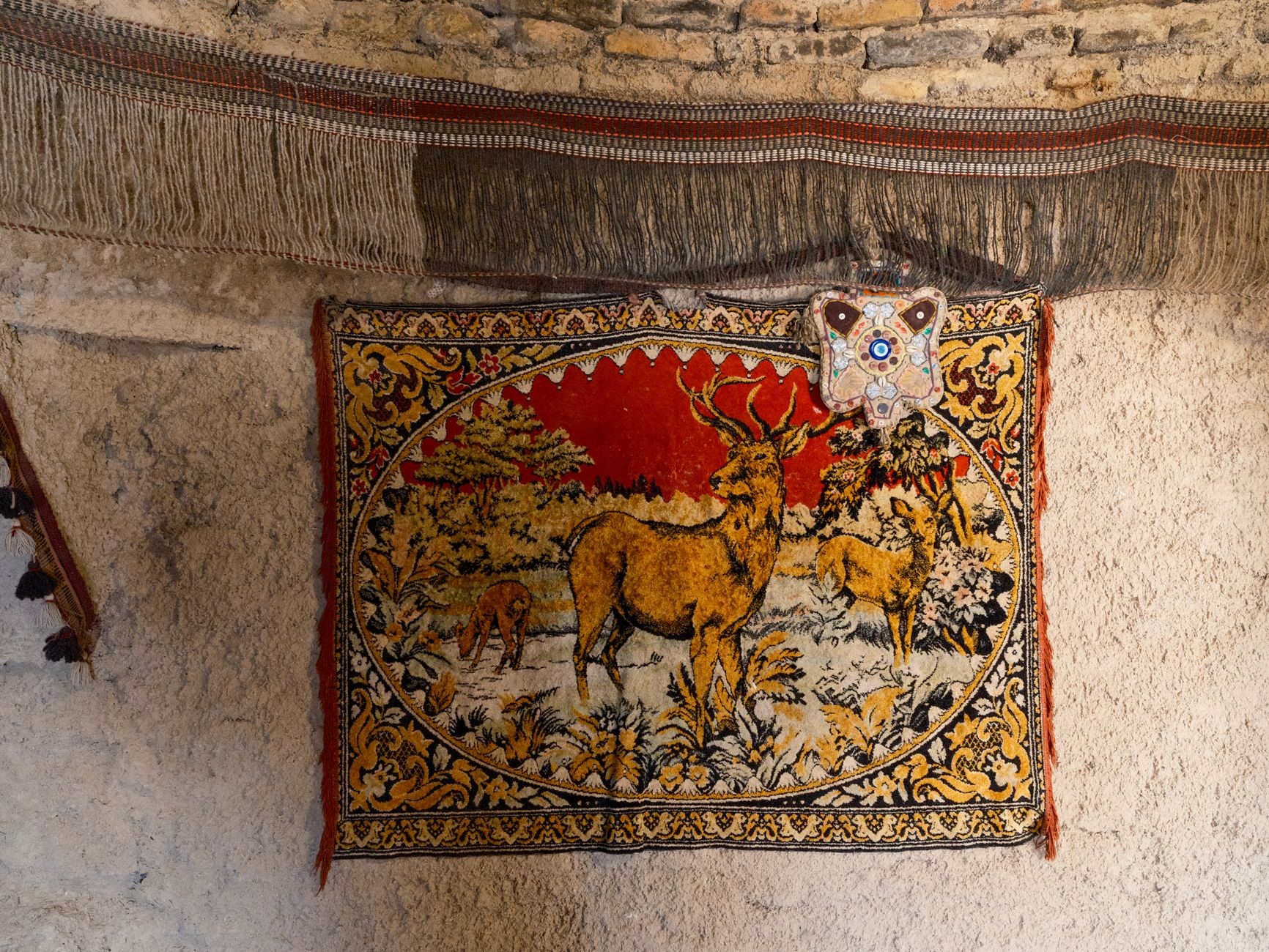
Photo by Hale Ş via Pexels.
A rug on the wall can change a room faster than another print ever will. It adds scale, softness, color, and a tactile presence that framed art cannot imitate. It can also sag, fade, pull itself out of shape, or fall if it is treated like an oversized poster.
So the first question is not simply how to hang a rug on the wall. It is whether this particular rug can safely support its own weight—and which display method will spread that weight without damaging the textile. Get that right, and a rug reads as intentional textile art. Get it wrong, and the installation will always look temporary, no matter how beautiful the pattern is.
For the broader design decision before installation, use our guide to matching wall art with furniture and room scale.
First Decide Whether the Rug Should Be Hung
Lay the rug flat in good light and inspect the front, back, edges, and any existing repairs. Look for weak areas, tears, brittle fibers, loose fringe, distorted weave, heavy surface decoration, or previous damage around the top edge. A structurally sound flat-weave rug is a very different mounting problem from a thick, heavy carpet or an antique textile with fragile fibers. The same material-first thinking used to choose stylish but hard-wearing home textiles matters even more when gravity becomes part of the display.
The George Washington University Textile Museum’s display guidance makes the central test clear: a hanging method is only appropriate if the textile can support its own weight. Thin, fragile, heavily embellished, or weakened pieces may need a full support rather than a suspension system. When the rug is valuable, antique, sentimental, damaged, or simply difficult to assess, consult a qualified textile conservator before adding stitches or hardware.
That caution is not anti-design. It is what lets the piece remain beautiful after the trend cycle moves on.
Why a Rug Works Differently From Framed Art
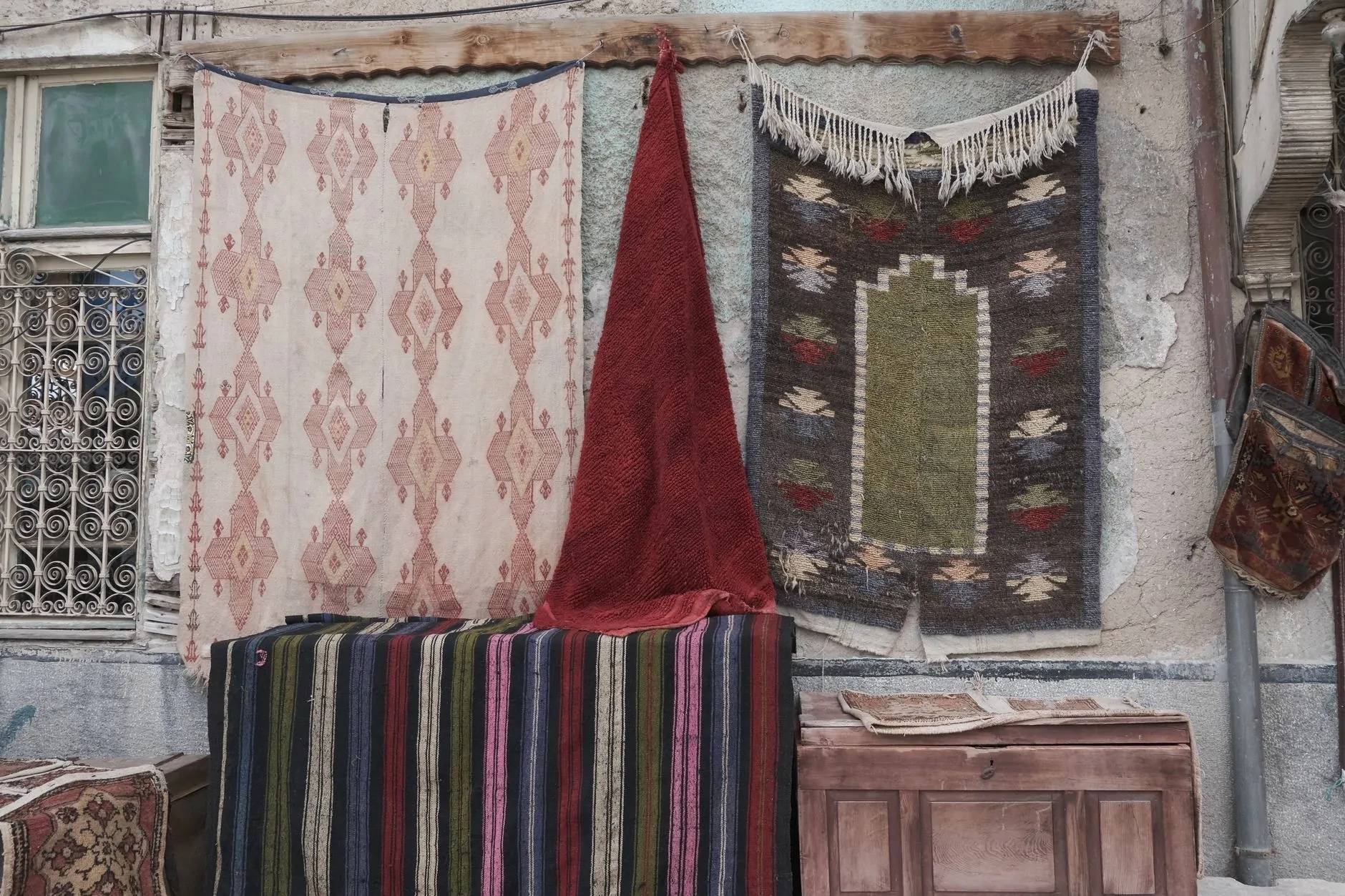
Designers have been moving rugs off the floor and using them as tapestries, mirror surrounds, and large-scale wall statements. Apartment Therapy reported the idea from 2026 designer showcases, while Vogue’s look at the renewed interest in textile art placed the appeal in a broader return to craft, vintage character, and material depth.
A rug earns that attention because it changes more than the wall. Its fibers soften hard surfaces, its scale can anchor a furniture group, and its texture reacts to side light throughout the day. A large textile may also take some edge off a visually or acoustically hard room, although it should not be presented as a substitute for designed acoustic treatment.
That is distinct from the role a rug plays on the floor, where it defines a seating area and handles foot traffic. On a wall, composition, gravity, fading, and structural support become the dominant concerns.
Compare the Mounting Methods
There is no single correct method for every rug. The safest choice depends on condition, weight, construction, value, and the wall itself.
| Method | Best for | Strongest advantage | Main risk | Verdict |
|---|---|---|---|---|
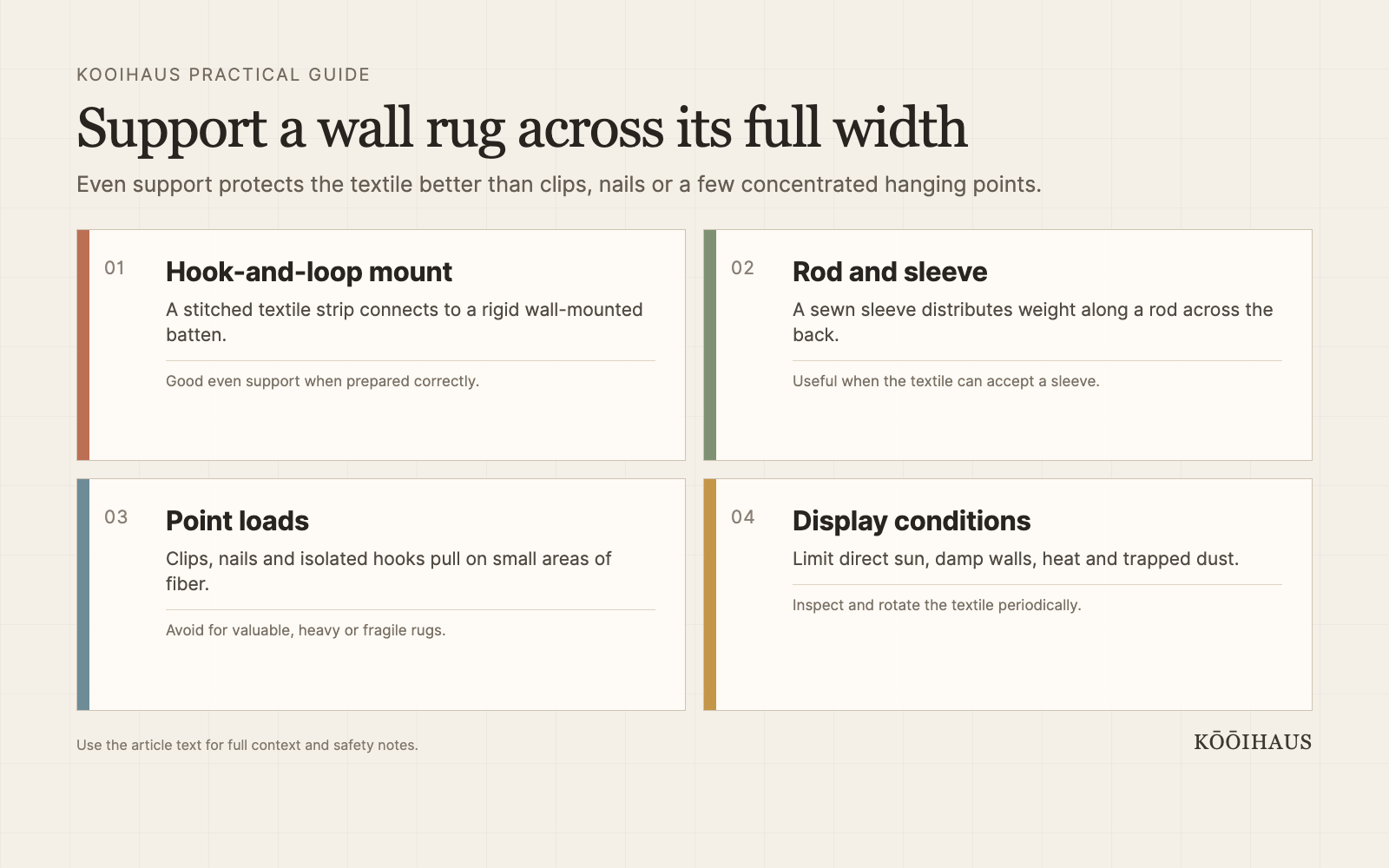
| Sewn hook-and-loop support across the top | Sound, flat textiles able to bear their weight | Spreads the load evenly and allows adjustment | Requires appropriate sewing and wall support | Best general route for many sturdy rugs |
| Rod and sewn sleeve | Lighter, sound textiles suited to a casing | Simple visual line and even support when properly made | Rod, sleeve, or brackets can be underspecified | Good when weight and construction suit it |
| Full fabric-covered rigid support | Fragile or structurally weak textiles | Supports the whole object rather than only the top edge | More complex, expensive, and visually substantial | Best for pieces that should not hang freely |
| Clips or clamps | Lightweight, replaceable decorative textiles | Quick and reversible in some setups | Concentrated pressure can mark or distort fibers | Use only after careful textile and load assessment |
Worth doing: a method that distributes weight continuously and can be reversed without tearing the piece. Skip: any shortcut that asks two nails, a few sticky tabs, or the rug’s fringe to carry the load.
The Conservation-Style Hook-and-Loop Method
For many sturdy, flat textiles, conservators favor a hook-and-loop support because it spreads the load across the width. The Canadian Conservation Institute’s detailed guidance explains that point support from rings, hooks, tacks, staples, or nails can distort fibers and cause tears or staining. Its system uses the soft loop component attached to a prepared cotton sleeve or tape, which is then hand-sewn to a sound textile; the corresponding component is secured to a rigid wall support.
The important phrase is sewn support system. This is not permission to press self-adhesive strips directly onto the back of a rug. Adhesive can migrate, fail, leave residue, or pull fibers, while a few small patches create concentrated loads. The textile-facing material, stitch choice, support width, wall fixing, and rug condition all need to suit the object.
For a valuable piece, this is conservator work. For an ordinary, structurally sound decorative rug, a competent textile professional and an installer who understands the wall construction may be enough. Either way, the wall side must be anchored for the actual load; drywall, masonry, timber framing, and plaster do not accept the same fixing.
When a Rod and Sleeve Makes More Sense
A rod through a properly made sleeve can work well for a lighter rug, quilt, or wall hanging. The sleeve spreads support across the top rather than pinching a few points, and the rod can become part of the visual composition or disappear behind the textile.
The sleeve must be compatible with the rug and attached without stressing weak fibers. The rod must resist bending across the full width, and its brackets must be fixed for the combined weight. Bare or unsealed wood should not sit directly against a valuable textile; conservation guidance often calls for an appropriate barrier or covered support.
A decorative curtain rod is not automatically a textile mount. Worth it: a properly sized system for a sound, relatively light piece. Skip it: a thin telescoping rod bowed by a heavy rug, or a sleeve sewn into an edge that is already fragile.
Give the Textile Enough Wall
The most common styling mistake is not the rug itself—it is a wall too crowded to let the rug act as art.
Start with the furniture group. Above a sofa, bed, or sideboard, the textile should relate to the width below it without feeling squeezed between the furniture and ceiling. Leave enough negative space around irregular edges and fringe. A small rug floating on a huge wall may need a contained architectural zone, such as a niche or paneled area, rather than more small objects packed around it.
This is where a wall textile offers a cleaner alternative to a conventional gallery wall composition. One strong piece can hold the visual field alone. Adding frames on every side often weakens the material impact that made the textile worth hanging.
Test placement with a paper template or painter’s tape marking the outer dimensions. View it from the doorway, the main seat, and the adjacent room. The correct height is the one that connects the rug to the room’s architecture and furniture—not a universal eye-level formula.
Light, Dust, Humidity, and Rotation
Once a rug leaves the floor, it avoids foot traffic but gains new environmental risks. Direct sunlight can fade dyes and weaken fibers. Dust settles into texture. Damp rooms, exterior walls with condensation, fireplaces, cooking grease, and heating vents can create unstable or dirty conditions.
The Canadian Conservation Institute’s broader care guidance for textiles recommends controlling light exposure, supporting oversized textiles appropriately, and using limited display periods for vulnerable objects. A museum schedule is not necessary for every contemporary decorative rug, but the principle is useful: valuable textiles do not need to remain in the brightest room indefinitely.
Choose a wall away from harsh direct sun and persistent moisture. Keep enough access to inspect and clean the area safely. For delicate or important pieces, follow a conservator’s cleaning and rotation plan rather than vacuuming by habit.
These choices connect to the wider care of carpets and floor textiles at home: material, environment, and maintenance determine whether softness remains an asset or becomes a burden.
Styling Verdicts by Room
Living room
Worth stealing: one large flat-weave textile above a low sofa in a room dominated by hard surfaces. Let it establish the palette, then repeat only two or three colors elsewhere. Skip: a heavy rug above seating unless the mounting and wall fixing have been professionally assessed.
Bedroom
Textiles bring softness where it feels natural. A lighter hanging can replace a headboard visually, but anything above a bed demands especially conservative fixing and weight choices. If there is doubt, move the piece to a side wall.
Dining room
A large textile can warm a formal dining space and balance wood, stone, or glass. Keep it away from candles, serving splashes, and routes where chairs repeatedly touch the wall.
Hallway
A narrow runner can become a vertical composition, but tight circulation increases the chance of brushing, snagging, or dirtying it. Recessed placement or a full protective mount may be more sensible than a freely hanging edge.
Kitchen and bathroom
Usually skip. Cooking residue, humidity, splashes, and limited ventilation make these rooms poor homes for valuable textiles. A washable, lightweight decorative piece may work in a protected, well-ventilated area, but the maintenance burden should be part of the decision.
What Never to Do
Do not drive nails, staples, or tacks through the rug. Do not hang a heavy piece from fringe, two corner loops, or a few adhesive patches. Do not assume a method is safe because it is described as “damage-free” for posters. Do not mount a dirty, damp, distorted, or fragile textile and hope the wall will flatten it.
And do not let the trend turn a useful floor rug into mediocre wall art. Some textiles are better underfoot, where their scale and durability can support the room as intended. If the pattern loses its power when viewed vertically, keep it in the role it does best.
The Final Verdict
A rug belongs on the wall when three things are true: it improves the room at that scale, its condition allows vertical display, and the mounting system supports it evenly and safely.
The most convincing installations are not the cleverest. They are the ones where material, wall, furniture, and negative space feel resolved—while the engineering quietly disappears. Treat the rug as textile art first and a trend second, and it can become the piece that gives an otherwise ordinary room its memory.
Frequently Asked Questions
Can you hang any rug on a wall?
No. The rug must be in sound condition and able to support its own weight, or it needs a full supportive mount. Thin, fragile, heavily embellished, damaged, antique, or especially valuable textiles should be assessed by a qualified conservator.
Is Velcro safe for hanging a rug?
A conservation-style hook-and-loop system can be appropriate when support is distributed across the width and the textile-facing component is attached through a prepared sewn sleeve or tape. Self-adhesive patches placed directly on a rug are not the same system and can create damage or failure risks.
How do you hang a rug without damaging it?
Choose a method based on weight, weave, condition, and wall construction; distribute support rather than using point loads; keep adhesives, nails, and staples out of the textile; and use a conservator for fragile or valuable pieces. The wall support must also be anchored for the actual load.
Will sunlight fade a rug on the wall?
Yes, prolonged light—especially direct sunlight—can fade dyes and weaken textile fibers. Choose a lower-exposure wall, consider UV control and rotation for important pieces, and follow professional conservation guidance when value or fragility warrants it.











 Blankets and Throws
 Home Accessories
 Furniture
 Rugs
Rugs Cushions
 Kitchen
 Cutlery and Dinnerware
 Drinkware
 Table Mats and Coasters
 Dining Accessories
 Tablecloths and Napkins
 Decorative Items
 Vases and Planters
 Wall Decor
 Bathroom Accessories
 Bathroom Storage
 Bath and Shower Mats
 Towels