FREE WORLDWIDE TRACKED SHIPPING
Nordic Throw Blankets: Materials, Sizes, and Styling Without the Clichés
 By Laura Jones
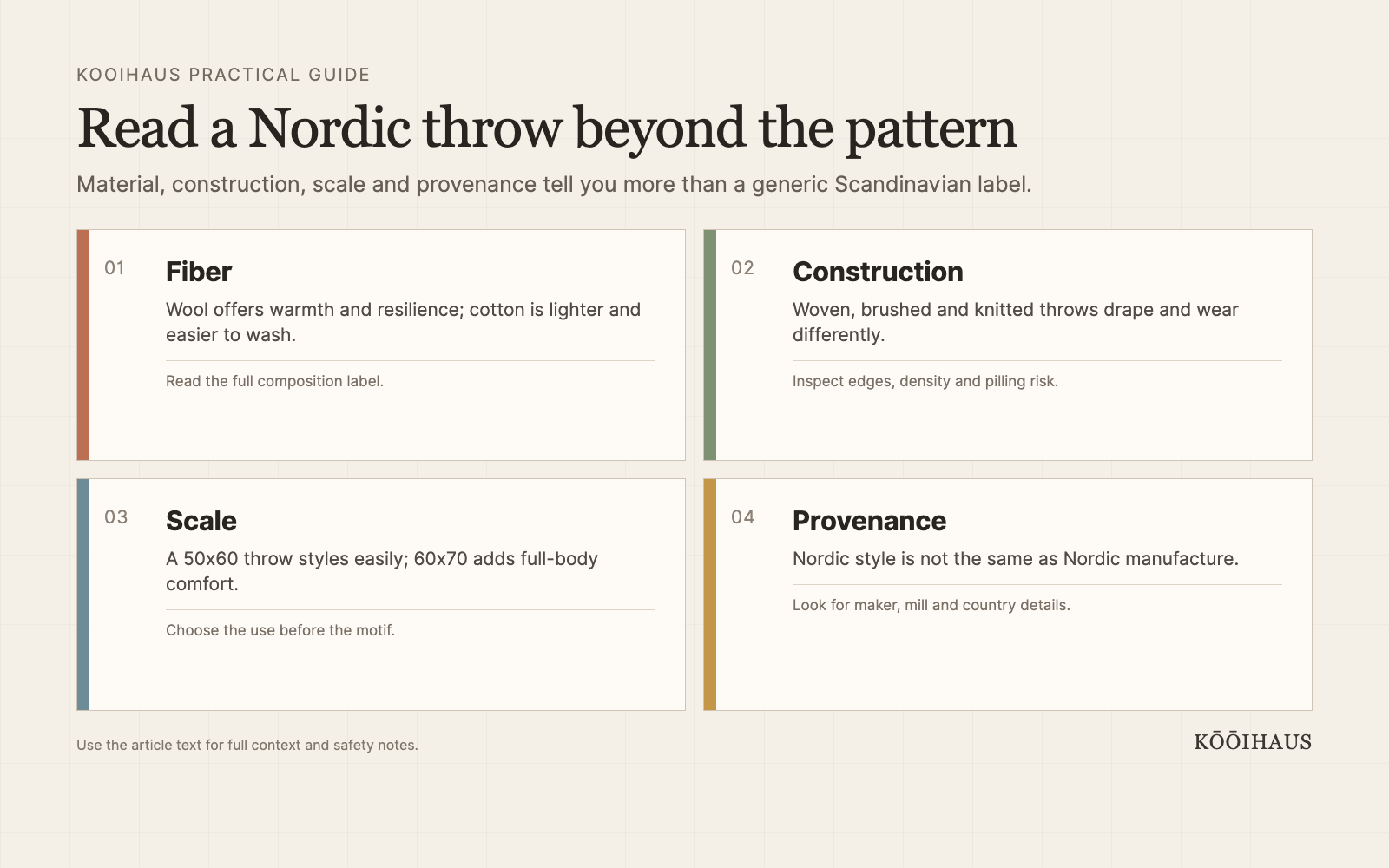
A Nordic throw is best understood through material, construction, restraint, and everyday usefulness—not a generic geometric pattern.

A convincing Nordic throw does not need a snowflake, a loud chevron or the word hygge in its product name. The more useful signals are honest fiber, clear construction, balanced color and a size that earns its place in daily life.
The label is only a starting point. A useful decision combines exact dimensions, fiber content, construction, care, visual scale and provenance. Those checks prevent an appealing image from becoming a textile that is too small, too heavy, too fragile or too generic for the room.
The quick decision framework
| Option | Design and use note |
|---|---|
| Wool | Warm, resilient, naturally textured — Cool rooms and long-term use — Check hand feel and care |
| Cotton | Lighter, washable, versatile — All-season casual use — May wrinkle or feel less insulating |
| Wool blend | Balanced softness and durability — Daily sofa use — Read exact percentages |
| Synthetic plush | Soft and affordable — High-wash households — Can pill or trap more heat |
Begin with the practical job. Decide who will use the blanket, where it will live, how often it will be washed and whether it should disappear into the room or provide contrast. Then compare materials and style. Reversing that order—falling for a motif and inventing a use later—is how decorative textiles become permanent clutter.

Begin with fiber, not the pattern
Wool remains a strong Nordic reference because it combines warmth, resilience and a dry tactile character. Cotton creates a lighter layer for warmer rooms and easier washing, while blends can add softness or reduce cost. None is automatically superior. Read the percentages, feel the surface if possible, and match the fiber to the room temperature, skin sensitivity and care routine. A beautiful throw that is never used because it scratches or requires unrealistic cleaning is poor design.
Put that principle into practice by testing the item in its daily position, not only in a styled photograph. Check scale from the doorway, from the main seat and under evening light. The right choice should still make sense when the room is untidy and the textile is being used rather than displayed.
Understand how construction changes the mood
A tightly woven throw reads graphic and architectural; brushing softens edges and makes color feel hazier; knitting adds visible structure and stretch. Fringes can reinforce a hand-finished impression, but they also catch, tangle and change the silhouette. Examine the hem, selvage, stitching and density. These details determine how the blanket ages long after a trend-led motif has lost its novelty.
Put that principle into practice by testing the item in its daily position, not only in a styled photograph. Check scale from the doorway, from the main seat and under evening light. The right choice should still make sense when the room is untidy and the textile is being used rather than displayed.
Separate style language from provenance
Nordic, Scandinavian and Danish-inspired are often used as visual categories, not legal statements about where a product was designed or made. If provenance matters, look for the named designer, manufacturer, mill, material origin and country of production. Transparent product information is more credible than a vague regional label. It also helps distinguish a considered textile from a mass-market pattern borrowing the language of craft.
Put that principle into practice by testing the item in its daily position, not only in a styled photograph. Check scale from the doorway, from the main seat and under evening light. The right choice should still make sense when the room is untidy and the textile is being used rather than displayed.
Choose a quieter palette with real contrast
Nordic rooms are not limited to beige. Chalky white, oatmeal, charcoal, rust, forest green, muted blue and warm red can all work when the palette is disciplined. The throw should either repeat a minor color already in the room or introduce one controlled point of contrast. Texture often supplies more depth than another decorative print, especially beside pale wood and simple upholstery.
Put that principle into practice by testing the item in its daily position, not only in a styled photograph. Check scale from the doorway, from the main seat and under evening light. The right choice should still make sense when the room is untidy and the textile is being used rather than displayed.
Style it as an object that gets used
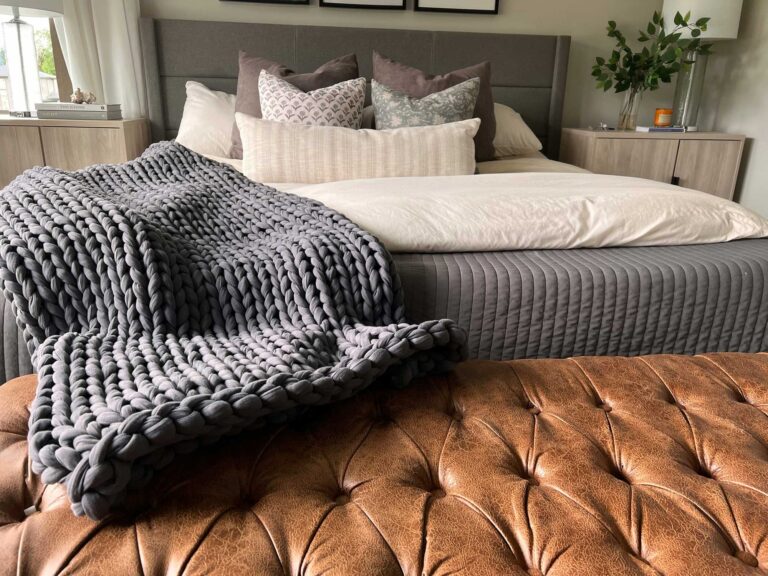
A single fold over a sofa arm shows weave and edge detail; a loose drop across a chair makes a reading corner feel occupied; a broad layer at the foot of the bed brings warmth without turning the room into a theme. Keep enough furniture visible, and do not add cushions in every matching pattern. Nordic restraint comes from editing relationships between objects, not from buying a coordinated set.
Put that principle into practice by testing the item in its daily position, not only in a styled photograph. Check scale from the doorway, from the main seat and under evening light. The right choice should still make sense when the room is untidy and the textile is being used rather than displayed.
A practical room test before buying
Mark the listed dimensions with a sheet, towel or painter’s tape. Sit where the blanket will be used, fold it the way it will be stored and look at it from the room entrance. If the item is for comfort, test shoulder-to-foot length and wrapping width. If it is for styling, note how much sofa, chair or bed remains visible.
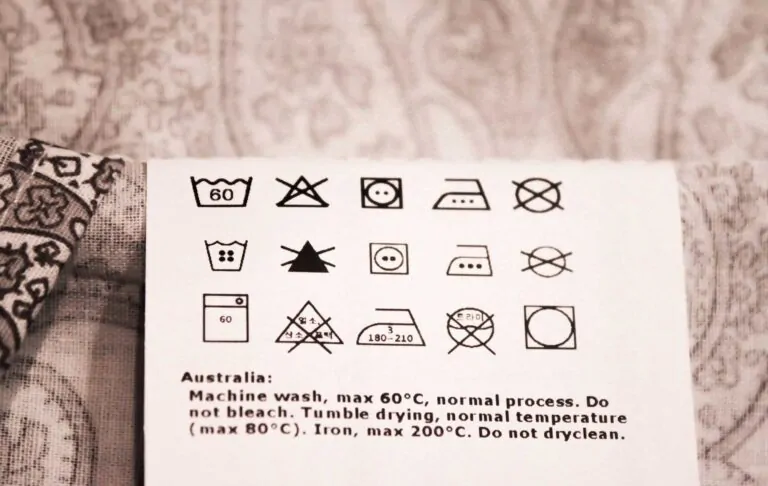
Next, audit the care path. Read the label, compare the blanket’s folded volume with your storage and check whether your washer can handle the material. Wool, cotton, blends and plush synthetics have different relationships with heat, moisture, pilling and drying. The most sustainable purchase is usually the textile you can maintain and keep using.
Common mistakes to avoid
- Buying the regional style label without checking fiber, maker or country information.
- Assuming oversized means the same dimensions across brands.
- Repeating one pattern across the throw, cushions and rug until the room feels themed.
- Ignoring how a larger or denser textile changes laundry and storage.
- Styling the blanket so carefully that nobody feels permitted to use it.
Make the choice last beyond one season
A durable textile decision does not require a neutral color, but it does require a reason that survives the current campaign image. Look at the room without the product and identify what is missing: warmth, length, softness, pattern, acoustic absorption or a portable layer. Then ask whether the proposed blanket supplies that quality without creating a new maintenance problem.
Compare at least two sizes and two materials. Inspect close photographs of the weave, edge and reverse side, not only the styled front. Read customer information critically: comments about pilling, shrinkage and hand feel are more useful than general praise, but care mistakes and individual sensitivity can also shape reviews. If provenance is part of the price, expect specific names and manufacturing details.
Finally, plan where the blanket goes when it is not being photographed. A dedicated basket, shelf or sofa arm prevents the textile from migrating into a permanent pile. Use it for a week before buying matching cushions or a second color. One object that earns daily use creates more atmosphere than a coordinated set that exists only to complete a look.
Editor’s checklist
- The exact dimensions suit the person and the furniture.
- The fiber and care routine match the household.
- The color works in daylight and evening light.
- The room retains negative space after the textile is added.
- The product information supports any provenance claim.
Frequently asked questions
What makes a throw blanket Nordic?
There is no single technical definition. Material honesty, restrained color, functional scale and transparent design provenance are more meaningful than a particular motif.
Are Nordic wool throws itchy?
Some are, some are not. Fiber fineness, finishing and individual sensitivity matter, so check the product details and feel it against skin when possible.
What size works best on a Scandinavian-style sofa?
A 50×60-inch throw is easy to fold and style; 60×70 is better for tall-adult comfort or a deeper sofa.
Can a Nordic throw work in a Japandi room?
Yes. Choose a quiet color, tactile natural-looking fiber and simple edge treatment so the textile supports rather than crowds the room.
Bottom line
Use the label as an invitation to inspect the object more closely. The lasting choice is the one whose material, dimensions and construction support daily life while adding one controlled layer of color or texture. A room does not become more considered by accumulating references; it becomes more considered when each object has a clear role.
Sources
- Northern Echo throw product information
- Nordic Nest blanket and throw overview
- Nordic Nest wool blanket overview










 Blankets and Throws
 Home Accessories
 Furniture
 Rugs
Rugs Cushions
 Kitchen
 Cutlery and Dinnerware
 Drinkware
 Table Mats and Coasters
 Dining Accessories
 Tablecloths and Napkins
 Decorative Items
 Vases and Planters
 Wall Decor
 Bathroom Accessories
 Bathroom Storage
 Bath and Shower Mats
 Towels