FREE WORLDWIDE TRACKED SHIPPING
The Soft Kitchen Trend Works – If You Protect the Work Zone
 By Laura Jones
The soft kitchen trend works when comfort stays outside the hardest-working zone. Use this two-zone rule to add warmth without hurting workflow.
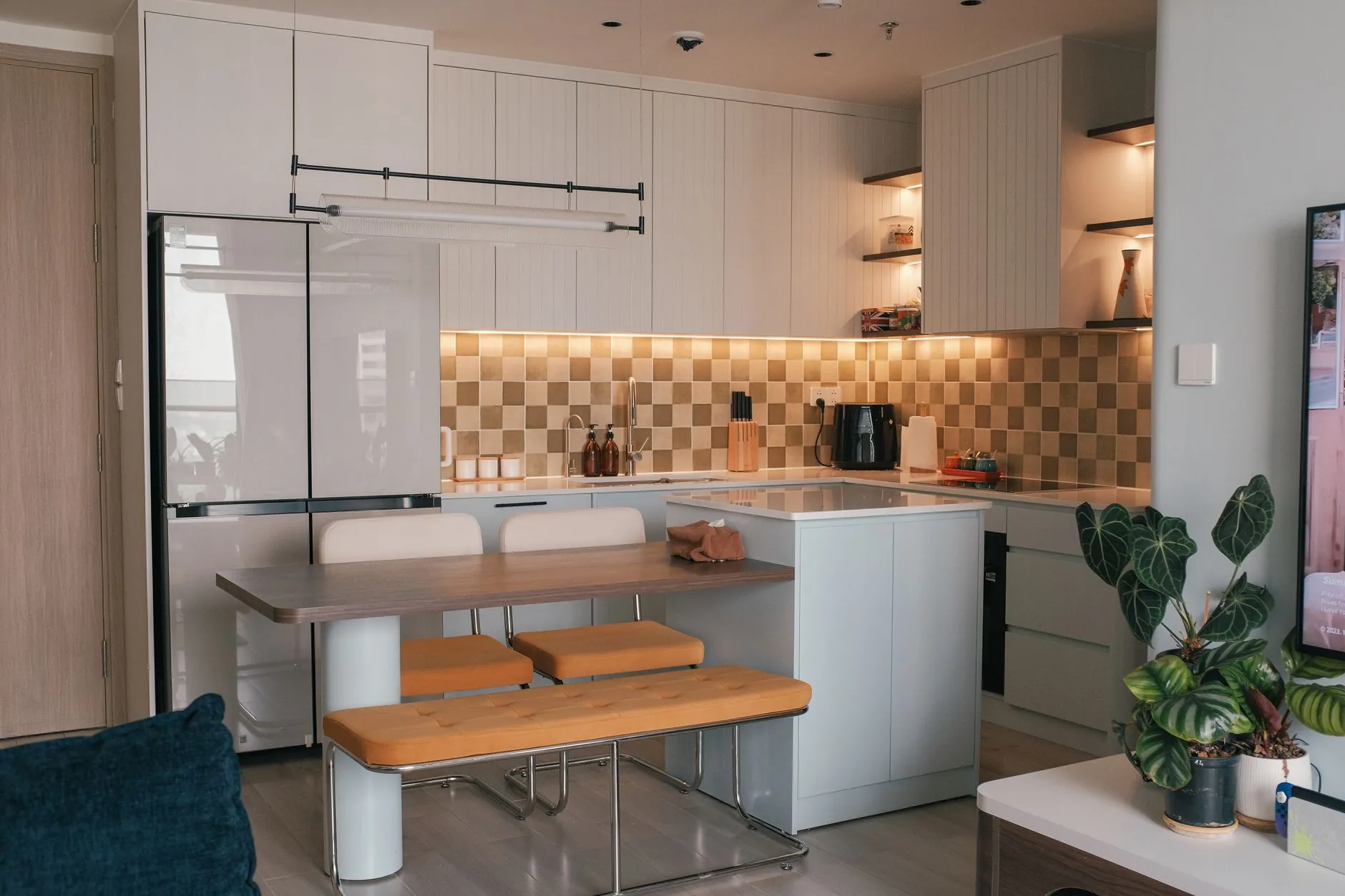
A warm modern kitchen combines durable work surfaces with upholstered seating, wood, plants, and layered light. Photo by Huy Phan via Pexels.
A kitchen can feel calmer without becoming less capable. That is the useful promise behind the soft kitchen trend. The problem begins when softness is treated as a shopping list of rugs, lamps, and upholstered chairs placed wherever the photograph looks inviting.
A working kitchen still has heat, water, grease, sharp tools, and hurried movement. The better interpretation is not to soften every surface. It is to keep the active work zone hard-working and easy to clean, then bring the visual language of a living room to the edges of the space.
That distinction turns a vague 2026 trend into a practical design rule: protect the work zone, soften the room around it.
What is the soft kitchen trend?
A soft kitchen is designed to feel like a room where people happen to cook, rather than a fitted system that stops at the cabinet line. It uses warmer light, natural materials, gentle shapes, furniture-like storage, art, books, comfortable seating, and a few textiles to reduce the clinical feel of a purely functional space.
The term is new enough to sound like a defined style, but the idea is not. House & Garden traces it to a longer shift in which kitchens have absorbed the social and decorative functions of dining rooms and living rooms. Its examples include table lamps, antiques, upholstered seating, shelves, artwork, curtains, and rugs.
House Beautiful’s 2026 coverage adds muted color, tactile materials, rounded forms, and layered lighting. Put together, those elements describe a feeling rather than a single look. A soft kitchen can be traditional, contemporary, colorful, or minimal.
That is good news. You do not need to replace the kitchen to use the idea, and you do not need to make every kitchen look like the same warm-beige mood board.
Why the idea fits how kitchens are changing
The soft kitchen is not appearing in isolation. The NKBA’s 2026 Kitchen Trends Report, based on feedback from 634 North American industry professionals, identifies whole-home continuity, social connection, multi-purpose kitchen hubs, personal expression, and organic aesthetics among the forces shaping kitchen design.
Those themes explain the appeal better than the trend name does. When a kitchen is also a breakfast room, homework station, video-call background, and evening gathering place, task efficiency is only one part of the brief. The room also needs light that can change character, seating that invites people to stay, and materials that connect it to the rest of the home.
The goal is not to disguise the kitchen. It is to stop designing it as though nobody will be there between cooking sessions.
Use the two-zone rule
Before adding anything soft, divide the room mentally into two zones.
| Zone | What belongs there | Design priority |
|---|---|---|
| Active work zone | Sink, hob, main preparation surface, dishwasher, frequently used appliances | Clear movement, washable surfaces, strong task light, easy access |
| Living edge | Dining corner, banquette, open shelf, dresser, window, unused wall, end of an island | Comfort, ambient light, art, texture, display, slower activities |
The boundary does not need to be visible. It is a decision filter. A fabric shade above a side table may add warmth without creating a cleaning problem. The same shade immediately beside the hob asks a decorative object to live in the hardest part of the room.
The rule also protects circulation. A lounge chair can make a generous kitchen feel sociable, but it is not a success if someone has to step around it while carrying a hot pan. Softness should remove visual tension, not introduce physical friction.
Start with light, not upholstery
Lighting is the lowest-friction way to change the room because it can soften the atmosphere without occupying another square foot. Keep clear task lighting over preparation and cleaning areas, then add a second layer for the hours when the work is finished.
That second layer might be a wall light, a pendant over the dining table, lighting inside a dresser, or a compact lamp on a dry surface away from active food preparation. A warm, dimmable layer lets the kitchen remain useful during cooking and become calmer afterward.
Our guide to lighting design trends for 2026 explains why this works: comfort comes from a hierarchy of task, ambient, and accent light, not from making the entire room uniformly dim.
Bring in furniture language
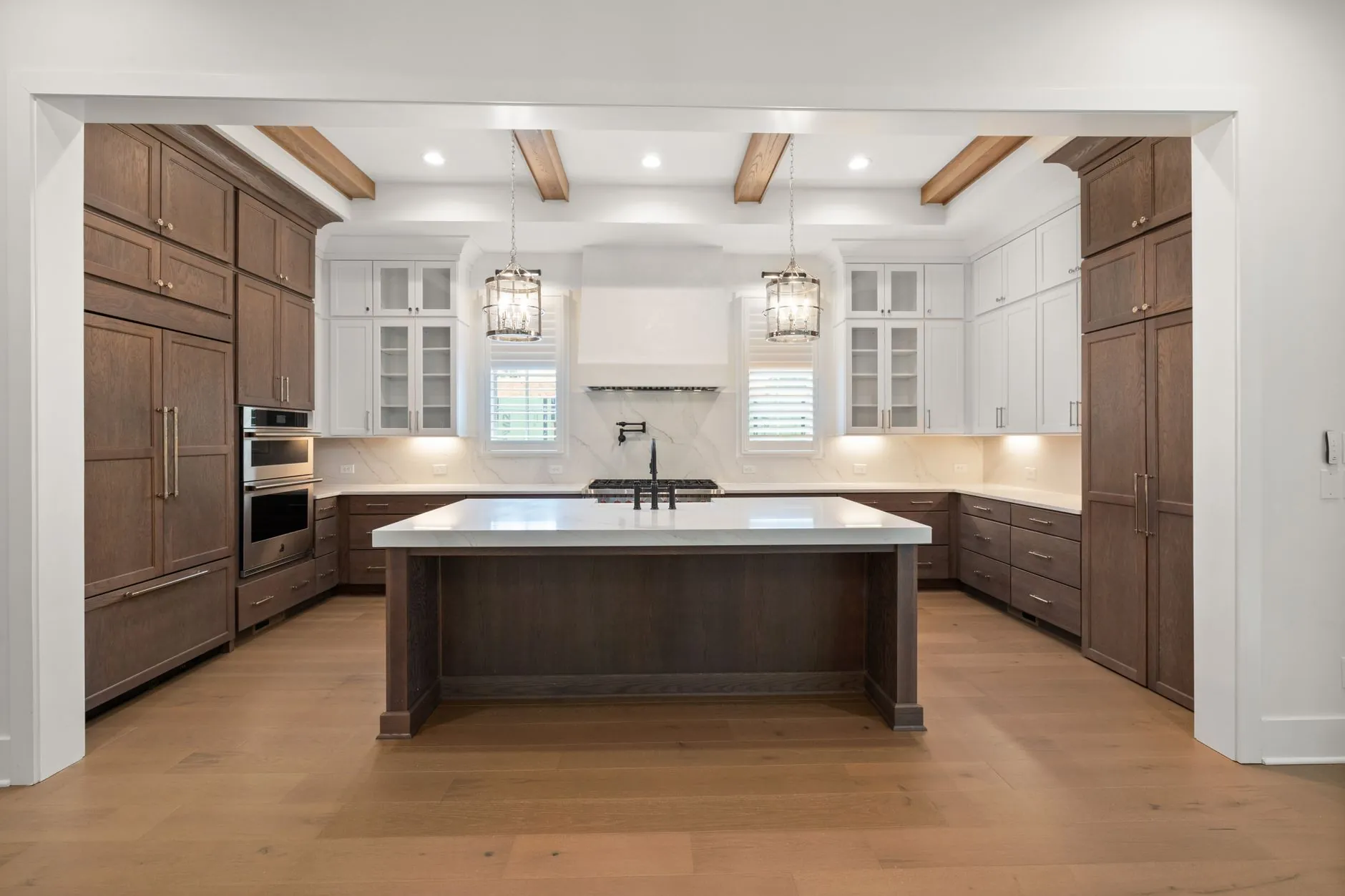
Many fitted kitchens look hard because every element shares the same depth, finish, and top line. One piece that behaves like furniture can interrupt that uniformity. Consider a freestanding dresser, a shallow bookcase at the dining end, a bench with a defined back, or an island that reads more like a table.
This is also where shape matters. Rounded table corners, a curved chair back, a cylindrical lamp, or a cabinet handle with a softer profile can change the rhythm without sacrificing durability. You do not need a room full of arches. One or two repeated curves are enough to make a grid of cabinets feel less severe.
Natural wood is useful for the same reason. It adds grain, tonal variation, and evidence of age. In a kitchen that already has wood cabinetry, the move may be as small as allowing the grain to remain visible instead of covering every surface with a uniform color.
Add textiles where they can survive the routine
Textiles are the most literal route to softness and the easiest part to overdo. Start with the cleaning routine, not the photograph.
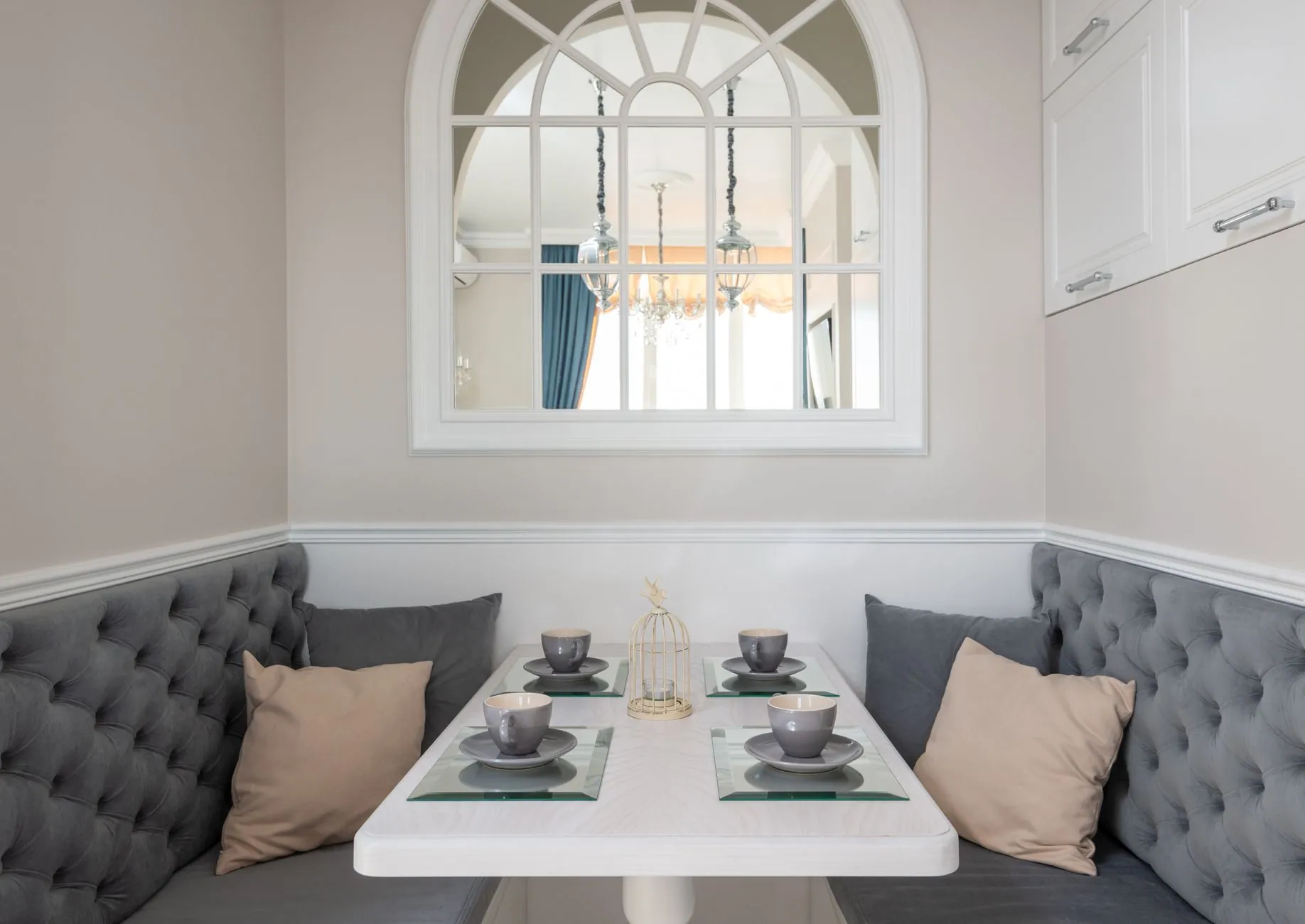
- Use washable seat covers or removable cushions in dining and banquette areas.
- Keep curtains clear of wet worktops, cooking heat, and narrow circulation routes.
- Choose a rug only where it can be lifted, cleaned, and kept flat under everyday traffic.
- Avoid fabric details that block cabinet doors, appliance ventilation, or access to sockets.
In a small kitchen, one upholstered bench can do more than several loose chairs. It concentrates comfort in a fixed zone and reduces visual clutter. In a larger room, a rug can help define the dining area, but it should belong to that area rather than float through the cooking route.
Make practical objects look intentional
A soft kitchen is not the same as a cluttered kitchen. Open shelves and counters feel personal when the visible objects have a reason to be there. They feel busy when every surface becomes storage.
Begin with what is already used: a fruit bowl, cutting boards, a ceramic jug, cookbooks, a tray for oils, or one piece of art. Grouping a few everyday objects creates a calmer composition than distributing small items across the full worktop.
Then protect the surfaces that need to remain open. Our appliance garage guide makes the same point from a storage angle: hiding an appliance only helps when access remains easy and the cleared counter improves the actual workflow.
What can you change without renovating?
| Move | Effort | What to check |
|---|---|---|
| Add an ambient light layer | Low to medium | Dry location, cable route, glare, and whether task light remains sufficient |
| Rework one display shelf | Low | Keep daily objects reachable and leave negative space |
| Add a washable bench cushion | Low | Removable cover, secure fit, and clearance around the table |
| Introduce a freestanding dresser | Medium | Door swing, circulation, wall fixing where required, and useful storage depth |
| Change cabinet fronts or worktops | High | Whether a smaller lighting, color, or hardware change solves the same problem |
If you are renting, focus on reversible layers: lamps, art, a compact table, seat pads, a washable runner in the dining zone, and a tighter edit of visible objects. If you own the space, test those layers before assuming the cabinets are the problem.
A restrained palette can help, but softness does not require beige. The warm whites, wood, and quiet contrast associated with a Japandi kitchen are one route. Deep green, terracotta, muted blue, or painted timber can create the same sense of ease when the colors repeat across the kitchen and adjoining room.
Where soft kitchens go wrong
The first failure is confusing atmosphere with low visibility. A kitchen still needs accurate task light and clear work surfaces. The second is placing decorative comfort inside the most demanding part of the room, where it becomes difficult to clean or obstructs movement.
The third is buying a complete aesthetic before identifying the source of the hardness. Sometimes the problem is a single cold overhead light. Sometimes it is an uninterrupted wall of glossy cabinetry. Sometimes the room is simply overfilled with small appliances and packaging.
Fix the strongest source first. A layered light plan will do more than three new cushions if the room feels flat after sunset. One wood piece will do more than a collection of beige accessories if every existing surface is glossy and uniform.
Verdict: soften the edges, not the standards
The soft kitchen trend earns its place when it makes the room more comfortable without weakening its ability to work. Its best ideas are not new products but better relationships: task light beside ambient light, fitted cabinetry beside one furniture-like piece, durable surfaces beside controlled texture, and clear worktops beside a few personal objects.
Use the two-zone test before every addition. Can the active zone still be cleaned quickly, lit properly, and crossed without obstruction? Does the living edge now give someone a reason to stay? If both answers are yes, the kitchen is softer in the way that matters.
Product installation, electrical work, and any change near heat, water, or ventilation should follow the relevant manufacturer instructions and local requirements.











 Blankets and Throws
 Home Accessories
 Furniture
 Rugs
Rugs Cushions
 Kitchen
 Cutlery and Dinnerware
 Drinkware
 Table Mats and Coasters
 Dining Accessories
 Tablecloths and Napkins
 Decorative Items
 Vases and Planters
 Wall Decor
 Bathroom Accessories
 Bathroom Storage
 Bath and Shower Mats
 Towels