FREE WORLDWIDE TRACKED SHIPPING
The Fall 2026 Micro-Trends Worth Trying Live at the Edges
 By Laura Jones
The best fall 2026 micro-trends work at a room's edges. Use this practical test to try five ideas without letting a trend take over the room.
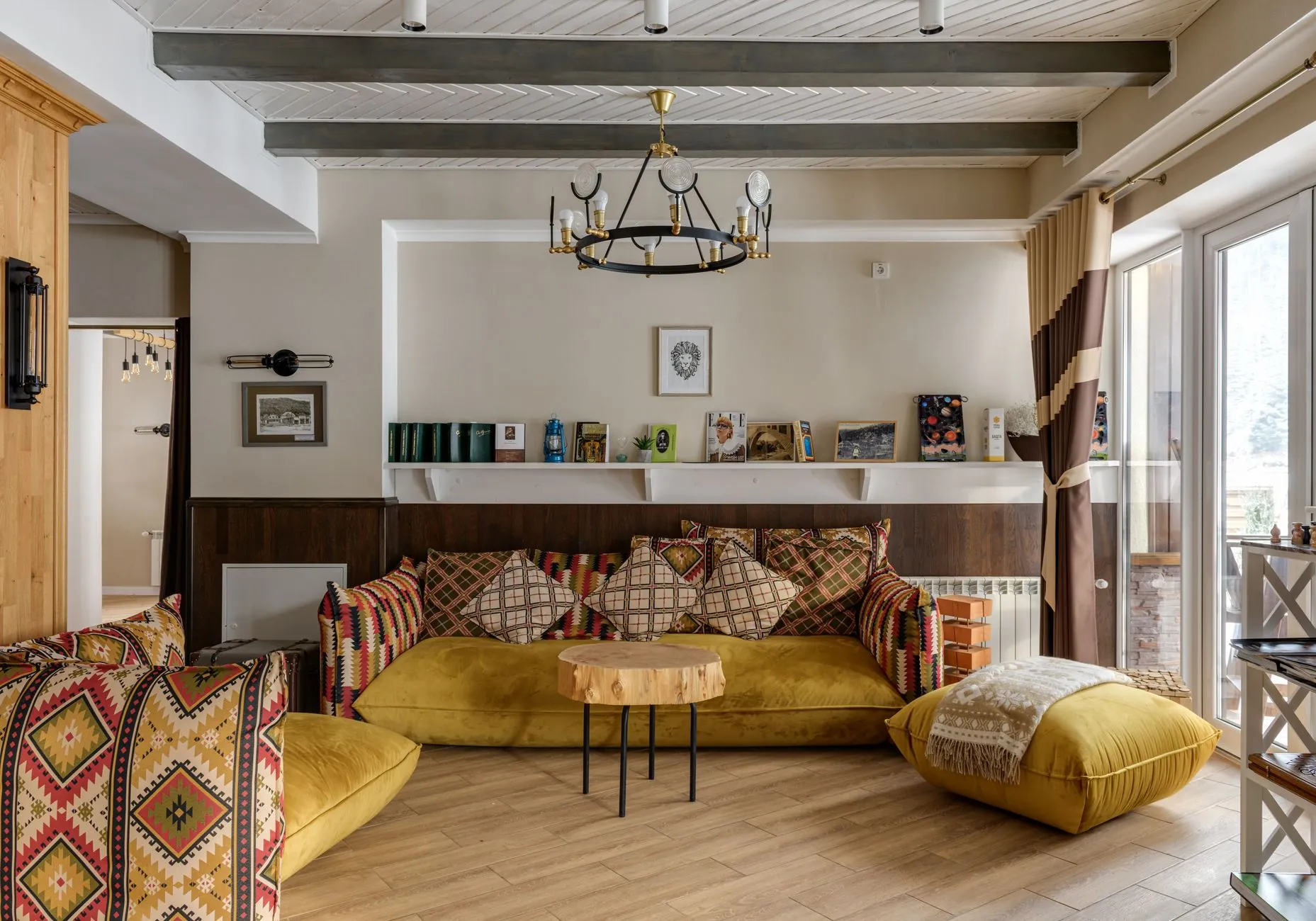
Pattern, books, lighting, and mixed shapes give the edges of this living room a distinct purpose. Photo by Max Vakhtbovych via Pexels.
You move a lamp into an awkward corner, switch it on, and the corner suddenly looks intentional. Nothing structural changed. The sofa stayed put, the walls stayed the same color, and no contractor was called.
That small shift explains the most useful fall 2026 micro-trends. The strongest ones do not ask you to redesign the center of a room. They work at its edges: a lampshade, a doorway, a stretch of wall, or a neglected nook.
This is more than a convenient shopping category. It is a practical test for deciding which trends deserve space in a real home. If an idea can improve one edge of a room, survive daily use, and be removed without leaving a renovation behind, it may be worth trying. If it needs a matching room around it, the trend is already in charge.
Why the edges matter this fall
House Beautiful’s fall 2026 micro-trend report points to embellished lampshades, mini libraries, framed doorways, wall textiles, greenery, hospitality-minded guest rooms, and mixed geometry. They look unrelated until you notice where most of them live. They occupy secondary surfaces and transitional spaces rather than replacing the room’s main furniture or architecture.
That pattern is supported by broader search behavior. In its 2026 U.S. Emerging Trends Report, Houzz found rising searches for bibliothèques, linen and seagrass wallpaper, warmer earthy colors, and curved forms. The numbers describe a desire for texture, character, and analog activity. They do not require every room to become a maximalist stage set.
The edge is where a larger aesthetic can be tested at human scale. It is also where a small change can solve a real problem: poor evening light, an unused corner, an abrupt transition, or a blank wall that makes the rest of the room feel unfinished.
Use the edge test before you buy anything
A micro-trend earns its place when it passes three questions.
- Is it reversible? You should be able to remove, repaint, rehang, or relocate it without rebuilding the room.
- Does it improve use? A reading nook needs light and a comfortable seat, not just books arranged for a photograph.
- Can it stand alone? The object or treatment should work with what you own. If it demands a new rug, new curtains, and new paint before it looks right, it is not a micro change.
The test is deliberately stricter than asking whether something looks current. A home has to carry the idea after the novelty wears off.
| Micro-trend | Smallest useful test | Hidden cost to check |
|---|---|---|
| Embellished lampshade | Change one shade on an existing lamp | Light output, dust, bulb clearance |
| Mini library | Add one shelf, a seat, and a reading light | Wall fixing, comfortable reach, clutter |
| Framed doorway | Paint or trim one threshold | Sightlines, patching, door clearance |
| Wall textile | Hang one lightweight piece securely | Dust, moisture, heat, safe fixing |
| Mixed geometry | Pair one curved object with a rectilinear one | Visual noise from too many competing shapes |
1. Let one lampshade change the light
An embellished shade is the clearest example of a trend that belongs at the edge. Pattern, pleating, fringe, or trim can make an ordinary lamp behave like a decorative object while still doing a job.
Start with the light, not the ornament. A dark or densely patterned shade may cast a narrower, warmer pool than a pale linen one. That can be useful beside a sofa or on an entry console, but frustrating on a desk. Keep task light adequate, follow the lamp and bulb limits, and make sure added trim cannot touch the bulb or trap heat.
Our guide to choosing a dining-room color temperature explains the principle that matters here: atmosphere comes from the color and direction of light as much as from the fixture. A decorative shade succeeds when the room feels better after sunset, not only when the lamp is off.
2. Turn the awkward corner into a mini library
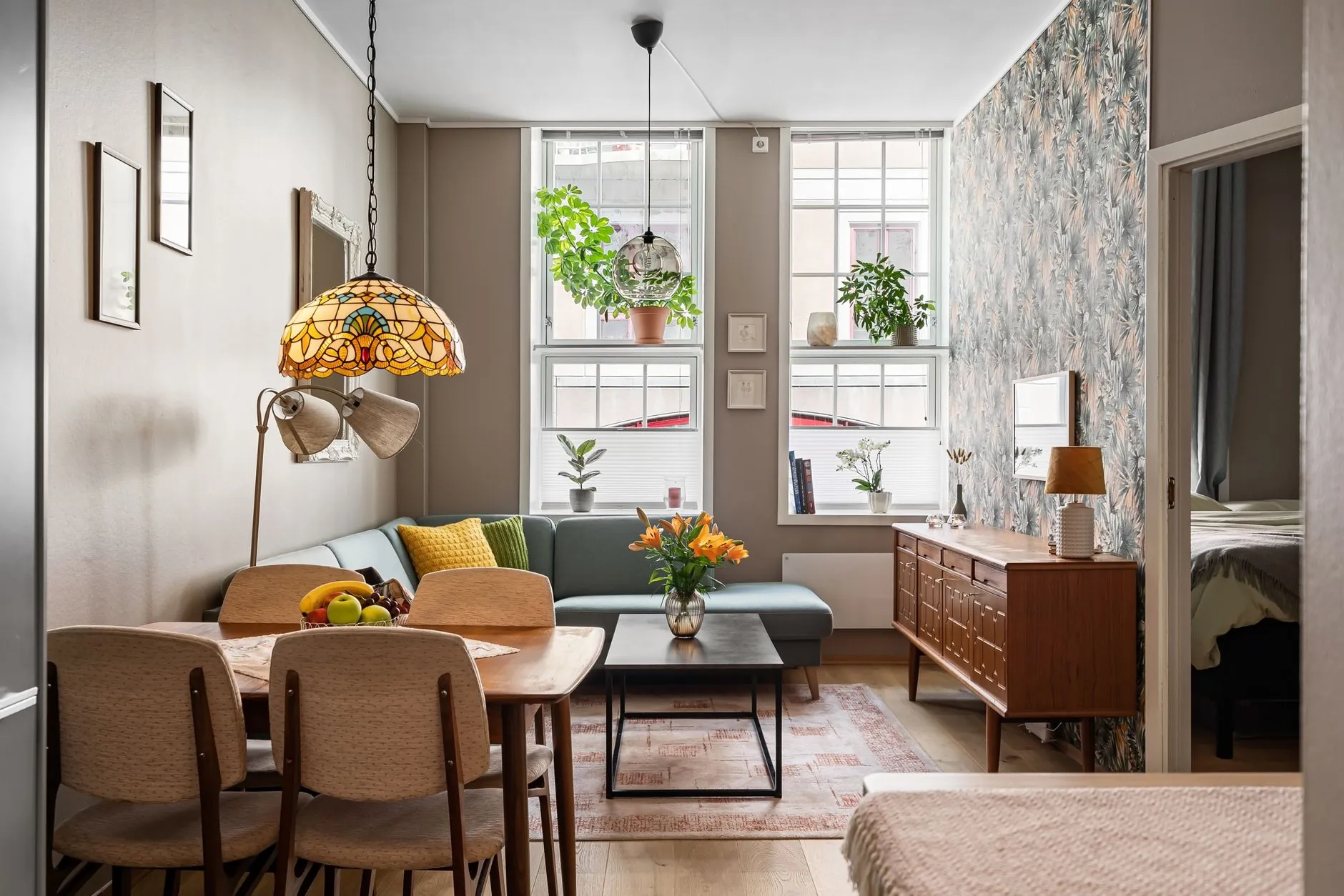
The mini library sounds grander than it needs to be. Its useful version is one underused corner with books, a seat, and light placed where someone can actually read. It might occupy a landing, the end of a hallway, or the shallow recess left beside a chimney breast.
The important move is not filling every inch with shelves. It is giving the corner a clear activity. Begin with a chair you can sit in for twenty minutes, then position the light and a small surface within reach. Add only the books that fit without blocking circulation.
This also corrects a common small-room mistake: treating every gap as storage before deciding what the room needs. Our expert roundup on small living room mistakes makes the case for circulation and properly scaled furniture. A library nook that pinches the route through the room is storage, not sanctuary.
3. Give a doorway a job
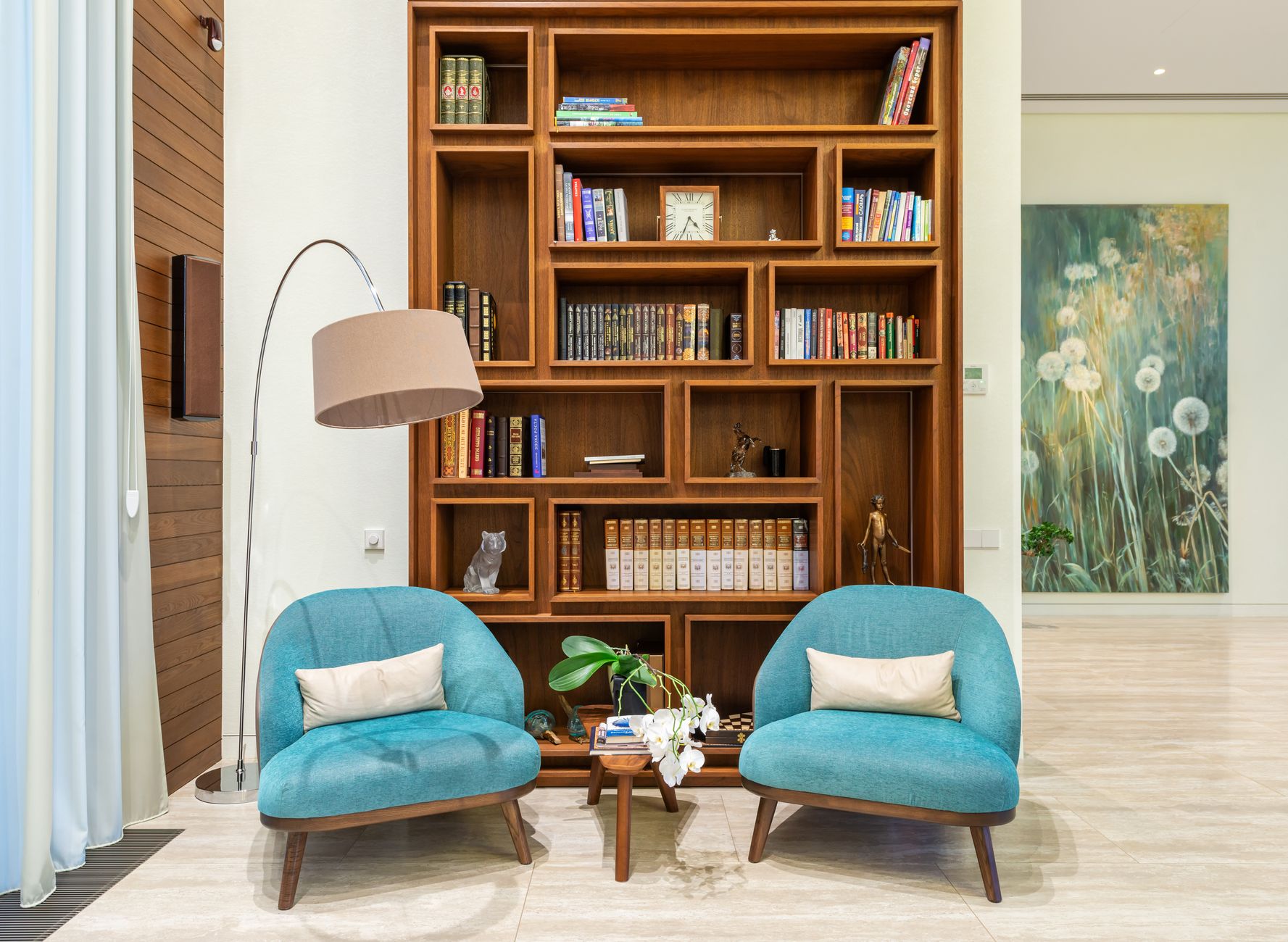
A doorway is usually painted to disappear, yet it controls the first view into the next room. Framing it with a contrasting color, narrow decorative trim, or a curtain can make the transition feel deliberate.
Use the view through the opening as the test. A dark frame can sharpen a pale room beyond it. A stripe of color can repeat a fabric or artwork already visible from both sides. A curtain can add privacy or soften sound, but it should open fully, clear the floor, and never compromise a required exit or interfere with a door.
Renters can keep this move lighter. A textile panel on a tension system, removable decorative elements, or color concentrated on a freestanding screen can create a threshold without pretending that every lease allows painted trim.
4. Use textiles on walls where softness has a purpose
Wall textiles are returning because they bring pattern and a softer acoustic character to a hard room. The safest entry point is not a fully upholstered wall. It is one securely hung rug, quilt, woven panel, or length of fabric with enough visual weight to hold the wall.
Scale matters. A small textile floating high above a sofa will look accidental, while a piece that relates to the furniture below can anchor the whole arrangement. The mounting method matters too. Heavy pieces need distributed support, and every textile needs distance from heat, cooking residue, persistent moisture, and open flame.
If a rug is the right piece, follow a mounting method that protects its structure. Our guide to hanging a rug on the wall covers weight, support, and placement without turning the textile into a stretched poster.
5. Mix shapes without collecting a theme
Mixed geometry is less an object than a way of breaking repetition. A round mirror above a straight console, a cylindrical lamp beside a boxy sofa, or an irregular tray on a rectangular table can interrupt a room built entirely from right angles.
The restraint is what makes it readable. Choose one contrast and let the existing room provide the other half. Buying several wavy pieces at once replaces one rigid motif with another. The room has changed costume, not character.
This is also where the fall palette can help without becoming another project. The 1stDibs 2026 designer survey reports strong interest in chocolate brown, burgundy, vintage pieces, irregular shapes, and skirted seating. One curved vintage lamp or dark-wood side table can carry both color and shape. You do not need five separate trend purchases.
What to skip, even if it is trending
Not every fall idea belongs in the micro category. ELLE Decor’s fall report includes reflective architectural surfaces, dedicated wellness spaces, and hospitality-inspired entrances alongside dark wood and a more lived-in look. Those may be meaningful design directions, but a mirrored ceiling or sauna is not a low-risk seasonal experiment.
Skip the expensive version when the small version answers the same need. If you want a more welcoming arrival, start with a useful lamp, somewhere to set keys, and one strong object in the sightline. If you want more reflection, test a smoked-glass tray or a modest mirror before committing a ceiling or entire wall.
Also skip any idea that creates a maintenance problem you already know you will resent. Fringe collects dust. Fabric near a busy kitchen absorbs residue. A stack of books without a place to sit becomes another surface to manage. The cost of a micro-trend is often care, not money.
A 30-minute room-edge audit
Walk the room clockwise and ignore the center. Look only at the perimeter and transitions.
- Which corner becomes unusable after dark?
- Which doorway feels abrupt or visually disconnected?
- Which wall needs scale, texture, or sound softening?
- Which shelf holds objects but supports no real activity?
- Which repeated shape makes the room feel stiff?
Choose one answer, then make the smallest reversible change that could improve it. Live with that change for a week before adding a second. The pause matters because a useful edge treatment often reduces the urge to keep decorating.
Verdict: borrow the move, not the whole mood
The best fall 2026 micro-trends are not tiny versions of a room makeover. They are precise interventions in places the room has neglected. A shade changes evening light. A shelf and chair give a corner a reason to exist. A framed threshold connects two spaces. A textile gives a hard wall weight and softness.
Return to the lamp in the awkward corner. If switching it on makes that part of the room more useful, more comfortable, and more itself, the trend has done enough. Stop there.
Photo by Max Vakhtbovych via Pexels.
Mounting, electrical, fire-safety, and egress requirements vary by object and location; follow product instructions and relevant local rules.












 Blankets and Throws
 Home Accessories
 Furniture
 Rugs
Rugs Cushions
 Kitchen
 Cutlery and Dinnerware
 Drinkware
 Table Mats and Coasters
 Dining Accessories
 Tablecloths and Napkins
 Decorative Items
 Vases and Planters
 Wall Decor
 Bathroom Accessories
 Bathroom Storage
 Bath and Shower Mats
 Towels